Veto Power & Effects On International Balance Period Between 1945-2015

Account upgrade
The download is free, but we offer some paid services. Support us by subscribing
Delete ads and speed up browsing the library.
The download starts with the click of a button without waiting for the book to be ready.
No limits for download times.
You can upload unlimited books in the library.
Enable readers to download your books without waiting.
Delete ads on the books that you publish.
No problems with download links for your uploaded books.
Download Book Veto Power Effects On International Balance Period Between 1945 2015 Pdf
The publisher is the author
Previewing the book or downloading it for personal use only and any other powers should be obtained from the author of the book publisher



Veto Power & Effects On International Balance Period Between 1945-2015
| Author: | Ezzat El Sayed Sayed Ahmed Hassan |
| Category: | International Law [Edit] |
| Language: | English |
| Publisher: | دار النهضة العربية/ دار النهضة العلمية |
| ISBN: | 9789948191070 |
| Release Date: | 05 Jun 2021 |
| Pages: | 221 |
| File Size: | 1.87 MB |
| Extension: | |
| Creation Date: | 15 Jun 2021 |
| Rank: | 286,274 No 1 most popular |
| Short link: | Copy |
| More books like this book | |
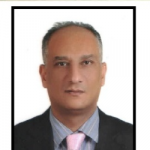
Ezzat El Sayed
مدير شؤون قانونية - باحث فى تطوير المنظمات الدولية وحقوق الإنسان
The Publisher and the author
Book Veto Power & Effects On International Balance Period Between 1945-2015 .
باحث فى تطوير المنظمات الدولية وحقوق الإنسان
باحث فى الشؤون المحليةوالإقليميةوالدولية
Book Description
In the aftermath of the First World War 1914 and the scourge of the war that the countries of the world witnessed, the League of Nations was established in January 1919, and it was a way to achieve international peace and security as well as international balance, but in fact it became clear that the programs of the League of Nations are designed to implement the policies and interests of some countries, which led to many international problems, and as a result, the League of Nations failed, and World War II came with its devastating woes, which resulted in enormous material losses, as well as great human losses. Which in turn led to the emergence of the United Nations with its organs to achieve many goals, the most important of which were international peace and security, and many other goals. The victorious countries in World War II initiated the call for the establishment of that organization. They believed that an international balance is desired for the five countries at that time on the basis of granting the five major powers the Veto Power against any UN resolution issued by the Security Council, which is the highest international authority of the UN, which has its recognized international role, whether positive or negative. This right has led to the creation of a balance between these countries within the framework of their international policy, but this balance did not include in its entirety all aspects of international relations and global issues in which none of the permanent five countries is a direct or indirect party, and these international issues have turned into a stage for concessions and bargaining, which affected the performance of the United Nations and the achievement of its goals in general in all its issues that have become threatening international peace and security, and preventing the United Nations from achieving its lofty goals, especially in many aborted international decisions. On the other hand, another voice appeared (adopted by the researcher) calling for the need to reformulate the privilege / right around which this research revolves. The research is to ensure a real global balance and not to achieve the desired balance between the holders of Veto Power only, as will be listed in the research, as well as its effects on the international balance.
1-1 Research problem
The research deals with the problem of Veto Power with its advantages and disadvantages, the theoretical basis on which Veto Power was built through practice while studying some of the cases that were affected by it, the opinion of some international law professors on the issue, and the new voice calling for reformulating a better system for voting in the UN Security Council which carries the meanings of democracy and is working to achieve them at the international level, as Veto Power works on not raising the decision by objecting to it once and without giving any reasons on the occasion of objecting to the decision, and not just objecting to it.
As soon as one of the five permanent members of the Security Council objects to a resolution, the result of that decision is not to pass it on to the rest of the member states and to reject it completely without giving any reasons, despite its acceptance by the rest of the fourteen member states of the UN Security Council.
It is internationally recognized and in application of the rules of justice and the foundations and rules of democracy that the voting system is based on the majority of the members, what we do not find in the UN Security Council with the voting system in place that contradicts the aforementioned rules, as the prevailing system in force is the system of privileged veto power established for some countries In particular, neglecting the rest of the member states.
The choice of the five permanent members of the UN Security Council was against the rules of democracy as well, as no democratic election process was carried out according to the majority result.
The research also deals with the effects of the recognized veto power that occurred, and is expected to continue in the event of the application of the same current rules in force and recognized by the United Nations Security Council and their effects on the international imbalance between all countries of the world, and only to maintain the international balance between the five countries are permanent members of the UN Security Council.
1-2 Importance of the research
The study relied on the sequence of events and their theoretical and scientific importance as follows:
This study seeks to discuss Veto Power in terms of its theoretical and practical importance through the balance it plays between the five permanent members.
The effect of Veto Power on obstructing the principles and decisions of the United Nations.
The study provides the most appropriate scenario for implementing Veto Power in order to play its role in maintaining international peace and security.
Presenting the views of the professor of public international law in light of the changing balance of power and the emergence of multiple international poles at the present time.
It is one of the important topics that has received and continues to receive great attention by those interested in this field.
1-3 Research objectives
The current study aims to identify the following matters:
Knowledge of the United Nations Charter and the legislative basis on which it is based.
Knowing the rules of democracy in force in all countries of the world and the theoretical basis for them in general.
Knowing the extent to which the United Nations Charter applies the rules of international justice that are based on the principles of democracy and human justice.
Knowing the principles that achieve transparency, credibility, equality and respect for the sovereignty and will of the rest of the member states of the United Nations.
Presenting a model represented by some proposals to amend the United Nations Charter to suit the passage of the draft resolution to the fifteen countries in the UN Security Council in accordance with the rules of democracy and the common scientific principles of voting.
1.4 Research methodology
The research was subject to the descriptive documentary approach; as it is the most appropriate to study the topic as a phenomenon of the human sciences and to have sufficient prior information on the topic, as the methodology is concerned with the careful and precise collection of available records and documents related to the topic / problem of the research and then a comprehensive analysis of its contents in order to conclude what is related to the problem research including evidences that prove the answer to the research questions.
The researcher relied on a group of important sources in his study, including primary and secondary sources:
Primary sources
They contain original data and information close to reality. They often reflect the truth and are rarely tainted by distortion. It can also be said that the primary sources are those that reach us without going through the stages of interpretation, change, deletion and addition, and from the sources on which the researcher relied also scientific research, manuscripts, and secondary reports, statistics issued by official institutions, historical documents and published and unpublished memos.
Secondary sources
The researcher relied on authored books, periodical articles and other sources transferred from other primary and non-primary sources, as well as the site of the United Nations Organization, and the study field will be some of the international draft resolutions circulating in the UN Security Council, which affected Veto Power and limit the reality that helped its establishment.
1-5 Research scope
The subject of study is defined by the following scopes:
Objective scopes: A study on Veto Power and its effects on the international balance.
Spatial scope: the United Nations Security Council
Temporal scope: the period between 1945 and 2015
1-6 Procedural terms of the research
International balance
A state of parity or relative parity between a set of interrelated variables in the international system characterized by a degree of flexibility and interdependence in interactions with the satisfaction of the basic units in the international system from the reality of the existing parity. (ALSYASI.COM Magazine, 2011)
Veto Power
There are many definitions of Veto Power, among which we mention the following:
The word “veto” has a Latin origin and means (I object / I do not allow), and its meaning became widespread after the end of World War II and the establishment of the United Nations in 1945. (Al-Jazeera.net, 2015)
The definition of “Veto Power” as a right of objection is inaccurate, since the objection to a decision has already been issued, and that the right of states to object to a decision is still in the preparation stage, and their non- consent leads to its non-issuance. (Shehab, International Organizations, 1985, p. 302)
The researcher will mention some of his different names, which all revolve around the same right granted to those five permanent members of the UN Security Council: Veto - Veto Power - the right to object - the right to object to any draft resolution submitted to the Security Council.


Share the book :
Book Review "Veto Power & Effects On International Balance Period Between 1945-2015"

Book Quotes "Veto Power & Effects On International Balance Period Between 1945-2015"

Other books like "Veto Power & Effects On International Balance Period Between 1945-2015"




Other books for "Ezzat El Sayed Sayed Ahmed Hassan"


If there is a problem with the book, please report through one of the following links:
Report the book or by Contact us
E-books are complementary and supportive of paper books and never cancel it. With the click of a button, the e-book reaches anyone, anywhere in the world.
E-books may weaken your eyesight due to the glare of the screen. Support the book publisher by purchasing his original paper book. If you can access it and get it, do not hesitate to buy it.
Publish your book now for free