Basic & Clinical Pharmacology, Fourteenth Edition

Account upgrade
The download is free, but we offer some paid services. Support us by subscribing
Delete ads and speed up browsing the library.
The download starts with the click of a button without waiting for the book to be ready.
No limits for download times.
You can upload unlimited books in the library.
Enable readers to download your books without waiting.
Delete ads on the books that you publish.
No problems with download links for your uploaded books.
Download Book Basic Clinical Pharmacology Fourteenth Edition Pdf
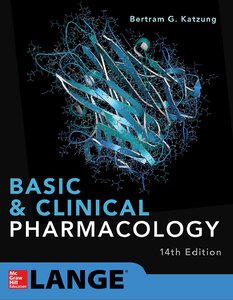

Basic & Clinical Pharmacology, Fourteenth Edition
| Author: | Bertram G. Katzung |
| Category: | Medical Sciences [Edit] |
| Language: | English |
| Publisher: | McGraw-Hill Education - LANGE |
| ISBN: | 9781259641152 |
| Release Date: | 01 Jan 2018 |
| Pages: | 1264 |
| File Size: | 71.64 MB |
| Extension: | |
| Creation Date: | 02 Nov 2017 |
| Rank: | 15,721 No 1 most popular |
| Short link: | Copy |
| More books like this book | |

Mohamed Irhuma
Professor
The Publisher and not the author Book Basic & Clinical Pharmacology, Fourteenth Edition .
As a Professor in Clinical Pharmacology, an academic researcher, and a physician, my professional journey has uniquely positioned me at the nexus of scientific rigour and holistic well-being. My work transcends conventional medical boundaries, delving into the philosophical underpinnings of Islamic thought, particularly as they relate to human health and spiritual [Imaan] flourishing. My research often explores how the sacred Islamic principles, such as those found in the rich Prophetic Sunnah, can inform contemporary medical ethics and practice. I aim to offer a nuanced perspective on healing that encompasses both body and soul [Imaan], acknowledging the Sunnah's role as a "divinely preserved legacy" that "elucidates the Qur’an’s commands" and guides a complete way of life. This interdisciplinary approach, deeply rooted in both empirical science and the true rich heritage of Islamic philosophy, underpins my writing, bridging the gap between faith [ISLAM] and evidence-based knowledge.
Book Description
The fourteenth edition of Basic & Clinical Pharmacology continues the extensive use of full-color illustrations and expanded coverage of transporters, pharmacogenomics, and new drugs of all types emphasized in prior editions. In addition, it reflects the major expansion of large-molecule drugs in the pharmacopeia, with numerous new monoclonal antibodies and other biologic agents.
Case studies accompany most chapters, and answers to questions posed in the case studies appear at the end of each chapter.
The book is designed to provide a comprehensive, authoritative, and readable pharmacology textbook for students in the health sciences. Frequent revision is necessary to keep pace with the rapid changes in pharmacology and therapeutics; the 2–3 year revision cycle of this text is among the shortest in the field, and the availability of an online version provides even greater currency. The book also offers special features that make it a useful reference for house officers and practicing clinicians.
This edition continues the sequence used in many pharmacology courses and in integrated curricula: basic principles of drug discovery, pharmacodynamics, pharmacokinetics, and pharmacogenomics; autonomic drugs; cardiovascular-renal drugs; drugs with important actions on smooth muscle; central nervous system drugs; drugs used to treat inflammation, gout, and diseases of the blood; endocrine drugs; chemotherapeutic drugs; toxicology; and special topics. This sequence builds new information on a foundation of information already assimilated. For example, early presentation of autonomic nervous system pharmacology allows
students to integrate the physiology and neuroscience they have learned elsewhere with the pharmacology they are learning and prepares them to understand the autonomic effects of other drugs.
This is especially important for the cardiovascular and central nervous system drug groups. However, chapters can be used equally well in courses and curricula that present these topics in a different sequence.
Within each chapter, emphasis is placed on discussion of drug groups and prototypes rather than offering repetitive detail about individual drugs. Selection of the subject matter and the order of its presentation are based on the accumulated experience of teaching this material to thousands of medical, pharmacy, dental,
podiatry, nursing, and other health science students.
Major features that make this book particularly useful in integrated curricula include sections that specifically address the clinical choice and use of drugs in patients and the monitoring of their effects—in other words, clinical pharmacology is an integral
part of this text. Lists of the trade and generic names of commercial preparations available are provided at the end of each chapter for easy reference by the house officer or practitioner evaluating a patient’s drug list or writing a prescription.


Share the book :


Book Quotes "Basic & Clinical Pharmacology, Fourteenth Edition"

Other books like "Basic & Clinical Pharmacology, Fourteenth Edition"






Other books for "Bertram G. Katzung"

If there is a problem with the book, please report through one of the following links:
Report the book or by Contact us
E-books are complementary and supportive of paper books and never cancel it. With the click of a button, the e-book reaches anyone, anywhere in the world.
E-books may weaken your eyesight due to the glare of the screen. Support the book publisher by purchasing his original paper book. If you can access it and get it, do not hesitate to buy it.
Publish your book now for free