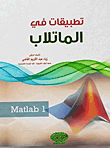
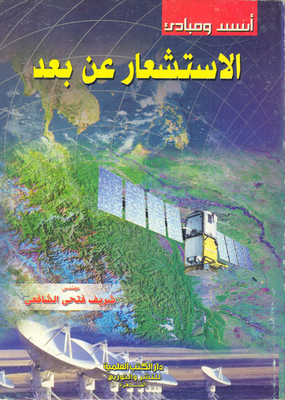
books application of remote sensing techniques with matlab
If you do not find what you're looking for, you can use more accurate words.

Application of Remote Sensing Techniques with MATLAB (Book)
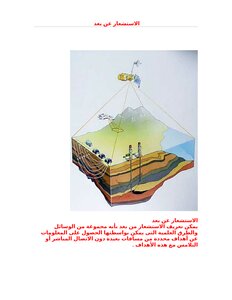
The Remote Sensing is defined as the collection and interpretation of information
about an object, area, or event without being in physical contact with the object. It
provides up-to-date information on analytical methods used to analyze digital remote
sensing data. Aircraft and satellites are the common platforms for remote sensing of
the earth and its natural resources. Aerial photography in the visible portion of the
electromagnetic wavelength was the original form of remote sensing but technological
developments has enabled the acquisition of information at other wavelengths
including near infrared, thermal infrared and microwave. The capacity of remote
sensing to identify and monitor land surfaces and environmental conditions has
expanded greatly over the last few decades and remotely sensed data becomes an
essential tool in natural resource management.
The study of remote sensing issues has become an important topic in many edges of
modern science (including weather forecasts, soil studies, urban planning, map
designs, surface and groundwater sources, detection of minerals and buried ores, etc.).
Therefore, many scientific departments in the universities of civilized countries began
to adopt and teach these topics to the students of primary and postgraduate studies
alike. Since the images provided by satellites are large in size, the situation
required searching for rapid computer languages that could handle and analyze the
information contained in them.