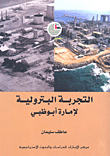
The Petroleum Experience Of Abu Dhabi

Account upgrade
The download is free, but we offer some paid services. Support us by subscribing
Delete ads and speed up browsing the library.
The download starts with the click of a button without waiting for the book to be ready.
No limits for download times.
You can upload unlimited books in the library.
Enable readers to download your books without waiting.
Delete ads on the books that you publish.
No problems with download links for your uploaded books.
Book The Petroleum Experience Of Abu Dhabi
Copyright reserved
The book cannot be previewed or downloaded in order to preserve the copyright of the author and publishing house
Not available digitally or on paper through the Noor Library, it is for rating and review



The Petroleum Experience Of Abu Dhabi
| Author: | Atef Suleiman |
| Category: | Abu Hanifa Al-Numan [Edit] |
| Language: | English |
| Publisher: | مركز الإمارات للدراسات والبحوث |
| Release Date: | 01 Dec 2007 |
| Pages: | 217 |
| Rank: | 668,101 No 1 most popular |
| Short link: | Copy |
| More books like this book | |

Atef Suleiman
The Author Book The Petroleum Experience Of Abu Dhabi and the author of 7 another books.
تعريف: عاطف سعد محمد أحمد سليمان (عاطف سليمان) كاتب مصري من مواليد أول يناير 1959 طبيب بشري معتزل صدر للكاتب: - صحراء على حدة ، قصص ، الناشر: ...
Book Description
Since granting its first oil concession in1939, Abu Dhabi has gained valuable experience in terms of the development of its natural resources and its relationships with foreign oil companies. Abu Dhabi is one of seven emirates that constitute the United Arab Emirates (UAE) federation, established in December 1971. The UAE is a major Arabian Gulf oil producer and is a member of both the Organization of the Petroleum Exporting Countries (OPEC) and the organization of Arab Petroleum Exporting countries (OAPEC). Thanks to its extensive reserves of oil and gas, the UAE enjoys a comfortable production capacity. Oil, in effect, is the corner-stone of its economy. Of the seven emirates comprising the YAE federation, Abu Dhabi possesses the largest oil and gas reserves and is the principal producer.
The UAE has neither a unified federal oil policy nor any federal petroleum legislation that governs the granting of exploration and development permits. Therefore, each emirate handles its own petroleum affairs. Since Abu Dhabi is the largest oil producing emirate, with the most substantial oil reserves, the richest experience in the oil industry and the longest history of relationships with foreign oil companies, it is ideally suited to serve as the focus of a study of the development of petroleum resources in the UAE.
This book explores this development, outlining the main features of the petroleum experience of Abu Dhabi and the core principles of the emirate’s petroleum policy, including: the legal framework for the development of its petroleum resources; Abu Dhabi’s experience in the field of gas production; the fiscal regime governing oil and gas operations; the methods used in the settlement of disputes involving oil agreements; and the evolving relationships between the government of Abu Dhabi and the oil companies operating within the emirate.

Copyright reserved
The book cannot be previewed or downloaded in order to preserve the copyright of the author and publishing house
Not available digitally or on paper through the Noor Library, it is for rating and review
Share the book :
Book Review "The Petroleum Experience Of Abu Dhabi"

Book Quotes "The Petroleum Experience Of Abu Dhabi"

Other books like "The Petroleum Experience Of Abu Dhabi"







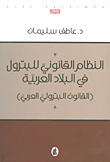
Other books for "Atef Suleiman"



If there is a problem with the book, please report through one of the following links:
Report the book or by Contact us
E-books are complementary and supportive of paper books and never cancel it. With the click of a button, the e-book reaches anyone, anywhere in the world.
E-books may weaken your eyesight due to the glare of the screen. Support the book publisher by purchasing his original paper book. If you can access it and get it, do not hesitate to buy it.
Publish your book now for free