Clinical Anatomy By Systems

Account upgrade
The download is free, but we offer some paid services. Support us by subscribing
Delete ads and speed up browsing the library.
The download starts with the click of a button without waiting for the book to be ready.
No limits for download times.
You can upload unlimited books in the library.
Enable readers to download your books without waiting.
Delete ads on the books that you publish.
No problems with download links for your uploaded books.
Book Clinical Anatomy By Systems
Copyright reserved
The book cannot be previewed or downloaded in order to preserve the copyright of the author and publishing house
Not available digitally or on paper through the Noor Library, it is for rating and review

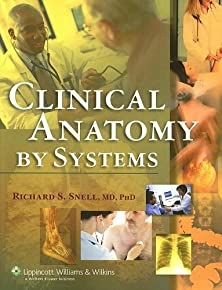

Clinical Anatomy By Systems
| Author: | Richard S. Snell MD PhD |
| Category: | Clinical Psychology [Edit] |
| Language: | English |
| Publisher: | Lippincott Williams & Wilkins |
| ISBN: | 781791642 |
| Rank: | 158,968 No 1 most popular |
| Short link: | Copy |
| More books like this book | |
Book Description
Clinical Anatomy by Systems is the first anatomy textbook featuring a systems-based approach geared to medical school programs that have adopted an integrated, organ system-based curriculum. Based on Dr. Snell's established and successful gross anatomy textbook, Clinical Anatomy , this book uses most of the schematic illustrations and many of the same pedagogical features to approach the study of anatomy from a systems-based orientation. Basic anatomy sections supply basic information for diagnostic and treatment purposes and for performing medical procedures. Numerous imaging examples and labeled photographs of cross-sectional anatomy are included to help students think in terms of three-dimensional anatomy. Surface anatomy sections provide surface landmarks of important anatomic structures located beneath the skin and often bypassed by practicing clinicians. Physiologic and embryologic notes are interspersed with basic anatomical material to point out the functional significance of the material and provide developmental anatomy information that is essential for the understanding of the structure and relationships of organs. Congenital anomalies that may affect the respective organs are listed after these notes. Chapter opening outlines highlight the important concepts students should take away from each chapter. End-of-chapter review questions and answers provide valuable assistance in board and course review. A free bound-in CD-ROM contains clinical notes, information on congenital anomalies, radiographic anatomy, and clinical problem-solving exercises. The clinical notes emphasize the structures that the physician will encounter when making a diagnosis and treating a patient. They also provide the anatomic knowledge necessary to understand many procedures and techniques and note the anatomic "pitfalls" commonly encountered. The problem-solving sections consist of case histories followed by multiple-choice questions and answers with rationales.

Copyright reserved
The book cannot be previewed or downloaded in order to preserve the copyright of the author and publishing house
Not available digitally or on paper through the Noor Library, it is for rating and review
Share the book :

Book Quotes "Clinical Anatomy By Systems"

Other books like "Clinical Anatomy By Systems"










Other books for "Richard S. Snell MD PhD"

If there is a problem with the book, please report through one of the following links:
Report the book or by Contact us
E-books are complementary and supportive of paper books and never cancel it. With the click of a button, the e-book reaches anyone, anywhere in the world.
E-books may weaken your eyesight due to the glare of the screen. Support the book publisher by purchasing his original paper book. If you can access it and get it, do not hesitate to buy it.
Publish your book now for free