books tha false trinity
If you do not find what you're looking for, you can use more accurate words.

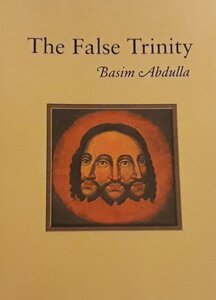
Tha false trinity (Book)
This book is critical study of the doctrine of the trinity, explores the false of this doctrine. Among Greek philosophers, arguments for the existence of multiple gods were part of natural theology which was considered superior to mythic and civic theology. Similarly, in ancient Egypt, triads of gods were worshipped, believed to incarnate, and connected to myth. Existence of triad gods worshipped incarnated and had connection with myths. The book explores the relationship between arguments in natural theology, metaphysics and the biblical understanding of God. In the pagan Celtic world, divinity was often represented as three identical figures, or as one figure with three identical heads. In Greek philosophy the concepts of three hypostases and ousia ”substance” later became the accepted terms used by the Eastern Church to express the Trinity. 1- Father, son and Holy Spirit are often presented as three separate gods combined into one god. Instead of one God existing in three persons. 2- The Holy Spirit is seen as an impersonal force, not God himself. 3- Jesus is created by the Father, not eternally God like the Father. Why " False " ? From this perspective, the biblical picture is that the Father alone view the biblical picture is the Father alone is the true God. Jesus is God's son /Messiah, and the Holy Spirit is God's active force. This is not three co-equal persons in one God. Plato and Neo-Platonism spoke of “the one “ and ” the Logos " meaning “the word”. John 1:1 used "Logos" in references to Jesus. Therefore, Greek philosophy shaped how the Trinity was described, not where the belief originated.