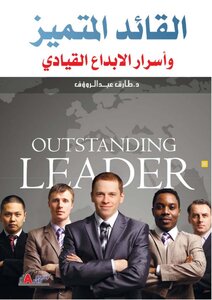
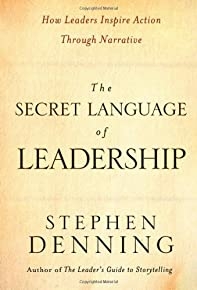
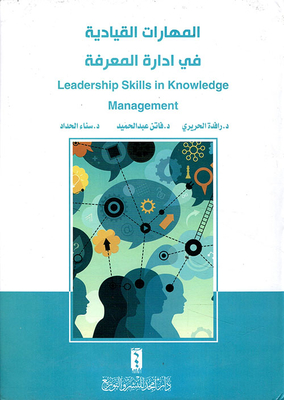
books communication and leadership mahatma gandhi as a great leader
If you do not find what you're looking for, you can use more accurate words.

Communication and Leadership “Mahatma Gandhi As A Great leader “ (Book)
Communication is widely recognized as one of the most pervasive and influential concepts in contemporary culture. It extends far beyond the mere transmission of information to encompass a broad spectrum of experiences, practices, technologies, and social interactions. From traditional media such as newspapers, radio, and television to advanced digital platforms and mobile communication technologies, communication constitutes a complex and integrated system through which meaning is produced, circulated, negotiated, and interpreted. Within this system, professionals in journalism, advertising, public relations, and media production play a pivotal role in shaping messages and influencing the dynamics of public discourse.
At its conceptual core, communication is grounded in the notion of “commonness,” derived from the Latin term communis, meaning shared or mutual. In this sense, communication can be understood as the process through which information, ideas, attitudes, and meanings are exchanged among individuals in order to achieve mutual understanding. This process inherently involves two essential components: a sender, who encodes and transmits a message, and a receiver, who decodes and interprets it. Effective communication, therefore, extends beyond mere transmission to include the successful construction and interpretation of meaning within a shared symbolic framework.
Beyond its functional dimension, communication constitutes a deeply social and cultural phenomenon that reflects and sustains human connectedness. Through communication, individuals engage in dialogue, build relationships, and participate in collective experiences across diverse contexts, whether in moments of celebration or periods of crisis and mourning. Accordingly, communication should be understood not simply as a process or activity, but as a form of social and cultural “togetherness” that underpins the fabric of human interaction.
In organizational and media contexts, communication assumes a distinctly strategic and purposive character. Messages are deliberately designed to achieve specific objectives, such as informing, persuading, educating, motivating, or entertaining audiences. This intentionality distinguishes professional and managerial communication from spontaneous everyday interaction, positioning it as a critical instrument for shaping perceptions, influencing public opinion, and enhancing institutional effectiveness in increasingly complex media environments.