Critical Data Studies CDS - Algorithmic Bias and Discrimination

Account upgrade
The download is free, but we offer some paid services. Support us by subscribing
Delete ads and speed up browsing the library.
The download starts with the click of a button without waiting for the book to be ready.
No limits for download times.
You can upload unlimited books in the library.
Enable readers to download your books without waiting.
Delete ads on the books that you publish.
No problems with download links for your uploaded books.
Book Review Critical Data Studies Cds Algorithmic Bias And Discrimination
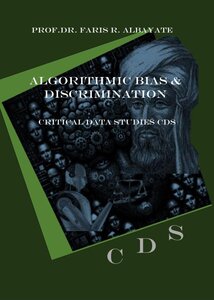

Critical Data Studies CDS - Algorithmic Bias And Discrimination
| Author: | الأستاذ الدكتور فارس رشيد البياتي |
| Category: | Postgraduate Research [Edit] |
| Language: | English |
| Pages: | 345 |
| Rank: | 491,782 No 1 most popular |
| Short link: | Copy |
| More books like this book | |
Book Description
In the digital age, data has become a powerful currency shaping our lives in ways we might not always recognize. From the ads we see online to the news stories that pop up in our feeds, algorithms fueled by vast amounts of data are constantly making decisions that affect us. But behind the scenes, there's a growing awareness of a troubling issue: algorithmic bias and discrimination.
Welcome to our book on Critical Data Studies (CDS) and algorithmic bias. In these pages, we delve into the complex interplay between data, technology, and society, exploring how biases embedded within algorithms can perpetuate discrimination and inequality.
In our interconnected world, data is everywhere. It's generated by our online interactions, tracked by sensors in our smartphones, and collected by companies and governments. This wealth of data has fueled the rise of machine learning and artificial intelligence (AI), promising to revolutionize everything from healthcare to transportation.
But as we entrust more decisions to algorithms, we must confront a stark reality: these systems are not neutral. They reflect the biases and prejudices inherent in the data they're trained on, leading to discriminatory outcomes that can disproportionately impact marginalized communities.
In this book, we embark on a journey to understand the roots of algorithmic bias and discrimination, exploring the social, political, and ethical dimensions of data-driven technologies. We examine case studies from various domains, from criminal justice to hiring practices, revealing how algorithmic decision-making can perpetuate systemic inequalities.
But we don't stop there. We also explore strategies for addressing algorithmic bias, from technical approaches like fairness-aware algorithms to policy solutions such as transparency and accountability measures. We highlight the importance of interdisciplinary collaboration, bringing together researchers, policymakers, and activists to tackle this pressing issue from multiple angles.
Share the book :


Other books like "Critical Data Studies CDS - Algorithmic Bias and Discrimination"










Other books for "الأستاذ الدكتور فارس رشيد البياتي"





If there is a problem with the book, please report through one of the following links:
Report the book or by Contact us
E-books are complementary and supportive of paper books and never cancel it. With the click of a button, the e-book reaches anyone, anywhere in the world.
E-books may weaken your eyesight due to the glare of the screen. Support the book publisher by purchasing his original paper book. If you can access it and get it, do not hesitate to buy it.
Publish your book now for free