Les Remedes De Justice Privee A Linexecution Du Contrat Etude Comparative

Account upgrade
The download is free, but we offer some paid services. Support us by subscribing
Delete ads and speed up browsing the library.
The download starts with the click of a button without waiting for the book to be ready.
No limits for download times.
You can upload unlimited books in the library.
Enable readers to download your books without waiting.
Delete ads on the books that you publish.
No problems with download links for your uploaded books.
Book Les Remedes De Justice Privee A Linexecution Du Contrat Etude Comparative
Copyright reserved
The book cannot be previewed or downloaded in order to preserve the copyright of the author and publishing house
Not available digitally or on paper through the Noor Library, it is for rating and review

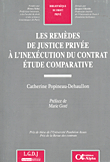

Les Remedes De Justice Privee A Linexecution Du Contrat Etude Comparative
| Author: | Catherine Popineau-Dehaullon |
| Category: | Comparative Literature Translated [Edit] |
| Language: | English |
| Publisher: | المؤسسة الجامعية للدراسات والنشر |
| ISBN: | 9782275033372 |
| Release Date: | 01 Jan 2009 |
| Pages: | 689 |
| Rank: | 726,267 No 1 most popular |
| Short link: | Copy |
| More books like this book | |
Book Description
Le juge est souvent considéré comme le seul à pouvoir remédier efficacement à l’inexécution du débiteur afin de protéger la force obligatoire du contrat. Les actes de justice privée par lesquels le créancier peut remédier unilatéralement à la défallance de son partenaire sont cantonnés, soit à des mécanismes d’incitation à l’exécution, soit à de simples anticipations de la décision du juge, en cas d’urgence ou de faute grave.
Le droit compare permet de renouveler cette conception classique de la justice privée contractuelle car il montre que le créancier peut parer efficacement l’inexécution du débiteur, sans que la force obligatoire du contrat soit nécessairement mise à gérer seules l’inexécution du contrat.
Cette étude démontre que les remèdes de justice privée sont légitimes face à l’inexécution du débiteur. Ills donnent le droit au créancier d’inciter son partenaire à l’exécution, notamment grâce à des instruments d’adaptation, mais ils lui accordant aussi le droit de rompre unilatéralement le contrat lorsqu’elle artère le lien contractuel. Les remèdes de justice privée peuvent ainsi être considérés comme une alternative aux remèdes judiciaires.
Pour cette raison, ils ont vocation à s’appliquer de manière générale, en concurrence avec les remèdes judiciaires, selon les mêmes conditions, déplacées des mains du juge à celles du créancier. Leurs effects peuvent, certes, être remis en cause par l’intervention judiciaire à posteriori mais seulement lorsque le créancier les à abusivement mis en oeuvre. Leurs avantages et leurs limites conduisent ainsi à dédramatiser le recours à la justice privée en matière contractuelle.

Copyright reserved
The book cannot be previewed or downloaded in order to preserve the copyright of the author and publishing house
Not available digitally or on paper through the Noor Library, it is for rating and review
Share the book :
Book Review "Les Remedes De Justice Privee A Linexecution Du Contrat Etude Comparative"

Book Quotes "Les Remedes De Justice Privee A Linexecution Du Contrat Etude Comparative"

Other books like "Les Remedes De Justice Privee A Linexecution Du Contrat Etude Comparative"










If there is a problem with the book, please report through one of the following links:
Report the book or by Contact us
E-books are complementary and supportive of paper books and never cancel it. With the click of a button, the e-book reaches anyone, anywhere in the world.
E-books may weaken your eyesight due to the glare of the screen. Support the book publisher by purchasing his original paper book. If you can access it and get it, do not hesitate to buy it.
Publish your book now for free