books pharmacological principles in the screening and bioassay of new drugs
If you do not find what you're looking for, you can use more accurate words.
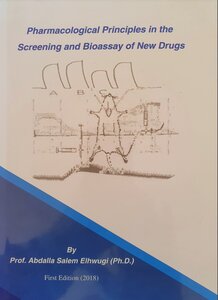
Pharmacological Principles in the Screening and Bioassay of New Drugs (Book)
Developing a new drug is a complex process that can take 10-15 years, costs in excess of one billion US dollars, and involves many branches of the pharmaceutical sciences. Any new drug developed for clinical use passes through two different phases, the pre-clinical phase and the clinical phase. The preclinical phase takes from 3-5 years. The main goals of the preclinical studies are to determine the efficacy of the drug in the process of drug screening, its potency in the process of bioassay and finally its safety by studying its acute and chronic toxicities in animals.
The main goal of this book is to provide the student with basic pharmacological knowledge in the preclinical processes involving the search for a new drug molecule. This goal is achieved through the following objectives that will provide the students with:
1. The knowledge of understanding the concepts of screening and bioassay of new molecules for their potential pharmacological effects.
2. The knowledge of models used in the screening and bioassay of different classes of drugs according to their pharmacological groups.
3. The ability (skills) to think, to identify and evaluate scientifically the nature of a new drug according to its actions on different biological models.
Selecting models to identify the pharmacological actions of a lead compound (known in drug screening as assay development process) is the main core of this book and it will be discussed in some details. However, it has to be acknowledged that no attempt has been made to cover exhaustively all models used in the screening of new drugs.
The first two chapters of this book deals with the general principles in the process of drug screening and their bioassay. The rest of the chapters deals with models used for the screening and bioassay of drugs according to their pharmacological group. An attempt has been made to reproduce the graphic illustrations prepared in our own laboratory. However, some were drawn hypothetically to emphasis relevant points in the text. The different chapters cover a brief theoretical background followed by the experimental screening programs.
Important sources of the information used in the preparation of this text are available at the end of the book. However, it has to be acknowledged that many of the information mentioned in this book became so engrossed and integrated into the memory of the author that tracing them to their original sources becomes impossible. Therefore, I apologize to, and acknowledge all, who contributed to the scientific information mentioned in this book without citing their names.
The book is ended with a study questions chapter, which will help the student to self-access him/her self about the subject.