Tragic Sense Of Life

Account upgrade
The download is free, but we offer some paid services. Support us by subscribing
Delete ads and speed up browsing the library.
The download starts with the click of a button without waiting for the book to be ready.
No limits for download times.
You can upload unlimited books in the library.
Enable readers to download your books without waiting.
Delete ads on the books that you publish.
No problems with download links for your uploaded books.
Download Book Tragic Sense Of Life Pdf
This book is in public domain
This book was published with a Creative Commons license with a mention the author and source



Tragic Sense Of Life
| Author: | Miguel De Unamuno |
| Category: | Religious Education [Edit] |
| Language: | English |
| Publisher: | Project Gutenberg |
| Release Date: | 08 Jan 2005 |
| Pages: | 331 |
| File Size: | 1.85 MB |
| Extension: | |
| Creation Date: | 20 Jul 2022 |
| Rank: | 327,643 No 1 most popular |
| Short link: | Copy |
| More books like this book | |

Miguel De Unamuno
The Author Book Tragic Sense Of Life and the author of 14 another books.
Miguel de Unamuno was born in the medieval centre of Bilbao, Basque Country, the son of Félix de Unamuno and Salomé Jugo. As a young man, he was interested in the Basque language, and competed for a teaching position in the Instituto de Bilbao, against Sabino Arana. The contest was finally won by the Basque scholar Resurrección María de Azcue.
Unamuno worked in all major genres: the essay, the nove Miguel de Unamuno was born in the medieval centre of Bilbao, Basque Country, the son of Félix de Unamuno and Salomé Jugo. As a young man, he was interested in the Basque language, and competed for a teaching position in the Instituto de Bilbao, against Sabino Arana. The contest was finally won by the Basque scholar Resurrección María de Azcue.
Unamuno worked in all major genres: the essay, the novel, poetry and theatre, and, as a modernist, contributed greatly to dissolving the boundaries between genres. There is some debate as to whether Unamuno was in fact a member of the Generation of '98 (an ex post facto literary group of Spanish intellectuals and philosophers that was the creation of José Martínez Ruiz — a group that includes Antonio Machado, Azorín, Pío Baroja, Ramón del Valle-Inclán, Ramiro de Maeztu and Ángel Ganivet, among others).
In addition to his writing, Unamuno played an important role in the intellectual life of Spain. He served as rector of the University of Salamanca for two periods: from 1900 to 1924 and 1930 to 1936, during a time of great social and political upheaval. Unamuno was removed from his post by the government in 1924, to the protest of other Spanish intellectuals. He lived in exile until 1930, first banned to Fuerteventura (Canary Islands), from where he escaped to France. Unamuno returned after the fall of General Primo de Rivera's dictatorship and took up his rectorship again. It is said in Salamanca that the day he returned to the University, Unamuno began his lecture by saying "As we were saying yesterday, ", as Fray Luis de León had done in the same place four centuries before, as though he had not been absent at all. After the fall of Rivera's dictatorship, Spain embarked on its second Republic, a short-lived attempt by the people of Spain to take democratic control of their own country. He was a candidate for the small intellectual party Al Servicio de la República.
The burgeoning Republic was eventually squashed when a military coup headed by General Francisco Franco caused the outbreak of the Spanish Civil War. Having begun his literary career as an internationalist, Unamuno gradually became a convinced Spanish nationalist, feeling that Spain's essential qualities would be destroyed if influenced too much by outside forces. Thus for a brief period he actually welcomed Franco's revolt as necessary to rescue Spain from radical influence. However, the harsh tactics employed by the Francoists in the struggle against their republican opponents caused him to oppose both the Republic and Franco.
As a result of his opposition to Franco, Unamuno was effectively removed for a second time from his University post. Also, in 1936 Unamuno had a brief public quarrel with the Nationalist general Millán Astray at the University in which he denounced both Astray and elements of the Francoist movement. He called the battle cry of the rightist Falange movement—"Long live death!"—repellent and suggested Astray wanted to see Spain crippled. One historian notes that his address was a "remarkable act of moral courage" and that he risked being lynched on the spot. Shortly afterwards, he was placed under house arrest, where he remained, broken-hearted, until his death ten weeks later.[1]
Book Description
Author: Unamuno, Miguel de, 1864-1936
Translator: Flitch, J. E. Crawford (John Ernest Crawford), 1881-1946
Uniform Title: Del sentimiento trágico de la vida. English
Title: Tragic Sense Of Life
Language: English
LoC Class: B: Philosophy, Psychology, Religion
Subject: Faith and reason -- Christianity
Subject: Immortality -- Christianity
Subject: Tragic, The -- Religious aspects -- Christianity
Release Date: Jan 8, 2005
Copyright Status: Public domain in the USA.
: Project Gutenberg books are always free!


Share the book :
Book Review "Tragic Sense Of Life"

Book Quotes "Tragic Sense Of Life"

Other books like "Tragic Sense Of Life"
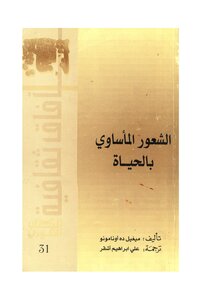








Other books for "Miguel De Unamuno"


If there is a problem with the book, please report through one of the following links:
Report the book or by Contact us
E-books are complementary and supportive of paper books and never cancel it. With the click of a button, the e-book reaches anyone, anywhere in the world.
E-books may weaken your eyesight due to the glare of the screen. Support the book publisher by purchasing his original paper book. If you can access it and get it, do not hesitate to buy it.
Publish your book now for free