HUMAN BEINGS RIGHTS AND DUTIES

Account upgrade
The download is free, but we offer some paid services. Support us by subscribing
Delete ads and speed up browsing the library.
The download starts with the click of a button without waiting for the book to be ready.
No limits for download times.
You can upload unlimited books in the library.
Enable readers to download your books without waiting.
Delete ads on the books that you publish.
No problems with download links for your uploaded books.
Book Human Beings Rights And Duties
Copyright reserved
The book cannot be previewed or downloaded in order to preserve the copyright of the author and publishing house
Not available digitally or on paper through the Noor Library, it is for rating and review



HUMAN BEINGS RIGHTS AND DUTIES
| Author: | Ezzat El Sayed Sayed Ahmed Hassan |
| Category: | Egyptian Law [Edit] |
| Language: | English |
| Rank: | 475,146 No 1 most popular |
| Short link: | Copy |
| More books like this book | |
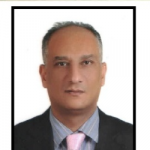
Ezzat El Sayed
مدير شؤون قانونية - باحث فى تطوير المنظمات الدولية وحقوق الإنسان
The Publisher and the author
Book HUMAN BEINGS RIGHTS AND DUTIES .
باحث فى تطوير المنظمات الدولية وحقوق الإنسان
باحث فى الشؤون المحليةوالإقليميةوالدولية
Book Description
General Framework of The Research
Introduction
When discussing human rights, it must be known that these rights are not modern, they are as ancient as man’s creation, the talk about human rights has spread at the present time in various parts of the earth, in north, south, east and west, and legislation has multiplied with its differences, whether international, regional or local legislation, in addition to the various books, articles and reports on human rights published, however, a very few have noticed that achieving human rights and maintaining them at the appropriate and desired level requires discussion, addressing, narrating and enacting some legal legislation on human duties and obligations. Without defining and applying human duties and obligations and without observing their implementation, human rights will not be achieved.
The United Nations is considered the first sponsor and the main umbrella for human rights through a subsidiary body, which is the High Commissioner for Human Rights, which has its own charter, principles and objectives, all of which are represented in maintaining and applying human rights in all member states of the United Nations to achieve the goals concerned in this regard.
Although the Office of the High Commissioner for Human Rights of the United Nations works hard and in dedication to achieve the desired goals, it collides with the tangible reality that lacks those hopes to achieve the goals stipulated in the official Universal Declaration of Human Rights issued by the United Nations. It is worth noting that, in addition to the Office of the High Commissioner for Human Rights, there are many different international, regional and local organizations, whether governmental or non-governmental, and there are also many individuals / natural persons who are not legal persons, all of whom work individually and collectively to spread true awareness, believe in it, and endorse it to achieve human rights in more than one country around the world.
1.1 Research question
The research discusses a topic of great importance to every human being, namely, human rights and duties. It discusses the definition of human rights in the way that every human being hopes to see on the ground, achieve and witness those rights in order to elevate and support humanity, which in the end constitutes fruitful and desired successes in the field of human rights for every individual, group and state.
In order to achieve these goals, the research also discusses the question of highlighting the duties and obligations of man, which is a paramount necessity to achieve and maintain human rights in the desired manner, because in the case being content with the application of those legislations, laws, texts and current rules in force and recognized internationally, regionally or locally at the present time, it is insufficient to achieve these goals, and if they continue to be applied with the same approach, these goals will not see any way to light, and will remain in the dark and will remain mere goals written in international, regional and local legislation and covenants regarding human rights, which we find in our practical reality, and perhaps shedding light on human duties as an absolute necessity to achieve and maintain human rights from the researcher's point of view, is the best and fastest way to achieve and maintain human rights, which is what the researcher seeks to achieve in the research subject of writing, and on the ground in reality in north, south, east and west by publishing his vision and recommendations in the current research through his presentation and observing some problematic issues in the field Human rights, discussing these observed problematic issues, and proposing solutions in its regard.
2.1 The importance and objectives of the research
The study relied on the sequence of events and their theoretical and scientific importance. The current study aims to identify the following:
- This study seeks to identify international, regional and local legislation in the field of human rights, and to get acquainted with some human rights organizations.
- This study seeks to identify the history and concept of human rights.
- Knowing the sources of human rights, and knowing the challenges of human rights.
- This study seeks to present the visions and proposals presented by the researcher at the end of the research / study in accordance with the standards and rules of jurists of international humanitarian law, as well as presenting the most famous opinions of significant researchers, activists and human rights defenders, and finally presenting and highlighting the duties and obligations of man to achieve and activate his rights in reality.
- The study presents the most appropriate vision represented in the vision of the researcher / writer by presenting some visions and proposals in order to achieve and maintain human rights in the best way in order to reach the desired goals and increase their effectiveness.
3.1 Research Methodology
The research was subjected to the descriptive and documentary approach, as it is the most suitable for studying the subject as a phenomenon of the human sciences, and due to the existence of sufficient prior information on the subject, as the method is concerned with the careful and accurate collection of available records and documents related to the subject/question of the research, and then a comprehensive analysis of its contents in order to conclude what is related to the research problem from evidences and proofs to answer the research questions.
The researcher relied on a group of important sources in his study, including primary sources and secondary sources, and this will be followed by a brief explanation of these sources in the following order:
Primary sources:
It contains original data and information as close as possible to reality, and it often reflects the truth and is rarely tainted by distortion. It can also be said that the primary sources are the ones that reach us without going through the stages of interpretation, change, deletion, and addition. Among the sources that the researcher relied on are also scientific research, manuscripts, and secondary reports and statistics issued by official institutions, historical documents, and published and unpublished notes.
Secondary sources:
The researcher relied on authored books, periodical articles, and other sources quoted from other primary and non-primary sources, as well as the official website of the United Nations. The field of study will be human rights and duties, with an overview of some regional, international, and local organizations interested in the field of human rights.
4.1 Research limitations
The aim of study is defined by the following limits:
- Objective limits: A Brief Study of Human Rights and Duties.
- Spatial limit: the planet Earth on which God Almighty has left man as his successor.
- Temporal limit: from the early ages until the year of issuance of the research / book.

Copyright reserved
The book cannot be previewed or downloaded in order to preserve the copyright of the author and publishing house
Not available digitally or on paper through the Noor Library, it is for rating and review
Share the book :
Book Review "HUMAN BEINGS RIGHTS AND DUTIES"

Book Quotes "HUMAN BEINGS RIGHTS AND DUTIES"

Other books like "HUMAN BEINGS RIGHTS AND DUTIES"







Other books for "Ezzat El Sayed Sayed Ahmed Hassan"



If there is a problem with the book, please report through one of the following links:
Report the book or by Contact us
E-books are complementary and supportive of paper books and never cancel it. With the click of a button, the e-book reaches anyone, anywhere in the world.
E-books may weaken your eyesight due to the glare of the screen. Support the book publisher by purchasing his original paper book. If you can access it and get it, do not hesitate to buy it.
Publish your book now for free