Beginnings: Intention And Method

Account upgrade
The download is free, but we offer some paid services. Support us by subscribing
Delete ads and speed up browsing the library.
The download starts with the click of a button without waiting for the book to be ready.
No limits for download times.
You can upload unlimited books in the library.
Enable readers to download your books without waiting.
Delete ads on the books that you publish.
No problems with download links for your uploaded books.
Book Beginnings Intention And Method
Copyright reserved
The book cannot be previewed or downloaded in order to preserve the copyright of the author and publishing house
Not available digitally or on paper through the Noor Library, it is for rating and review



Beginnings: Intention And Method
| Author: | Edward W. Said |
| Category: | Ethics And Ethics [Edit] |
| Language: | English |
| Publisher: | Columbia University Press |
| ISBN: | 23105937 |
| Release Date: | 01 Jan 1985 |
| Rank: | 364,126 No 1 most popular |
| Short link: | Copy |
| More books like this book | |

Edward W. Said
The Author Book Beginnings: Intention And Method and the author of 28 another books.
(Arabic Profile إدوارد سعيد)
Edward Wadie Said was a professor of literature at Columbia University, a public intellectual, and a founder of the academic field of postcolonial studies. A Palestinian American born in Mandatory Palestine, he was a citizen of the United States by way of his father, a U.S. Army veteran.
Educated in the Western canon, at British and American schools, Said applied his ed (Arabic Profile إدوارد سعيد)
Edward Wadie Said was a professor of literature at Columbia University, a public intellectual, and a founder of the academic field of postcolonial studies. A Palestinian American born in Mandatory Palestine, he was a citizen of the United States by way of his father, a U.S. Army veteran.
Educated in the Western canon, at British and American schools, Said applied his education and bi-cultural perspective to illuminating the gaps of cultural and political understanding between the Western world and the Eastern world, especially about the Israeli-Palestinian conflict in the Middle East; his principal influences were Antonio Gramsci, Frantz Fanon, Aimé Césaire, Michel Foucault, and Theodor Adorno.
As a cultural critic, Said is known for the book Orientalism (1978), a critique of the cultural representations that are the bases of Orientalism—how the Western world perceives the Orient. Said’s model of textual analysis transformed the academic discourse of researchers in literary theory, literary criticism, and Middle-Eastern studies—how academics examine, describe, and define the cultures being studied. As a foundational text, Orientalism was controversial among the scholars of Oriental Studies, philosophy, and literature.
As a public intellectual, Said was a controversial member of the Palestinian National Council, because he publicly criticized Israel and the Arab countries, especially the political and cultural policies of Muslim régimes who acted against the national interests of their peoples. Said advocated the establishment of a Palestinian state to ensure equal political and human rights for the Palestinians in Israel, including the right of return to the homeland. He defined his oppositional relation with the status quo as the remit of the public intellectual who has “to sift, to judge, to criticize, to choose, so that choice and agency return to the individual” man and woman.
In 1999, with his friend Daniel Barenboim, Said co-founded the West–Eastern Divan Orchestra, based in Seville, which comprises young Israeli, Palestinian, and Arab musicians. Besides being an academic, Said also was an accomplished pianist, and, with Barenboim, co-authored the book Parallels and Paradoxes: Explorations in Music and Society (2002), a compilation of their conversations about music. Edward Said died of leukemia on 25 September 2003.
Book Description
A "beginning," especially as embodied in much modern thought, is its own method, Edward Said argues in this classic treatise on the role of the intellectual and the goal of criticism. Distinguishing between "origin," which is divine, mythical, and privileged, and "beginning," which is secular and humanly produced, Said traces the ramifications and diverse understandings of the concept of beginning through history. A beginning is a first step in the intentional production of meaning and the production of difference from preexisting traditions. It authorizes subsequent texts -- it both enables them and limits what is acceptable. Drawing on the insights of Vico, Valery, Nietzsche, Saussure, Lévi-Strauss, Husserl, and Foucault, Said recognizes the novel as the major attempt in Western literary culture to give beginnings an authorizing function in experience, art, and knowledge. Scholarship should see itself as a beginning -- as a uniting of theory and practice. Said's insistence on a criticism that is humane and socially responsible is what makes Beginnings a book about much more than writing: it is about imagination and action as well as the constraints on freedom and invention that come from human intention and the method of its fulfillment.

Copyright reserved
The book cannot be previewed or downloaded in order to preserve the copyright of the author and publishing house
Not available digitally or on paper through the Noor Library, it is for rating and review
Share the book :
Book Review "Beginnings: Intention And Method"

Book Quotes "Beginnings: Intention And Method"

Other books like "Beginnings: Intention And Method"




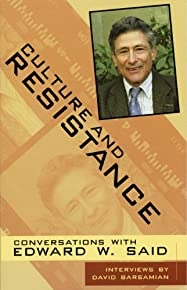
Other books for "Edward W. Said"



If there is a problem with the book, please report through one of the following links:
Report the book or by Contact us
E-books are complementary and supportive of paper books and never cancel it. With the click of a button, the e-book reaches anyone, anywhere in the world.
E-books may weaken your eyesight due to the glare of the screen. Support the book publisher by purchasing his original paper book. If you can access it and get it, do not hesitate to buy it.
Publish your book now for free