Iran, Iraq And Turkey: Strategic Impact On Gulf Security

Account upgrade
The download is free, but we offer some paid services. Support us by subscribing
Delete ads and speed up browsing the library.
The download starts with the click of a button without waiting for the book to be ready.
No limits for download times.
You can upload unlimited books in the library.
Enable readers to download your books without waiting.
Delete ads on the books that you publish.
No problems with download links for your uploaded books.
Book Iran Iraq And Turkey Strategic Impact On Gulf Security
Copyright reserved
The book cannot be previewed or downloaded in order to preserve the copyright of the author and publishing house
Not available digitally or on paper through the Noor Library, it is for rating and review

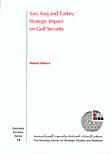

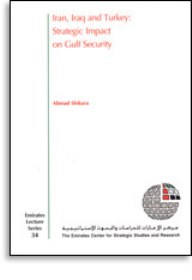
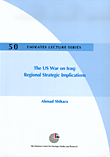
Iran, Iraq And Turkey: Strategic Impact On Gulf Security
| Author: | Ahmad Shikara |
| Category: | Iraq War [Edit] |
| Language: | English |
| Publisher: | مركز الإمارات للدراسات والبحوث السلسلة: Emirates Lecture |
| ISBN: | 9948002288 |
| Release Date: | 01 Jan 2001 |
| Pages: | 36 |
| Rank: | 772,815 No 1 most popular |
| Short link: | Copy |
| More books like this book | |
Book Description
Iran, Iraq and Turkey are key players in Middle East and Gulf security. Their individual strategies in this respect are affected by the dynamics of their internal politics and by the changeable balance of power between them. This has important implications for stability and peace in the Middle East in general, and the Gulf in particular. Since the Gulf has enormous strategic energy implications for the broader international community, stability in the Middle East is of global importance.
A brief overview of the internal situation of the three countries reveals that they are strongly, albeit not entirely, focused on internal sources of threat. Their domestic security/political tensions are exacerbated, particularly in the case of Iran and Iraq, by severe economic constraints. In addition to serious political and economic mismanagement, Iran and Iraq have both incurred vast and costly damage, in material and human terms, as a result of the Iran-Iraq war of 1980-1988, and, in the case of Iraq, two grave Gulf wars lasting over a decade. With regard to Turkey, which boast the seventeenth largest economy in the world, internal security is less vulnerable to economic factors than to turbulent, and at times violent, political developments. All three countries share the problem of Kurdish nationalism on their territory- a common threat that does not succeed in bridging the distance between them.
On the level of inter-state relations, Iran and Iraq have not fully recovered from the adversity of their long encounter in the first Gulf war. Furthermore, though Iran stayed neutral in the second Gulf war, Iraq-Iran relations continued to suffer from a tendency of mistrust, leading at times to periods of tension. The cross-border incursions by armed militias from the territory of the one into that of the other have exacerbated this tension. As far as Turkey is concerned, its cross-border strikes at militant Kurds in Iraq have also ensured that relations with Iraq remain precariously balanced. The long costly Turkish war (1984-1999) to dismantle the Kurdistan Workers Party (PKK) is still far from being resolved and continues to have regional spillover effects.

Copyright reserved
The book cannot be previewed or downloaded in order to preserve the copyright of the author and publishing house
Not available digitally or on paper through the Noor Library, it is for rating and review
Share the book :
Book Review "Iran, Iraq And Turkey: Strategic Impact On Gulf Security"

Book Quotes "Iran, Iraq And Turkey: Strategic Impact On Gulf Security"

Other books like "Iran, Iraq And Turkey: Strategic Impact On Gulf Security"






Other books for "Ahmad Shikara"


If there is a problem with the book, please report through one of the following links:
Report the book or by Contact us
E-books are complementary and supportive of paper books and never cancel it. With the click of a button, the e-book reaches anyone, anywhere in the world.
E-books may weaken your eyesight due to the glare of the screen. Support the book publisher by purchasing his original paper book. If you can access it and get it, do not hesitate to buy it.
Publish your book now for free