The Shiite Movement In Iraq

Account upgrade
The download is free, but we offer some paid services. Support us by subscribing
Delete ads and speed up browsing the library.
The download starts with the click of a button without waiting for the book to be ready.
No limits for download times.
You can upload unlimited books in the library.
Enable readers to download your books without waiting.
Delete ads on the books that you publish.
No problems with download links for your uploaded books.
Book The Shiite Movement In Iraq
Copyright reserved
The book cannot be previewed or downloaded in order to preserve the copyright of the author and publishing house
Not available digitally or on paper through the Noor Library, it is for rating and review

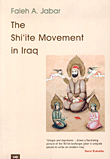

The Shiite Movement In Iraq
| Author: | Faleh A. Jadar |
| Category: | Inventory Management And Product Movement [Edit] |
| Language: | English |
| Publisher: | دار الساقي للطباعة والنشر |
| ISBN: | 863563953 |
| Release Date: | 01 Jun 2003 |
| Pages: | 391 |
| Rank: | 379,301 No 1 most popular |
| Short link: | Copy |
| More books like this book | |
Book Description
Long oppressed and without any real power despite their majority status, the Shi'is of Iraq have for decades seen their leaders assassinated or exiled and their rituals debased. But they have always constituted a force to be reckoned with, and will play a key role in the reshaping of Iraq. This book is a thorough investigation by one of the far most experts on the region into the origins and development of Iraqi shi'ite political activism from the nineteenth century to the present day.
Tracing the course of the shi'is quest for self representation, the book shows how their political formation has historically intersected with a variety of religious and geopolitical forces, from Sufism, Wahhabism, the British Mandate and the Faisal monarchy to pan-Arabism and Islamic Fundamentalism. As the newly created, oli-rich state of Iraq began to prosper, the shi'is had to contend with a series of modern-era strongman regimes culminating in the most violent of them all, the Ba'th rule under Saddam Hussein. A new generation of Shi'is attempted to adopt the structures of modernity while holding fast to the principles of Islamic orthodoxy. The various social movements spearheaded by shi'I religious leaders, the 'ulama, are examined in depth along with their power bases, and placed within the context of shi'ite community dynamics as a whole with a special study of the Arba'in pilgrimage, one of the world's holy processions.
Almost alone amongst observers of the region, Faleh A. Jabar greatly enlarges our understanding of shi'ism in its social, cultural, political and economic dimensions, and underscores the fact that Iraq's Shi'is have never constituted the homogeneous group that political analysts have too often insisted upon.
Timely and exhaustively researched, this book offers a perspective on the complexities of the Iraqi situation before and after the fall of Saddam Hussein, and is a valuable resource for understanding the active role of the shi'is in the country's future.

Copyright reserved
The book cannot be previewed or downloaded in order to preserve the copyright of the author and publishing house
Not available digitally or on paper through the Noor Library, it is for rating and review
Share the book :
Book Review "The Shiite Movement In Iraq"

Book Quotes "The Shiite Movement In Iraq"

Other books like "The Shiite Movement In Iraq"










If there is a problem with the book, please report through one of the following links:
Report the book or by Contact us
E-books are complementary and supportive of paper books and never cancel it. With the click of a button, the e-book reaches anyone, anywhere in the world.
E-books may weaken your eyesight due to the glare of the screen. Support the book publisher by purchasing his original paper book. If you can access it and get it, do not hesitate to buy it.
Publish your book now for free