A Potential Kurdistan: The Quest For Statehood

Account upgrade
The download is free, but we offer some paid services. Support us by subscribing
Delete ads and speed up browsing the library.
The download starts with the click of a button without waiting for the book to be ready.
No limits for download times.
You can upload unlimited books in the library.
Enable readers to download your books without waiting.
Delete ads on the books that you publish.
No problems with download links for your uploaded books.
Book A Potential Kurdistan The Quest For Statehood
Copyright reserved
The book cannot be previewed or downloaded in order to preserve the copyright of the author and publishing house
Not available digitally or on paper through the Noor Library, it is for rating and review

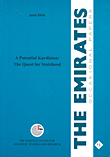

A Potential Kurdistan: The Quest For Statehood
| Author: | Janet Klein |
| Category: | Unspecified Category [Edit] |
| Language: | English |
| Publisher: | مركز الإمارات للدراسات والبحوث السلسلة: The Emirates occasional papers |
| ISBN: | 9789948141907 |
| Release Date: | 31 Dec 2009 |
| Pages: | 72 |
| Rank: | 714,391 No 1 most popular |
| Short link: | Copy |
| More books like this book | |
Book Description
The name "Kurdistan" has a long and curious history but it did not become politicized or contentious until the 20th century, particularly after the breakup of the Ottoman Empire and the emergence of new states that incorporated Kurdistan – understood as the "land of the Kurds" – in their new borders. Today the term has received renewed attention as it no longer just signifies an innocuous geographical term or a nationalist dream; it is the name of the political entity in northern Iraq that has many features of statehood but is not, in fact, a state. The Kurdistan Region of Iraq (KRI) is a curious entity indeed; it looks like a state, it acts like a state, but it is not certified as a state through international recognition. The KRI’s current "state capacity" has been the result of a determined state-building project that began nearly two decades ago, and yet it remains somewhere between state and statelessness. Is it in the process of forging an alternative kind of polity? This question has consumed not only the governments of Iraq, Turkey, Iran and Syria – the four main states who house most of the 30 million Kurds who refer to themselves as "a nation without a state" – but also the wider world. The obvious questions that loom large in the minds of many are: what do the Kurds want? What are they really building in northern Iraq? What would an independent Kurdistan look like? Is independence what Kurds seek? If Iraqi Kurdistan seceded from Iraq, what would this mean for Kurds outside of its borders? What would happen to the rest of Iraq? These are certainly pressing questions and there have been many insightful responses in recent years. However, more interesting is how the Kurdistan Regional Government (KRG) is working to sell its very unique state-building project to the rest of the world in its bid to gain international recognition of and support for its venture. This paper analyses the KRG’s marketing campaign, waged not only through the usual diplomatic (or para-diplomatic) channels, but also via the Internet and through its novel development of what can only be described as "nationalist infomercials." This performative aspect of state-building (literally acting out the state in an attempt to sell sovereignty) may represent both old and new chapters in the history of nationalist movements, but ones that have not yet been adequately theorized. This paper examines the question of a potential Kurdistan through a new lens of analysis that explores not simply the cold, hard struggle for sovereignty, but the softer "para-diplomatic" performances acting as the creative energies that market these struggles to the international community.

Copyright reserved
The book cannot be previewed or downloaded in order to preserve the copyright of the author and publishing house
Not available digitally or on paper through the Noor Library, it is for rating and review
Share the book :
Book Review "A Potential Kurdistan: The Quest For Statehood"

Book Quotes "A Potential Kurdistan: The Quest For Statehood"

Other books like "A Potential Kurdistan: The Quest For Statehood"






If there is a problem with the book, please report through one of the following links:
Report the book or by Contact us
E-books are complementary and supportive of paper books and never cancel it. With the click of a button, the e-book reaches anyone, anywhere in the world.
E-books may weaken your eyesight due to the glare of the screen. Support the book publisher by purchasing his original paper book. If you can access it and get it, do not hesitate to buy it.
Publish your book now for free