Umar Ibn Al-Farid: Sufi Verse, Saintly Life

Account upgrade
The download is free, but we offer some paid services. Support us by subscribing
Delete ads and speed up browsing the library.
The download starts with the click of a button without waiting for the book to be ready.
No limits for download times.
You can upload unlimited books in the library.
Enable readers to download your books without waiting.
Delete ads on the books that you publish.
No problems with download links for your uploaded books.
Book Umar Ibn Al Farid Sufi Verse Saintly Life
Copyright reserved
The book cannot be previewed or downloaded in order to preserve the copyright of the author and publishing house
Not available digitally or on paper through the Noor Library, it is for rating and review

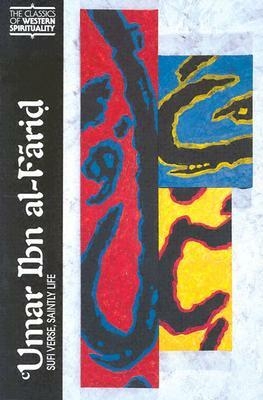

Umar Ibn Al-Farid: Sufi Verse, Saintly Life
| Author: | Bin AlFarid , Ibn Al-Farid , Th. Emil Homerin |
| Category: | Praise Poetry [Edit] |
| Language: | English |
| Publisher: | Paulist Press |
| Release Date: | 01 Jan 2001 |
| Pages: | 384 |
| Rank: | 557,905 No 1 most popular |
| Short link: | Copy |
| More books like this book | |
Book Description
Umar Ibn al-Farid (b. 576 [hijri date]/1181 CE; d. 632 [hijri date]/1235 is the most venerated mystical poet in Arabic. An accomplished Sufi as well as a respected poet, his poetry blends the two traditions-classical Arabic poetry and Islamic mysticism-in a body of work with a distinctly devotional and mystical character. In a major contribution to the critically acclaimed Umar Ibn al-Farid (b. 576 [hijri date]/1181 CE; d. 632 [hijri date]/1235 is the most venerated mystical poet in Arabic. An accomplished Sufi as well as a respected poet, his poetry blends the two traditions-classical Arabic poetry and Islamic mysticism-in a body of work with a distinctly devotional and mystical character. In a major contribution to the critically acclaimed and long lived Classics of Western Spirituality(TM), editor Th. Emil Homerin makes available here two of Ibn al-Farid's poems that have long been considered classics of Islamic mystical literature. The Wine Ode, a poem in praise of wine as well as a love poem, can also be seen as an extended meditation on the presence of divine love in the universe. The Poem of the Sufi Way, one of the longest poems ever composed in Arabic, and the most famous one rhyming in "T," begins as a love poem and then explores a number of crucial concerns confronting the seeker on the Sufi path. Both works have been treated for centuries in numerous mystical commentaries. Noteworthy as well in this volume is the addition of the Adorned Proem, a reverential account of Ibn al-Farid's life by his grandson. Individuals interested in the fields of mysticism and spirituality, as well as lovers of poetry, particularly love poetry, will find this to be fascinating reading. It will have great relevance, of course, for scholars and students of Arabic literature, Islam and mysticism.

Copyright reserved
The book cannot be previewed or downloaded in order to preserve the copyright of the author and publishing house
Not available digitally or on paper through the Noor Library, it is for rating and review
Share the book :
Book Review "Umar Ibn Al-Farid: Sufi Verse, Saintly Life"

Book Quotes "Umar Ibn Al-Farid: Sufi Verse, Saintly Life"

Other books like "Umar Ibn Al-Farid: Sufi Verse, Saintly Life"


![Eugene Oneguine [Onegin] A Romance of Russian Life in Verse](/publice/covers_cache_jpg/20/4/4/6/95830d24e94464af34ea0fac527c1cd8.jpg.jpg "Eugene Oneguine [Onegin] A Romance of Russian Life in Verse")







If there is a problem with the book, please report through one of the following links:
Report the book or by Contact us
E-books are complementary and supportive of paper books and never cancel it. With the click of a button, the e-book reaches anyone, anywhere in the world.
E-books may weaken your eyesight due to the glare of the screen. Support the book publisher by purchasing his original paper book. If you can access it and get it, do not hesitate to buy it.
Publish your book now for free