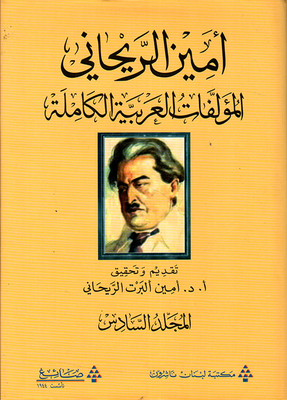
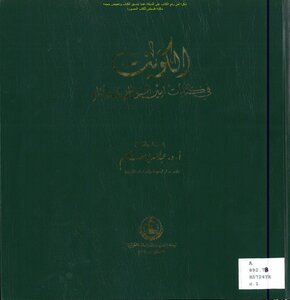
The Complete Arabic Works Of Amin Al-Rihani - Volume Four

Account upgrade
The download is free, but we offer some paid services. Support us by subscribing
Delete ads and speed up browsing the library.
The download starts with the click of a button without waiting for the book to be ready.
No limits for download times.
You can upload unlimited books in the library.
Enable readers to download your books without waiting.
Delete ads on the books that you publish.
No problems with download links for your uploaded books.
Book The Complete Arabic Works Of Amin Al Rihani Volume Four
Copyright reserved
The book cannot be previewed or downloaded in order to preserve the copyright of the author and publishing house
Not available digitally or on paper through the Noor Library, it is for rating and review



The Complete Arabic Works Of Amin Al-Rihani - Volume Four
| Author: | Ameen Rihani |
| Category: | The Popular Revolution And The Revolutions Of The Arab Spring [Edit] |
| Language: | Arabic |
| Publisher: | مكتبة لبنان ناشرون- بيروت |
| Release Date: | 01 Jan 1996 |
| Pages: | 1020 |
| Rank: | 774,936 No 1 most popular |
| Short link: | Copy |
| More books like this book | |

Ameen Rihani
The Author Book The Complete Arabic Works Of Amin Al-Rihani - Volume Four and the author of 5 another books.
Born in Freike, Lebanon, on November 24, 1876, Ameen Rihani was one of six children and the oldest son of a Lebanese Maronite raw silk manufacturer, then a flourishing local industry. His father had commercial ambitions which beckoned him to America. In the summer of 1888, Ferris Rihani, the father, sent his brother and eldest son, Ameen, to the United States and followed a year later.
The young i Born in Freike, Lebanon, on November 24, 1876, Ameen Rihani was one of six children and the oldest son of a Lebanese Maronite raw silk manufacturer, then a flourishing local industry. His father had commercial ambitions which beckoned him to America. In the summer of 1888, Ferris Rihani, the father, sent his brother and eldest son, Ameen, to the United States and followed a year later.
The young immigrant, then twelve years old, was placed in a school outside the city of New York, a few months after his arrival. There, he learned the rudiments of English. His father and uncle, having established themselves as merchants in a small cellar in lower Manhattan, soon felt the need for an assistant who could read and write English. Therefore, the boy was taken away from school to become the chief clerk, interpreter and bookkeeper of the business. The family continued in this trade for four years.
Ameen had a natural talent in eloquent speaking, and in 1895, the teenager became carried away by stage fever and joined a touring stock company headed by Henry Jewet (who later had his theatre in Boston). During the summer of the same year, the troupe became stranded in Kansas City, Missouri and so the prodigal son returned to his father. However, he returned not to rejoin the business, but to insist that his father give him a regular education for a professional career. They agreed that he should study law. To that end, he attended night school for a year, passed the Regents Exam, and in 1897 entered the New York Law School. A lung infection interrupted his studies, and at the end of his first year, his father had to send him back to Lebanon to recover.
Ameen Rihani first became familiar with Arab and other Eastern poets in 1897. Among these poets were Abul-Ala, whom Ameen discovered to be the forerunner of Omar Khayyam. In 1899 he returned to New York having decided to translate some of the quatrains of Abul-Ala into English. He managed to do this while he was still giving much of his time to the family business. The first version of the translation was published in 1903. During this period, he joined several literary and artistic societies in New York, such as the Poetry Society of America and the Pleiades Club, and also became a regular contributor to an Arabic weekly, "Al-Huda" published in New York. He wrote about social traditions, religion, national politics and philosophy. Thus, he began his extensive literary career, bridging two worlds. He published his first two books in Arabic in 1902 and 1903.
He also worked, along with other national leaders, for the liberation of his country from Turkish rule. In 1910 he published Al-Rihaniyat, the book that established him as a forward thinker and a visionary. As a result of the Rihaniyat, the Egyptian media hailed him as "The Philosopher of Freike." The Book of Khalid was written during this same period of mountain solitude and was later published in 1911 after he returned to New York (for the third time) via Paris and London where he met with fellow writers and artists. The illustrations for this book, which was the first English novel ever written by a Lebanese/Arab, were provided by Kahlil Gibran. A reception was held in honor of Rihani for the release of The Book of Khalid and the president of the New York Pleiades Club crowned him with a laurel garland.
Ameen Rihani passed away at age 64 at 1:00 pm on September 13, 1940 in his hometown of Freike, Lebanon. The cause of his death was a bicycle accident which resulted in infectious injuries from multiple fractures of the skull. The news of his death was broadcast to many parts of the world. Representatives of Arab kings and rulers and of foreign diplomatic missions attended the funeral ceremony. He was laid to rest in the Rihani Family Mausoleum in Freike.
Book Description
المجلّد الأوّل: يضمّ المقالة الإجتماعيَّة، والفلسفيَّة، والسياسيَّة، ويحتوي على سفر التدوين، وشّذّرات من عَهْدِ الصِّبا، والرَّيحانيّات، والقَوْميّات.
المجلّد الثاني: يضمّ المقالة الأدبيَّة، والقصّة، والرواية والمسرح، والتاريخ، ويحتوي على وُجُوه شَرْقِيَّة غَرْبيَّة، المُكارِي والكاهِن، سِجِلّ التَّوْبَة، زَنْبَقة الغَوْر، عَبْد الحَمِيْد في سجن الآسِتانَة، وَفاء الزِّمان، المجلّد الأوّل: يضمّ المقالة الإجتماعيَّة، والفلسفيَّة، والسياسيَّة، ويحتوي على سفر التدوين، وشّذّرات من عَهْدِ الصِّبا، والرَّيحانيّات، والقَوْميّات.
المجلّد الثاني: يضمّ المقالة الأدبيَّة، والقصّة، والرواية والمسرح، والتاريخ، ويحتوي على وُجُوه شَرْقِيَّة غَرْبيَّة، المُكارِي والكاهِن، سِجِلّ التَّوْبَة، زَنْبَقة الغَوْر، عَبْد الحَمِيْد في سجن الآسِتانَة، وَفاء الزِّمان، تارِيْخ نَجْد الحَدِيْث، وفَيْصَل الأوَّل.
المجلد الثالث: يضمّ أدب الرحلة (1)، ويحتوي على مُلُوْك العَرَب، والمَغْرِب الأَقْصى، ونَوْر الأنَدَلُس.
المجلد الرابع: يضم أدب الرحلة (2)، والشعر المنثور، والنقد الأدبيّ، والسيرة الادبيَّة، والقول المأثور، ويحتوي على قَلْب العِراق، قَلْب لُبْنان، هُتاف الأَوْدِيّة، أَدَب وفَنّ، أنتُم الشُّعراء، قِصَّتي مَعَ مَيّ، وبُذُور لِلزَّارِعين.
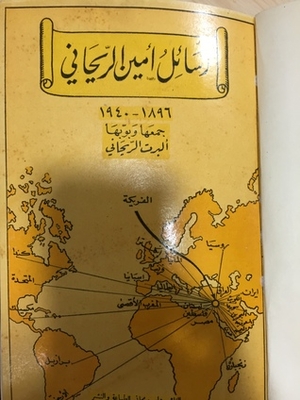
المجلّد الخامس: يضمّ النقد التاريخيّ والسياسيّ، والرسائل العربيّة، والمقابلات، والوصيَّة، ويحتوي على نَبْذَة في الثَّوْرَةِ الفَرَنْسيَّة، النَّكَبات، التَّطَرُّف والإصْلاح، رَسائل أمين الرَّيحاني العَرَبيَّة، بَيْنَ وادِي الفْرَيْكَة وَوادي نْيُويُورْكْلِيْم، ووَصِيَّتي.
المجلد السادس: يضمِّ المسارد والجداول الإحصائيَّة والمراجع والفهارس لمجموعة مؤلَّفات امين الرَّيحاني العربيَّة والإنكليزيَّة بحيث توفّر للقارئ وللباحث ما يحتاجه من مادّة أوليَّة ضروريَّة لدراسة الرَّيحاني.

Copyright reserved
The book cannot be previewed or downloaded in order to preserve the copyright of the author and publishing house
Not available digitally or on paper through the Noor Library, it is for rating and review
Share the book :
Book Review "The Complete Arabic Works Of Amin Al-Rihani - Volume Four"

Book Quotes "The Complete Arabic Works Of Amin Al-Rihani - Volume Four"

Other books like "The Complete Arabic Works Of Amin Al-Rihani - Volume Four"








Other books for "Ameen Rihani"


If there is a problem with the book, please report through one of the following links:
Report the book or by Contact us
E-books are complementary and supportive of paper books and never cancel it. With the click of a button, the e-book reaches anyone, anywhere in the world.
E-books may weaken your eyesight due to the glare of the screen. Support the book publisher by purchasing his original paper book. If you can access it and get it, do not hesitate to buy it.
Publish your book now for free