books simplified engineering mechanics statics
If you do not find what you're looking for, you can use more accurate words.

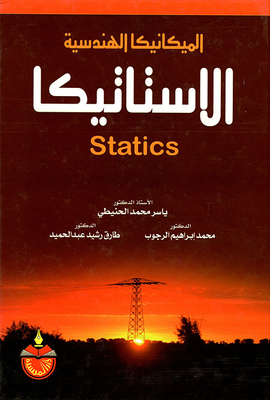
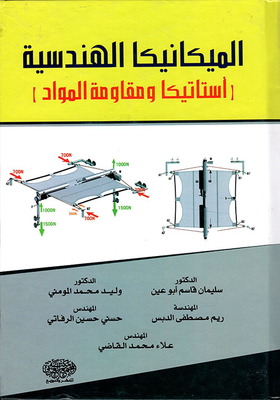
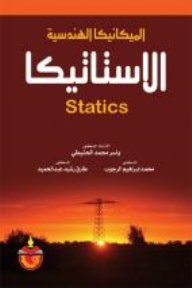
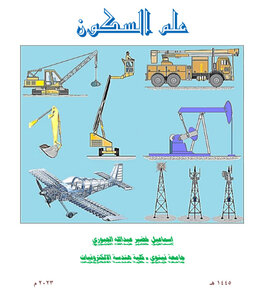
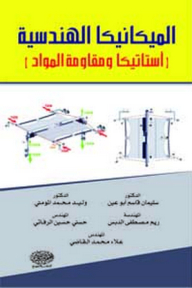
Simplified Engineering Mechanics - Statics (Book)
This book consists of eight chapters, the first chapter includes definitions and laws specialized in the field of engineering mechanics in general and statics in particular, it deals with Newton's laws of motion and universal gravitation, and also deals with coordinate systems and unit systems used globally and their conversions. The second chapter includes the analysis of the forces applied to bodies, the explanation of their types and systems, and finding of the resultant of these forces. The third chapter includes the moments applied about the axes of the bodies, the methods of concluding them, finding their resultant, and how to analyze the forces and conclude the resultant of the forces and moments together. The fourth chapter shows the methods of achieving the equilibrium of the forces and moments required to achieve the static stability of the bodies, and it is divided into two branches, the first shows how to achieve equilibrium for particles, and the second shows how to achieve equilibrium for rigid bodies. The fifth chapter includes the engineering structures and how to conclude the forces and torques required to carry out the ideal designs for these structures, and it is divided into two parts, the first part deals with the analysis of the truss structures that make up bridges, towers and steel structures, while the second part deals with the analysis of the structures of frames and machines. The sixth chapter includes the topic of friction between touching surfaces during sliding motion with an indication of its types and properties. The seventh chapter includes methods for finding the centers of masses and dimensions ( lengths, areas and volumes ) of objects. Finally, the eighth chapter includes methods for calculating the moment of inertia for bodies, and this is very necessary in calculating the stresses and deformations of the mechanical parts required in preparing the design calculations for these parts, this chapter is divided into two branches, the first section shows how to calculate the moment of inertia for areas, and the second section shows how to calculate the moment of inertia for masses. The book ended by some appendices that necessary in the study of engineering mechanics.