Shia Gri

Account upgrade
The download is free, but we offer some paid services. Support us by subscribing
Delete ads and speed up browsing the library.
The download starts with the click of a button without waiting for the book to be ready.
No limits for download times.
You can upload unlimited books in the library.
Enable readers to download your books without waiting.
Delete ads on the books that you publish.
No problems with download links for your uploaded books.
Download Book Shia Gri Pdf
The source of the book
This book was brought from archive.org as under a Creative Commons license, or the author or publishing house agrees to publish the book. If you object to the publication of the book, please contact us.


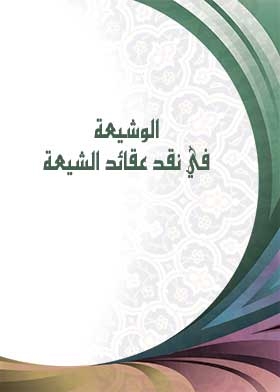
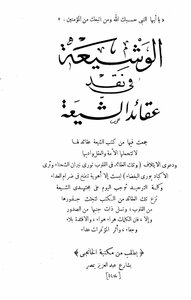
Shia Gri
| Author: | احمد كسروی |
| Category: | Islamic Religion [Edit] |
| Language: | Arabic |
| Pages: | 363 |
| File Size: | 34.35 MB |
| Extension: | |
| Creation Date: | 12 May 2012 |
| Rank: | 80,822 No 1 most popular |
| Short link: | Copy |
| More books like this book | |

Ahmed Kasrawi
The Author Book Shia Gri and the author of 1 another books.
Aḥmad Kasravī
Born in Hokmabad (Hohmavar), Tabriz, Iran, Kasravi was an Iranian Azari. Initially, Kasravi enrolled in a seminary. Later, he joined the Persian Constitutional Revolution. He experienced a sort of conversion to Western learning when he learned that the comet of 1910 had been identified as a reappearance of Halley's comet. He abandoned his clerical training after this event and enrolle Aḥmad Kasravī
Born in Hokmabad (Hohmavar), Tabriz, Iran, Kasravi was an Iranian Azari. Initially, Kasravi enrolled in a seminary. Later, he joined the Persian Constitutional Revolution. He experienced a sort of conversion to Western learning when he learned that the comet of 1910 had been identified as a reappearance of Halley's comet. He abandoned his clerical training after this event and enrolled in the American Memorial School of Tabriz. Thenceforward he became, in Roy Mottahedeh's words, "a true anti-cleric."
It was in Tbilisi where he first became acquainted with a wide spectrum of political ideas and movements, and he soon was employed by the government of Iran in various cultural posts.
A prolific writer, Kasravi was very critical of both the Shi'a clergy and of the policies of the central government. He had liberal views on religion, was a strong supporter of democracy, and expressed them in satirical pamphlets like What Is the Religion of the Hajis with Warehouses? that infuriated many readers. His views earned him many powerful enemies such as Ayatollah Khomeini.
His detailed account of the Constitutional Revolution still stands out as one of the most important sources on the events, even though Kasravi was a teenager at the time of the revolution and cannot claim the full authority of a contemporary witness that his writing at times suggests.
Kasravi is known for his solid research work on the ancient Azari language and origin of the Azerbaijani people. He showed that the ancient Azari language was an offshoot of Pahlavi language. Due to this discovery, he was granted the membership of London Royal Asiatic Society and American Academy.
Arguing that ancient Azari language had been closely related to Persian language and the influx of Turkic words began only with the Seljuq invasion, Ahmad Kasravi believed that true national language of Iranian Azerbaijan was Persian and therefore advocated the linguistic assimilation of Persian in Azarbaijan.
In 1927-8 Ahmad Kasravi led the way in establishing the ancestry of the Safavids dynasty with the publication of three influential articles and disputed the validity of the `official' Safavid family tree contained in the Safvat al-Safa, and argued convincingly that the ancestors of Shaykh Safi al-Din, who founded the Safavid Order (tariqa), were indigenous inhabitants of Iran and were of pure Aryan stock. Today, the consensus among Safavid historians is that the Safavid family hailed from Persian Kurdistan.
On March 11, 1946, while being tried on charges of "slander against Islam," Kasravi and one of his assistants were knifed and killed in open court in Tehran by followers of Navvab Safavi, a Shi'a extremist cleric who had founded a terrorist organization called the Fadayan-e Islam (literally Devotees of Islam). The same group had failed in assassinating Kasravi earlier in April 1945 in Tehran. Ayatollah Borujerdi and Ayatollah Sadr[who?:] issued fatwas for killing Ahmad Kasravi
Book Description
نويسنده كتاب يكي از منتقدان مذهب باطل شيعه مي باشد كه با بيان حقايق و اشكالات اين مذهب باطل در راه اصلاح آن مي كوشد


Share the book :
Book Review "Shia Gri"

Book Quotes "Shia Gri"

Other books like "Shia Gri"


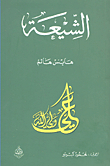
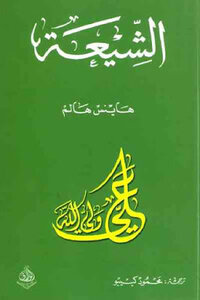

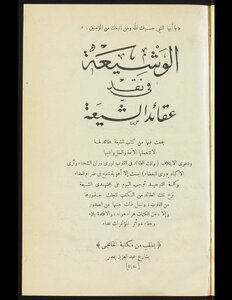
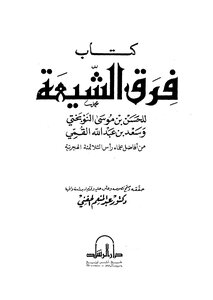
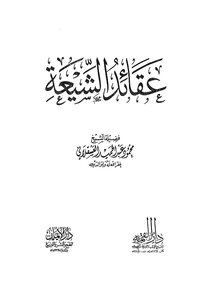



Other books for "احمد كسروی"

If there is a problem with the book, please report through one of the following links:
Report the book or by Contact us
E-books are complementary and supportive of paper books and never cancel it. With the click of a button, the e-book reaches anyone, anywhere in the world.
E-books may weaken your eyesight due to the glare of the screen. Support the book publisher by purchasing his original paper book. If you can access it and get it, do not hesitate to buy it.
Publish your book now for free