البحث عن الذات دراسه نفسيه

Account upgrade
The download is free, but we offer some paid services. Support us by subscribing
Delete ads and speed up browsing the library.
The download starts with the click of a button without waiting for the book to be ready.
No limits for download times.
You can upload unlimited books in the library.
Enable readers to download your books without waiting.
Delete ads on the books that you publish.
No problems with download links for your uploaded books.
Download Book البحث عن الذات دراسه نفسيه Pdf
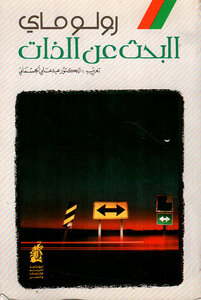

البحث عن الذات دراسه نفسيه
| Author: | Rollo May |
| Category: | Principles Of Psychology [Edit] |
| Language: | Arabic |
| Pages: | 213 |
| File Size: | 2.94 MB |
| Extension: | |
| Creation Date: | 10 Dec 2007 |
| Rank: | 68,579 No 1 most popular |
| Short link: | Copy |
| More books like this book | |

Hassan Hasheem
Мастера
The Publisher and not the author Book البحث عن الذات دراسه نفسيه .
Я иностранный студент, учусь в России, интересуюсь психологией и социологией
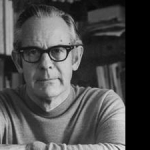
Rollo May
The Author Book البحث عن الذات دراسه نفسيه .
Rollo May (April 21, 1909 – October 22, 1994) was an American existential psychologist. He authored the influential book Love and Will during 1969.
Although he is often associated with humanistic psychology, his philosophy was influenced strongly by existentialist philosophy. May was a close friend of the theologian Paul Tillich. His works include Love and Will and The Courage to Create, the latter Rollo May (April 21, 1909 – October 22, 1994) was an American existential psychologist. He authored the influential book Love and Will during 1969.
Although he is often associated with humanistic psychology, his philosophy was influenced strongly by existentialist philosophy. May was a close friend of the theologian Paul Tillich. His works include Love and Will and The Courage to Create, the latter title honoring Tillich's The Courage to Be.
Biography
May was born in Ada, Ohio in 1909. He experienced a difficult childhood, with his parents divorcing and his sister becoming schizophrenic. His educational career took him to Michigan State College majoring in English and Oberlin College for a bachelor's degree, teaching for a time in Greece, to Union Theological Seminary for a BD during 1938, and finally to Teachers College, Columbia University for a PhD in clinical psychology during 1949. May was a founder and faculty member of Saybrook Graduate School and Research Center in San Francisco.[1]
He spent the final years of his life in Tiburon on San Francisco Bay, where he died in October 1994.
Accomplishments
May was influenced by American humanism, and interested in reconciling existential psychology with other philosophies, especially Freud's.
May considered Otto Rank (1884-1939) to be the most important precursor of existential therapy. Shortly before his death, May wrote the foreword to Robert Kramer's edited collection of Rank’s American lectures. “I have long considered Otto Rank to be the great unacknowledged genius in Freud’s circle,” wrote May (Rank, 1996, p. xi).
May used some traditional existential terms in a slightly different fashion than others, and he invented new words for traditional existentialist concepts. Destiny, for example, could be "thrownness" combined with "fallenness" — the part of our lives that is determined for us, for the purpose of creating our lives. He also used the word "courage" to signify resisting anxiety.
He defined certain "stages" of development:
Innocence – the pre-egoic, pre-self-conscious stage of the infant.
An innocent is only doing what he or she must do. However, an innocent does have a degree of will in the sense of a drive to fulfill needs.
Rebellion – the rebellious person wants freedom, but does not yet have a good understanding of the responsibility that goes with it.
Decision – The person is in a transition stage in their life such that they need to be independent from their parents and settle into the "ordinary stage". In this stage they must decide what to do with their life, and fulfilling rebellious needs from the rebellious stage.
Ordinary – the normal adult ego learned responsibility, but finds it too demanding, and so seeks refuge in conformity and traditional values.
Creative – the authentic adult, the existential stage, self-actualizing and transcending simple egocentrism.
These are not "stages" in the traditional sense. A child may certainly be innocent, ordinary or creative at times; an adult may be rebellious. The only association with certain ages is in terms of importance: rebelliousness is important for a two year old or a teenager.
May perceived the sexual s of the 1960s and 1970s, as well as commercialization of sex and pornography, as having influenced society such that people believed that love and sex are no longer associated directly. According to May, emotion has become separated from reason, making it acceptable socially to seek sexual relationships and avoid the natural drive to relate to another person and create new life. May believed that sexual freedom can cause modern society to neglect important psychological developments. May suggests that the only way to remedy the cynical ideas that characterize our times is to rediscover the importance of caring for another, which May describes as the opposite of apathy.
His first book, The Meaning of Anxiety, was based on his d
Book Description
هذا الكتاب يتولى بالبحث حكمه أولئك الذين سعوا ليتبنوا ما تجمع لديهم وتراكم من خبرات الحياة بحكم تقادم الأعمار وما خلفت به مجالات الأدب، وما زخرت به حلبات الفلسفة، وما جد في مجال مستجدات علم الأخلاق، وليتفهموا كيف يتمكن الإنسان في أحسن الأحوال أن يضمن لنفسه جواً من الأمان، وكيف يواجه أزماته الشخصية، ليحولها، من أزمات إلى منافع الوقوف في وقتنا الراهن بوجه ما يتهدد أمتنا، وبذلك نتحرى مواطن القوة في دواخل أنفسنا، ونحدد بالتالي معالم الطريق المؤدي إلى تحقيق القيم والأهداف التي يمكن الاتكاء عليها في وقت تضاءلت فيه فرص ضمان الأمن والأمان


Share the book :

Book Quotes "البحث عن الذات دراسه نفسيه"

Other books like "البحث عن الذات دراسه نفسيه"











If there is a problem with the book, please report through one of the following links:
Report the book or by Contact us
E-books are complementary and supportive of paper books and never cancel it. With the click of a button, the e-book reaches anyone, anywhere in the world.
E-books may weaken your eyesight due to the glare of the screen. Support the book publisher by purchasing his original paper book. If you can access it and get it, do not hesitate to buy it.
Publish your book now for free