Mastering Algorithms With Perl

Account upgrade
The download is free, but we offer some paid services. Support us by subscribing
Delete ads and speed up browsing the library.
The download starts with the click of a button without waiting for the book to be ready.
No limits for download times.
You can upload unlimited books in the library.
Enable readers to download your books without waiting.
Delete ads on the books that you publish.
No problems with download links for your uploaded books.
Book Mastering Algorithms With Perl
Copyright reserved
The book cannot be previewed or downloaded in order to preserve the copyright of the author and publishing house
Not available digitally or on paper through the Noor Library, it is for rating and review

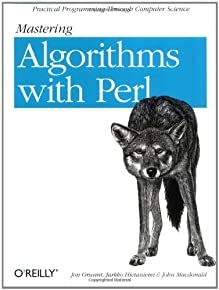

Mastering Algorithms With Perl
| Author: | John Macdonald |
| Category: | Perl Programming Language [Edit] |
| Language: | English |
| Publisher: | O'Reilly Media |
| ISBN: | 1565923987 |
| Release Date: | 01 Jan 1999 |
| Rank: | 261,355 No 1 most popular |
| Short link: | Copy |
| More books like this book | |
Book Description
Many programmers would love to use Perl for projects that involve heavy lifting, but miss the many traditional algorithms that textbooks teach for other languages. Computer scientists have identified many techniques that a wide range of programs need, such as: Fuzzy pattern matching for text (identify misspellings!) Finding correlations in data Game-playing algorithms Predicting phenomena such as Web traffic Polynomial and spline fitting Using algorithms explained in this book, you too can carry out traditional programming tasks in a high-powered, efficient, easy-to-maintain manner with Perl. This book assumes a basic understanding of Perl syntax and functions, but not necessarily any background in computer science. The authors explain in a readable fashion the reasons for using various classic programming techniques, the kind of applications that use them, and -- most important -- how to code these algorithms in Perl. If you are an amateur programmer, this book will fill you in on the essential algorithms you need to solve problems like an expert. If you have already learned algorithms in other languages, you will be surprised at how much different (and often easier) it is to implement them in Perl. And yes, the book even has the obligatory fractal display program. There have been dozens of books on programming algorithms, some of them excellent, but never before has there been one that uses Perl. The authors include the editor of The Perl Journal and master librarian of CPAN; all are contributors to CPAN and have archived much of the code in this book there. "This book was so exciting I lost sleep reading it." Tom Christiansen

Copyright reserved
The book cannot be previewed or downloaded in order to preserve the copyright of the author and publishing house
Not available digitally or on paper through the Noor Library, it is for rating and review
Share the book :
Book Review "Mastering Algorithms With Perl"

Book Quotes "Mastering Algorithms With Perl"

Other books like "Mastering Algorithms With Perl"






Other books for "John Macdonald"


If there is a problem with the book, please report through one of the following links:
Report the book or by Contact us
E-books are complementary and supportive of paper books and never cancel it. With the click of a button, the e-book reaches anyone, anywhere in the world.
E-books may weaken your eyesight due to the glare of the screen. Support the book publisher by purchasing his original paper book. If you can access it and get it, do not hesitate to buy it.
Publish your book now for free