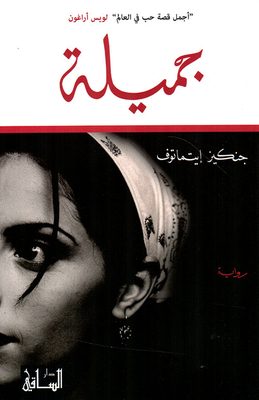
Jamila

Account upgrade
The download is free, but we offer some paid services. Support us by subscribing
Delete ads and speed up browsing the library.
The download starts with the click of a button without waiting for the book to be ready.
No limits for download times.
You can upload unlimited books in the library.
Enable readers to download your books without waiting.
Delete ads on the books that you publish.
No problems with download links for your uploaded books.
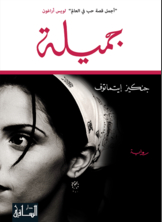
Book Jamila
Copyright reserved
The book cannot be previewed or downloaded in order to preserve the copyright of the author and publishing house
Not available digitally or on paper through the Noor Library, it is for rating and review



Jamila
| Author: | Chingiz Aitmatov |
| Category: | Unspecified Category [Edit] |
| Language: | English |
| Publisher: | دار الساقي للطباعة والنشر |
| Release Date: | 01 Mar 2007 |
| Pages: | 96 |
| Rank: | 231,726 No 1 most popular |
| Short link: | Copy |
| More books like this book | |
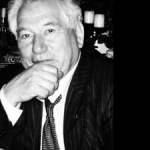
Chingiz Aitmatov
The Author Book Jamila .
Chinghiz Aitmatov (Чингиз Айтматов, Tschingis Aitmatow, Čingiz Ajtmatov, Tšõngõz Ajtmatov, Cengiz Aytmatov, Tsjingiz Ajtmatov, Tchinguiz Aïtmatov, جنكيز ايتماتوف) was an author who wrote in both Russian and Kyrgyz. He was the best known figure in Kyrgyzstan literature.
Aitmatov's parents were civil servants in Sheker. The name Chingiz is the same as the honorary title of Genghis Khan. In early chi Chinghiz Aitmatov (Чингиз Айтматов, Tschingis Aitmatow, Čingiz Ajtmatov, Tšõngõz Ajtmatov, Cengiz Aytmatov, Tsjingiz Ajtmatov, Tchinguiz Aïtmatov, جنكيز ايتماتوف) was an author who wrote in both Russian and Kyrgyz. He was the best known figure in Kyrgyzstan literature.
Aitmatov's parents were civil servants in Sheker. The name Chingiz is the same as the honorary title of Genghis Khan. In early childhood he wandered as a nomad with his family, as the Kyrgyzstan people did at the time. In 1937 his father was charged with "bourgeois nationalism" in Moscow, arrested and executed in 1938.
Aitmatov lived at a time when Kyrgyzstan was being transformed from one of the most remote lands of the Russian Empire to a republic of the USSR. The future author studied at a Soviet school in Sheker. He also worked from an early age. At fourteen he was an assistant to the Secretary at the Village Soviet. He later held jobs as a tax collector, a loader, an engineer's assistant and continued with many other types of work.
In 1946 he began studying at the Animal Husbandry Division of the Kirghiz Agricultural Institute in Frunze, but later switched to literary studies at the Maxim Gorky Literature Institute in Moscow, where he lived from 1956 to 1958. For the next eight years he worked for Pravda. His first two publications appeared in 1952 in Russian: The Newspaper Boy Dziuio and Ашым. His first work published in Kyrgyz was Ак Жаан (White Rain) in 1954, and his well known work Jamilya appeared in 1958. 1980 saw his first novel The Day Lasts More than a Hundred Years; his next significant novel, The Scaffold was published in 1988. The Day Lasts More than a Hundred Years and other writings were translated into several languages.
Aitmatov suffered kidney failure and on 16 May 2008 was admitted to a hospital in Nuremberg, Germany, where he died of pneumonia on 10 June 2008, aged 79. His obituary in The New York Times characterized him as "a Communist writer whose novels and plays before the collapse of the Soviet Union gave a voice to the people of the remote Soviet republic of Kyrgyz" and adds that he "later became a diplomat and a friend and adviser to the Soviet leader Mikhail S. Gorbachev."
Chinghiz Aitmatov belonged to the post-war generation of writers. His output before Jamila was not significant, a few short stories and a short novel called Face to Face. But it was Jamila that came to prove the author's work. Louis Aragon described the novellete as the world's most beautiful love story, raising it even above Rudyard Kipling's World's Most Beautiful Love Story. Aitmatov's representative works also include the short novels Farewell, Gulsary!, The White Ship, The Day Lasts More Than a Hundred Years, and The Scaffold.
Aitmatov was honoured in 1963 with the Lenin Prize for Jamila and later he was awarded a State prize for Farewell, Gulsary!. Aitmatov's art was glorified by admirers. Even critics of Aitmatov mentioned high quality of his novels.
Aitmatov's work has some elements that are unique specifically to his creative process. His work drew on folklore, not in the ancient sense of it; rather, he tried to recreate and synthesize oral tales in the context of contemporary life. This is prevalent in his work; in nearly every story he refers to a myth, a legend, or a folktale. In The Day Lasts More Than a Hundred Years a poetic legend about a young captive turned into a mankurt serves a tragic allegory and becomes a significant symbolic expression of the philosophy of the novel.
A second aspect of Aitmatov's writing is his ultimate closeness to our "little brothers" the animals, for their and our lives are intimately and inseparably connected. The two center characters of Farewell, Gulsary! are a man and his stallion. A camel plays a prominent role in The Day Lasts More Than a Hundred Years; one of the key turns of the novel which decide
Book Description
Jamilia’s husband is off fighting at the front. She spends her days hauling sacks of grain from the threshing floor to the train station in their small village in the Caucasus, accompanied by Seit, her young brother-in-law, and Daniyar, a sullen newcomer to the village who has been wounded on the battlefield.
Seit observes the beautiful, spirited Jamilia spurn men’s advances, and wince at the dispassionate letters she receives from her husband. Meanwhile, undeterred by Jamilia’s teasing, Daniyar sings as they return each evening from the fields. Soon Jamilia is in love, and she and Daniyar elope just as her husband returns…

Copyright reserved
The book cannot be previewed or downloaded in order to preserve the copyright of the author and publishing house
Not available digitally or on paper through the Noor Library, it is for rating and review
Share the book :
Book Review "Jamila"

Book Quotes "Jamila"

Other books like "Jamila"







If there is a problem with the book, please report through one of the following links:
Report the book or by Contact us
E-books are complementary and supportive of paper books and never cancel it. With the click of a button, the e-book reaches anyone, anywhere in the world.
E-books may weaken your eyesight due to the glare of the screen. Support the book publisher by purchasing his original paper book. If you can access it and get it, do not hesitate to buy it.
Publish your book now for free