HUMAN FACTORS AND ERGONOMICS

Account upgrade
The download is free, but we offer some paid services. Support us by subscribing
Delete ads and speed up browsing the library.
The download starts with the click of a button without waiting for the book to be ready.
No limits for download times.
You can upload unlimited books in the library.
Enable readers to download your books without waiting.
Delete ads on the books that you publish.
No problems with download links for your uploaded books.
Download Book Human Factors And Ergonomics Pdf
The publisher is the author
Previewing the book or downloading it for personal use only and any other powers should be obtained from the author of the book publisher

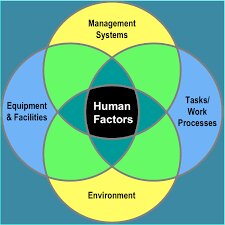

HUMAN FACTORS AND ERGONOMICS
| Author: | Osama Mohammed Elmardi دكتور أسامة محمد المرضي سليمان خيال |
| Category: | Mechanical Engineering [Edit] |
| Language: | English |
| Pages: | 33 |
| File Size: | 396.01 KB |
| Extension: | |
| Creation Date: | 16 Jul 2019 |
| Rank: | 55,577 No 1 most popular |
| Short link: | Copy |
| More books like this book | |


Osama Mohammed Elmardi
associate professor
The Publisher and the author
Book HUMAN FACTORS AND ERGONOMICS .
دكتور مهندس أسامة محمد المرضي سليمان وُلِدَ بمدينة عطبرة بالسودان في العام 1966م. حاز على دبلوم هندسة ميكانيكية من كلية الهندسة الميكانيكية – عطبرة في العام 1990م. تحصَّل أيضاً على درجة البكالوريوس في الهندسة الميكانيكية من جامعة السودان للعلوم والتكنولوجيا – الخرطوم في العام 1998م ، كما حاز على درجة الماجستير في تخصص ميكانيكا المواد من جامعة وادي النيل – عطبرة في العام 2003م ودرجة الدكتوراه من جامعة وادي النيل في العام 2017م. قام بالتدريس في العديد من الجامعات داخل السودان، بالإضافة لتأليفه لأكثر من ثلاثين كتاباً باللغة العربية ولعشرة كتب باللغة الإنجليزية بالإضافة لخمسين ورقة علمية منشورة في دور نشر ومجلات عالمية إلى جانب إشرافه على أكثر من ثلاثمائة بحث تخرج لكل من طلاب الماجستير، الدبلوم العالي، البكالوريوس، والدبلوم العام. يشغِل الآن وظيفة أستاذ مساعد بقسم الميكانيكا بكلية الهندسة والتقنية - جامعة وادي النيل. بالإضافة لعمله كاستشاري لبعض الورش الهندسية بالمنطقة الصناعية عطبرة. هذا بجانب عمله كمدير فني لمجموعة ورش الكمالي الهندسية لخراطة أعمدة المرافق واسطوانات السيارات والخراطة العامة وكبس خراطيش الهيدروليك.
Book Description
In its triennial report, the International Ergonomics Association (IEA, 2000) defined ergonomics as the scientific discipline that deals with understanding the interaction between humans and other elements of a socio-technical system. In this definition, ergonomics is the profession that applies theory, principles, data and design methods to optimize human well-being and the overall performance of a system. It is in particular responsible for the design and evaluation of tasks, jobs, products, environments and systems to make them compatible with the abilities, needs and limitations of people.
The word Ergonomics comes from the Greek Ergon meaning work and Nomos which means law. Therefore, etymologically, this is the science of work. The term has been used historically in the European tradition. In the American tradition one finds the term Human Factor Engineering to refer to the same issues, so both terms can be now considered as synonyms and are used interchangeably. The latter is evidenced by the fact that the Human Factor Society”, founded in Tulsa (Oklahoma) in 1957, is now called the Human Factor and Ergonomics Society” (HFES). Another term which is often used in the same context is “Engineering psychology” (Wickens & Hollands, 2000).
The early precursors of the new discipline could be set around the time of the World War I. They had their background in the pioneering studies of Frederic Bartlett (1886-1969), Hugo Munsterberg (1863-1916) and Frederick Winslow Taylor (1856- 1915) on applied psychology and industrial management. The design of new machines (for example, the first cars or tanks) revealed the importance of taking into account the characteristics of people who should operate them. It was found that many people had difficulties to operate with more complex machines, especially with warplanes. This led the army to recruited psychologists who were assigned the task of developing and administering tests to select soldiers and to assign them to different tasks. These applied psychologists first human factors laboratories that continued their work after the war ended. But it was the World War II which provided the final impetus for the establishment of ergonomics as a discipline with industrial and academic recognition. Moreover, this war involved an enormous amount of people and artefacts, many of them newly created, such as radar, which made the idea of selecting a few special individuals to use previously designed artefacts unworkable. The idea that emerged and has had an enormous impact on the development of the discipline was that the devices should be designed by taking into account characteristics of human beings who will use them, and not adapted to people once they are designed.
In Europe, the focus of ergonomics is to be found in industry and it has been linked to an interest in improving worker performance and satisfaction. The discipline began with an emphasis on the design of equipment and workplaces although in principle themes were related to biological, rather than to the psychological aspects. In this way, studies began on anthropometry, work medicine, architecture, lighting, etc. Back in the 1980s, the Europeans ergonomists began to worry largely about advanced psychological aspects and the European Association of Cognitive Ergonomics (EACE) emerged leading to a confluence of interests with human factors and cognitive science professionals in the other side of the Atlantic.
The definition of ergonomics is extended today to all human activities in which artefacts are implemented. Ergonomists (with many applied psychologists among them) are in a permanent search for comprehensive approaches in which physical, cognitive, social and environmental aspects of human activities can be considered. Although ergonomists often work on different economic sectors or particular tasks, these application domains are constantly evolving, creating new ones and changing the perspective of the old ones. Accordingly, one can recognize today four main domains of expertise crucial for investigating interaction between humans and socio-technical systems.


Share the book :

Book Quotes "HUMAN FACTORS AND ERGONOMICS"

Other books like "HUMAN FACTORS AND ERGONOMICS"













Other books for "Osama Mohammed Elmardi دكتور أسامة محمد المرضي سليمان خيال"




If there is a problem with the book, please report through one of the following links:
Report the book or by Contact us
E-books are complementary and supportive of paper books and never cancel it. With the click of a button, the e-book reaches anyone, anywhere in the world.
E-books may weaken your eyesight due to the glare of the screen. Support the book publisher by purchasing his original paper book. If you can access it and get it, do not hesitate to buy it.
Publish your book now for free