Encyclopedia Of Sacred Theology : Its Principles

Account upgrade
The download is free, but we offer some paid services. Support us by subscribing
Delete ads and speed up browsing the library.
The download starts with the click of a button without waiting for the book to be ready.
No limits for download times.
You can upload unlimited books in the library.
Enable readers to download your books without waiting.
Delete ads on the books that you publish.
No problems with download links for your uploaded books.
Download Book Encyclopedia Of Sacred Theology Its Principles Pdf
This book is in public domain
This book was published with a Creative Commons license with a mention the author and source



Encyclopedia Of Sacred Theology : Its Principles
| Author: | Abraham Kuyper |
| Category: | References, Encyclopedias, Atlases And Scientific Dictionaries [Edit] |
| Language: | English |
| Publisher: | New York : C. Scribner's |
| Release Date: | 01 Jan 1898 |
| Pages: | 724 |
| File Size: | 40.58 MB |
| Extension: | |
| Creation Date: | 06 Nov 2011 |
| Rank: | 410,934 No 1 most popular |
| Short link: | Copy |
| More books like this book | |

Abraham Kuyper
The Author Book Encyclopedia Of Sacred Theology : Its Principles and the author of 3 another books.
Kuyper, Abraham, 1837-1920
Book Description
Book digitized by Google from the library of the University of Michigan and uploaded to the Internet Archive by user tpb.
xxv, 683 pages ; 23 cm
First Division: Theological Encyclopedia -- I. The Name Encyclopedia -- 1. Significance of the Name -- 2. Use in the Greek Classics -- 3. Transition among the Fathers -- 4. Usage in the Period of Reformation -- 5. Usage of the Word after the Seventeenth Century -- 6. Usage of the Word in our Century -- 7. Conclusion -- II. The Idea of Encyclopedia -- 8. The First Appearance of the Idea -- 9. Development of the Organic Idea -- 10. Victory of the Organic Idea -- 11. The Break in the Process -- 12. Provisional Result -- III. The Conception of Encyclopedia -- 13. Forming of the Conception -- 14. Critical Demand -- 15. Encyclopedic Necessity -- 16. Scientific Character -- 17. Limitation of the Conception -- 18. Subdivision of Philosophy -- 19. Methodology and Hodegetics -- 20. "Wissenschaftslehre" -- 21. Organic Character -- 22. Still Incomplete -- 23. A Threefold Task -- 24. Method of Encyclopedia -- 25. Purely Formal -- 26. Result -- IV. The Conception of Theological Encyclopedia -- 27. Two Difficulties -- 28. The First Difficulty -- 29. The Second Difficulty -- 30. No Onesidedness -- 31. View-point here taken -- 32. Compass of its Task -- 33. Its Relation to Methodology -- 34. Its Aim -- 35. Result
Second Division: The Organism of Science -- 36. Introduction -- I. The Conception of Science -- 37. Etymology and Accepted Use of the Word -- 38. Subject and Object -- 39. Organic Relation between Subject and Object -- 40. Language -- 41. Fallacious Theories -- 42. The Spiritual Sciences -- II. Science Impaired by Sin -- 43. Science and the Fact of Sin -- 44. Truth -- 45. Wisdom -- 46. Faith -- 47. Religion -- III. The Twofold Development of Science -- 48. Two Kinds of People -- 49. Two Kinds of Science -- 50. The Process of Science -- 51. Both Sciences Universal -- IV. Division of Science -- 52. Organic Division of Scientific Study -- 53. The Five Faculties -- V. Theology in the Organism of Science -- 54. Is there a Place for Theology in the Organism of Science? -- 55. The Influence of Palingenesis upon our View of Theology and its Relation to the Other Sciences
Third Division: Theology -- I. The Conception of Theology -- 56. The Name -- 57. The Theological Modality of the Conception of Theology -- 58. The Idea of Theology -- 59. The Dependent Character of Theology -- 60. Ectypal Theology the Fruit of Revelation -- 61. The Conception of Theology as a Science -- 62. Degenerations of Theology as "Knowledge of God" -- 63. Falsification of the Conception of Theology -- 64. Deformation of Theology -- 65. The Relation of Theology to its Object -- 66. Sancta Theologia (Sacred Theology) -- II. The Fundamental, Regulative, and Distinctive Principle of Theology, or Principium Theologiae -- 67. What is here to be understood by Principium -- 68. Different Representations of the Workings of this Principium -- 69. The Relation between this Principium and our Consciousness -- 70. Relation between this Principium and the Natural Principium -- 71. Is the Natural Principium able to summon the Special Principium before its Tribunal? -- 72. Universality of this Principium -- 73. This Principium and the Holy Scriptures -- 74. The Special Principium and the Written Word -- 75. Inspiration: its Relation to the Principium Essendi -- 76. Inspiration in Connection with Miracles -- 77. Inspiration according to the Self-testimony of the Scripture -- 78. The Testimony of the Apostles -- 79. Significance of this Result for the Old Testament -- 80. Inspiration of the New Testament -- 81. Unity and Multiplicity -- 82. The Instruments of Inspiration -- 83. The Factors of Inspiration -- 84. The Forms of Inspiration -- 85. Graphical Inspiration -- 86. Testimonium Spiritus Sancti, or the Witness of the Holy Spirit
III. The Method of Theology -- 87. What is demanded by the Nature of this Principium -- 88. The Principium of Theology in Action -- 89. Relation to the Spiritual Reality -- 90. Spiritus Sanctus Doctor -- 91. The Church and the Office -- 92. The Liberty of Scientific Theology -- IV. The Organism of Theology -- 93. Part of an Organism -- 94. In the Organism of Science Theology is an Independent Organ -- 95. The Boundary of Theology in the Organism of Science -- 96. Self-determination of the Organism of Theology -- 97. Organic Articulation of Propaedeutics -- 98. Organic Articulation to the Spiritual Reality -- 99. The Organism of Theology in its Parts -- V. The History of Theology -- 100. Introduction -- 101. The Period of Naivety -- 102. The Internal Conflict -- 103. Triumph claimed Prematurely -- 104. The Development of Multiformity -- 105. The Apparent Defeat -- 106. The Period of Resurrection
Includes bibliographical references and index
commitment to retain 20151204


Share the book :
Book Review "Encyclopedia Of Sacred Theology : Its Principles"

Book Quotes "Encyclopedia Of Sacred Theology : Its Principles"

Other books like "Encyclopedia Of Sacred Theology : Its Principles"

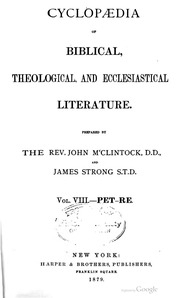


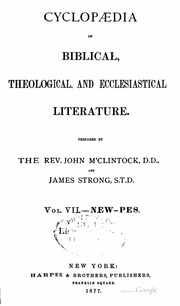
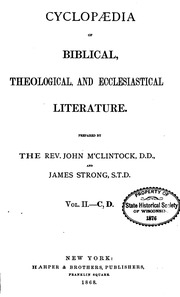


Other books for "Abraham Kuyper"


If there is a problem with the book, please report through one of the following links:
Report the book or by Contact us
E-books are complementary and supportive of paper books and never cancel it. With the click of a button, the e-book reaches anyone, anywhere in the world.
E-books may weaken your eyesight due to the glare of the screen. Support the book publisher by purchasing his original paper book. If you can access it and get it, do not hesitate to buy it.
Publish your book now for free

