HOW TO READ HUMAN NATURE

Account upgrade
The download is free, but we offer some paid services. Support us by subscribing
Delete ads and speed up browsing the library.
The download starts with the click of a button without waiting for the book to be ready.
No limits for download times.
You can upload unlimited books in the library.
Enable readers to download your books without waiting.
Delete ads on the books that you publish.
No problems with download links for your uploaded books.
Book How To Read Human Nature
Copyright reserved
The book cannot be previewed or downloaded in order to preserve the copyright of the author and publishing house
Not available digitally or on paper through the Noor Library, it is for rating and review



HOW TO READ HUMAN NATURE
| Author: | William Walker Atkinson |
| Category: | Western Philosophy [Edit] |
| Language: | English |
| Publisher: | ام كيه للنشر والتوزيع |
| Release Date: | 01 Jan 2021 |
| Rank: | 623,286 No 1 most popular |
| Short link: | Copy |
| More books like this book | |
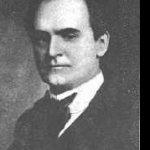
William Walker Atkinson
The Author Book HOW TO READ HUMAN NATURE and the author of 22 another books.
Pseudonyms: Theron Q. Dumont, Yogi Ramacharaka, Swami Bhakta Vishita & Swami Panchadasi
William Walker Atkinson (December 5, 1862 – November 22, 1932) was an attorney, merchant, publisher, and author, as well as an occultist and an American pioneer of the New Thought movement. He is also known to have been the author of the pseudonymous works attributed to Theron Q. Dumont, Swami Panchadasi and Yog Pseudonyms: Theron Q. Dumont, Yogi Ramacharaka, Swami Bhakta Vishita & Swami Panchadasi
William Walker Atkinson (December 5, 1862 – November 22, 1932) was an attorney, merchant, publisher, and author, as well as an occultist and an American pioneer of the New Thought movement. He is also known to have been the author of the pseudonymous works attributed to Theron Q. Dumont, Swami Panchadasi and Yogi Ramacharaka and others.
Due in part to Atkinson's intense personal secrecy and extensive use of pseudonyms, he is now largely forgotten, despite having obtained mention in past editions of Who's Who in America, Religious Leaders of America, and several similar publications—and having written than 100 books in the last 30 years of his life. His works have remained in print or less continuously since 1900.
William Walker Atkinson was born in Balti, Maryland on December 5, 1862, to William and Emma Atkinson. He began his working life as a grocer at 15 years old, probably helping his father. He married Margret Foster Black of Beverly, New Jersey, in October 1889, and they had two children. The first probably died young. The second later married and had two daughters.
Atkinson pursued a business career from 1882 onwards and in 1894 he was admitted as an attorney to the Bar of Pennsylvania. While he gained much material success in his profession as a lawyer, the stress and over-strain eventually took its toll, and during this time he experienced a complete physical and mental breakdown, and financial disaster. He looked for healing and in the late 1880s he found it with New Thought, later attributing the restoration of his health, mental vigor and material prosperity to the application of the principles of New Thought.
Some time after his healing, Atkinson began to write articles on the truths he felt he had discovered, which were then known as Mental Science. In 1889, an article by him entitled "A Mental Science Catechism," appeared in Charles Fill's new periodical, Modern Thought.
By the early 1890s Chicago had become a major centre for New Thought, mainly through the work of Emma Curtis Hopkins, and Atkinson decided to move there. Once in the city, he became an active promoter of the movement as an editor and author. He was responsible for publishing the magazines Suggestion (1900–1901), New Thought (1901–1905) and Advanced Thought (1906–1916).
In 1900 Atkinson worked as an associate editor of Suggestion, a New Thought Journal, and wrote his probable first book, Thought-Force in Business and Everyday Life, being a series of lessons in personal magnetism, psychic influence, thought-force, concentration, will-power, and practical mental science.
He then met Sydney Flower, a well-known New Thought publisher and businessman, and teamed up with him. In December, 1901 he assumed editorship of Flower's popular New Thought magazine, a post which he held until 1905. During these years he built for himself an enduring place in the hearts of its readers. Article after article flowed from his pen. Meanwhile he also founded his own Psychic Club and the so-called "Atkinson School of Mental Science". Both were located in the same building as Flower's Psychic Research and New Thought Publishing Company.
Atkinson was a past president of the International New Thought Alliance.
Throughout his subsequent career, Atkinson wrote and published under his own name and many pseudonyms. It is not known whether he ever acknowledged authorship of these pseudonymous works, but all of the supposedly independent authors whose writings are now credited to Atkinson were linked to one another by virtue of the fact that their works were released by a series of publishing houses with shared addresses and they also wrote for a series of magazines with a shared roster of authors. Atkinson was the editor of a
Book Description
How to Read Human Nature: Its Inner States and Outer Forms by William Walker Atkinson is a guide to human body language, personality, character, and qualities. It takes reading body language and voice inflection for meaning to the next level, analyzing such elements as mental qualities, emotive qualities, relative qualities, and perceptive qualities in the human brain, reminding one of the study of phrenology. A lovely complement to Atkinson's books relating to higher thought and the super- and sub-conscious, How to Read Human Nature is an ideal read for students of "New Thought." American writer WILLIAM WALKER ATKINSON (1862-1932) was editor of the popular magazine New Thought from 1901 to 1905, and editor of the journal Advanced Thought from 1916 to 1919. He authored dozens of New Thought books under numerous pseudonyms, including "Yogi," some of which are likely still unknown today.

Copyright reserved
The book cannot be previewed or downloaded in order to preserve the copyright of the author and publishing house
Not available digitally or on paper through the Noor Library, it is for rating and review
Share the book :
Book Review "HOW TO READ HUMAN NATURE"

Book Quotes "HOW TO READ HUMAN NATURE"

Other books like "HOW TO READ HUMAN NATURE"












Other books for "William Walker Atkinson"



If there is a problem with the book, please report through one of the following links:
Report the book or by Contact us
E-books are complementary and supportive of paper books and never cancel it. With the click of a button, the e-book reaches anyone, anywhere in the world.
E-books may weaken your eyesight due to the glare of the screen. Support the book publisher by purchasing his original paper book. If you can access it and get it, do not hesitate to buy it.
Publish your book now for free