Form And Content In Art

Account upgrade
The download is free, but we offer some paid services. Support us by subscribing
Delete ads and speed up browsing the library.
The download starts with the click of a button without waiting for the book to be ready.
No limits for download times.
You can upload unlimited books in the library.
Enable readers to download your books without waiting.
Delete ads on the books that you publish.
No problems with download links for your uploaded books.
Book Form And Content In Art
Copyright reserved
The book cannot be previewed or downloaded in order to preserve the copyright of the author and publishing house
Not available digitally or on paper through the Noor Library, it is for rating and review

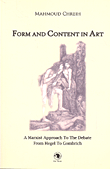

Form And Content In Art
| Author: | Mahmoud Chreih |
| Category: | Translations Related To A Specific Art Of Science [Edit] |
| Language: | English |
| Publisher: | دار نلسن |
| Release Date: | 16 May 2011 |
| Pages: | 176 |
| Rank: | 368,619 No 1 most popular |
| Short link: | Copy |
| More books like this book | |
Book Description
It is the purpose of my study here to trace the varying relations between form and content in aesthetics, the philosophy of fine art. By the word art I mean a different shape that renders content beauty, whether that shape is a sonnet, a painting, a limestone relief, a symphony, a Persian carpet, or even a Saxon tower, for all these fall under the realm of beauty.
What is beautiful is significant in form, i.e. A work of art has an aesthetic content because its shape makes it distinct from another work of art, this actual form is an outcome of both the artist and the age he lived in, and it is needless to say that the surrounding social network of that age affects, directly or indirectly, the very context or content of that particular work of art. What I am concerned with here is not a historical study of the philosophy of fine art, but rather the historical development of the varying relations between the form and content of artifacts within the essence of art itself.
Thus, I elaborate every now and then on the psychology of art and criticisms, as one is related to the wealthy accumulation of content, and the other to the history of the development of form.
Having narrowed down my topic to the historic development of the varying relations between form and content in aesthetics, I devote my study to the consideration of what beautiful is, and start naturally with Hegel’s concept of art; but I oppose it, normally, with his disciple’s concept of art, Marx, I elaborate on the dialectics of form and content between both German philosophers, pay special attention to the major trends in American and English aesthetics, and find formalism has won the battle against ideology, while Gombrich asserts the cultural tradition, Sparshott draws heavily from linguistic philosophy.

Copyright reserved
The book cannot be previewed or downloaded in order to preserve the copyright of the author and publishing house
Not available digitally or on paper through the Noor Library, it is for rating and review
Share the book :
Book Review "Form And Content In Art"

Book Quotes "Form And Content In Art"

Other books like "Form And Content In Art"







Other books for "Mahmoud Chreih"

If there is a problem with the book, please report through one of the following links:
Report the book or by Contact us
E-books are complementary and supportive of paper books and never cancel it. With the click of a button, the e-book reaches anyone, anywhere in the world.
E-books may weaken your eyesight due to the glare of the screen. Support the book publisher by purchasing his original paper book. If you can access it and get it, do not hesitate to buy it.
Publish your book now for free