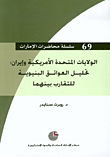
The United States And Iran: Analyzing The Structural Impediments To A Rapprochement

Account upgrade
The download is free, but we offer some paid services. Support us by subscribing
Delete ads and speed up browsing the library.
The download starts with the click of a button without waiting for the book to be ready.
No limits for download times.
You can upload unlimited books in the library.
Enable readers to download your books without waiting.
Delete ads on the books that you publish.
No problems with download links for your uploaded books.
Book The United States And Iran Analyzing The Structural Impediments To A Rapprochement
Copyright reserved
The book cannot be previewed or downloaded in order to preserve the copyright of the author and publishing house
Not available digitally or on paper through the Noor Library, it is for rating and review



The United States And Iran: Analyzing The Structural Impediments To A Rapprochement
| Author: | Robert S. Snyder |
| Category: | Ethics And Ethics [Edit] |
| Language: | English |
| Publisher: | مركز الإمارات للدراسات والبحوث السلسلة: Emirates Lecture |
| ISBN: | 9948002393 |
| Release Date: | 01 Jan 2001 |
| Pages: | 48 |
| Rank: | 774,411 No 1 most popular |
| Short link: | Copy |
| More books like this book | |
Book Description
The United States and Iran have been bitter enemies for two decades. Iran has accused the United States, among other things, of supporting the detested Shah's regime, attempting to undermine the revolution and the Islamic republic, assisting Iraq in its war against Tehran, and of trying to isolate the Islamic republic from the rest of the international community. Likewise, the United States has charged Iran, among other things, with supporting terrorism against it and others, flaunting international law and norms in seizing its embassy, trying to undermine the Arab- Israeli peace process, and promoting anti-Americanism throughout the region. Nevertheless, there have been signs of a thaw in the hostile relations in the last few years. Iran has encouraged economic and cultural changes, reduced its use of terrorism, and lowered the volume of its anti-American rhetoric. In kind, the United States has lifted a few sanctions and has encouraged a dialogue. What are the prospects for a reconciliation between the United States and Iran?
Although the two states will probably continue to improve their relations, they are unlikely to become friends in the near future because of structural impediments. To use an analogy: the two are on the road to reconciliation, but they have yet to turn the corner. The good news is that the car will probably not turn around, although it could shift into reverse gear or move forward only at a slow pace.
In analyzing the difficult relations between two states, different structural factors, issues and decision makers may be regarded. All three are related to, and overlap with, one another. In this study, the structural factors are primarily examined, because they often provide the foundation for understanding the issues that divide two states and for understanding what elites believe and do.

Copyright reserved
The book cannot be previewed or downloaded in order to preserve the copyright of the author and publishing house
Not available digitally or on paper through the Noor Library, it is for rating and review
Share the book :
Book Review "The United States And Iran: Analyzing The Structural Impediments To A Rapprochement"

Book Quotes "The United States And Iran: Analyzing The Structural Impediments To A Rapprochement"

Other books like "The United States And Iran: Analyzing The Structural Impediments To A Rapprochement"








If there is a problem with the book, please report through one of the following links:
Report the book or by Contact us
E-books are complementary and supportive of paper books and never cancel it. With the click of a button, the e-book reaches anyone, anywhere in the world.
E-books may weaken your eyesight due to the glare of the screen. Support the book publisher by purchasing his original paper book. If you can access it and get it, do not hesitate to buy it.
Publish your book now for free