Russias Relations With The Arab World

Account upgrade
The download is free, but we offer some paid services. Support us by subscribing
Delete ads and speed up browsing the library.
The download starts with the click of a button without waiting for the book to be ready.
No limits for download times.
You can upload unlimited books in the library.
Enable readers to download your books without waiting.
Delete ads on the books that you publish.
No problems with download links for your uploaded books.
Book Russias Relations With The Arab World
Copyright reserved
The book cannot be previewed or downloaded in order to preserve the copyright of the author and publishing house
Not available digitally or on paper through the Noor Library, it is for rating and review

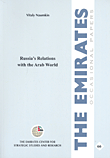

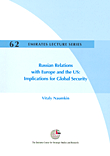
Russias Relations With The Arab World
| Author: | Vitaly Naumkin |
| Category: | Relationship Marketing [Edit] |
| Language: | English |
| Publisher: | مركز الإمارات للدراسات والبحوث السلسلة: THE EMIRATES OCCASIONAL PAPERS |
| Release Date: | 01 Dec 2008 |
| Pages: | 70 |
| Rank: | 741,095 No 1 most popular |
| Short link: | Copy |
| More books like this book | |
Book Description
During the 1990s the Russian Federation critically downgraded its relations with Middle Eastern states due to its economic difficulties and also on account of the predominant orientation of its new political class towards the Euro-Atlantic community. However, Russia did inherit from its Soviet days the role of cosponsor of the Arab-Israeli peace process and managed to establish diplomatic relations with new partners in the Arabian Gulf, yet the Asian direction of Russia’s policy was generally put on the back burner.
It was only after the post-Soviet transition period – with its associated developmental difficulties and insecurity – that Russia began to assume once again its role in the world and started to rectify the imbalance between its Western and Asian focus on foreign policy (including its special Islamic dimension) and began to make up lost ground. Many Russian experts believe that the current high rates of economic growth enjoyed under the current macroeconomic policies will enable Russia in the coming decade to become the sixth largest economy in the world, and by 2020 to be one of the world’s five largest economies. Worthy of note in this respect are the goals set by President Vladimir Putin in early 2008, which aim to strengthen market and democratic transformations and help move Russia’s economy from the inertia-ridden path based on energy and raw material exports to the path of innovation.
In the atmosphere of political self-improvement during Putin’s presidency, Russia developed its relations with the Middle-Eastern states, raised the level of its involvement in the regional and global politics of the region, and demonstrated its determination to follow an independent policy towards sensitive political issues such as Iraq or Iran’s nuclear program. A number of important directions can be singled out from Russia’s Middle-Eastern policy where considerable success has been achieved.
Today, a strong, more self-confident Russia is becoming an important force for political change in the world and has emerged once more as an actor in international politics and a state that values its developing relations with the Arab world and the Middle East in general.

Copyright reserved
The book cannot be previewed or downloaded in order to preserve the copyright of the author and publishing house
Not available digitally or on paper through the Noor Library, it is for rating and review
Share the book :
Book Review "Russias Relations With The Arab World"

Book Quotes "Russias Relations With The Arab World"

Other books like "Russias Relations With The Arab World"

Other books for "Vitaly Naumkin"
If there is a problem with the book, please report through one of the following links:
Report the book or by Contact us
E-books are complementary and supportive of paper books and never cancel it. With the click of a button, the e-book reaches anyone, anywhere in the world.
E-books may weaken your eyesight due to the glare of the screen. Support the book publisher by purchasing his original paper book. If you can access it and get it, do not hesitate to buy it.
Publish your book now for free