Sufism In Arabic Poetry; Its Origins And Development Until The End Of The Third Century AH

Account upgrade
The download is free, but we offer some paid services. Support us by subscribing
Delete ads and speed up browsing the library.
The download starts with the click of a button without waiting for the book to be ready.
No limits for download times.
You can upload unlimited books in the library.
Enable readers to download your books without waiting.
Delete ads on the books that you publish.
No problems with download links for your uploaded books.
Book Sufism In Arabic Poetry Its Origins And Development Until The End Of The Third Century Ah
Copyright reserved
The book cannot be previewed or downloaded in order to preserve the copyright of the author and publishing house
Not available digitally or on paper through the Noor Library, it is for rating and review



Sufism In Arabic Poetry; Its Origins And Development Until The End Of The Third Century AH
| Author: | Abdul Hakim Hassan |
| Category: | Islamic Mysticism [Edit] |
| Language: | Arabic |
| Publisher: | نور حوران للدراسات والنشر والترجمة |
| Release Date: | 25 Jan 2010 |
| Pages: | 380 |
| Rank: | 335,951 No 1 most popular |
| Short link: | Copy |
| More books like this book | |
Book Description
اللغة الصوفية لغة عالية، تفتح تساؤلات، وتحتمل تأويلات كثيرة، ولأنها لغة رمز، فإنه لا بد لنا أن نتأمل ما وراء النص الصوفي؛ فالرمز - حسب أدونيس - "هو، قبل كل شيء، معنى خفي، وإيحاء، إنه اللغة التي تبدأ حين تنتهي لغة القصيدة، او هو القصيدة التي تتكون في وعيك بعد قراءة القصيدة...".
أحدثت اللغة الصوفية تغييراً كبيراً في اللغة العربية، وبرز المتصوفة كمجددين، وبتعبير أدق، كان المتصوفة قادة الثورة اللغوية في التاريخ العربي، ويمكن التجرؤ على القول إن بداية الحداثة في تاريخ اللغة العربية، انطلقت مع كلام المتصوفة، وما زال المتصوفة إلى اليوم يعتبرون سادة في علم اللغة، وما زال تأثيرهم قوياً في الشعر الحديث وفي الأدب المعاصر عموماً.
وللأسف فعلاً، إنه لم يأت، ومنذ أيام المتصوفين العرب إلى اليوم، من جاء وإستطاع أن يفجر اللغة ويتفوق على اللغة الصوفية.
وببساطة، إن المتصوفة قد حطموا نظام اللغة الذي كان سائداً، وتجرؤوا، بحرفية قل نظيرها، أن يخربوا المنطق الداخلي للغة، لقد اخترعوا لغة عربية جديدة، من الحروف نفسها، ولكن بدلالات جديدة وخارقة.
كما تميز شعراء الصوفية بعدة قضايا، كان في مقدمتها زهدهم وتقشفهم في الدنيا، وتركز شعرهم حول الوعظ وضرورة الزهد كطريق موصل إلى الله، والقضية الثانية تمحورت حول الحب الإلهي والتودد إلى الله كهدف رئيس، والقضية الثالثة تركزت حول المقامات، وتحدثت حول المكاسب التي ينالها العابد المتصوف من مجاهداته الروحية، أما القضية الرابعة فهي سرد التجربة الروحية والمجاهدة المضنية لكل صوفي.
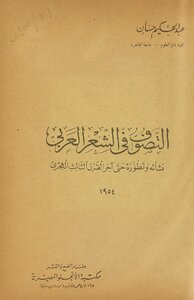
جاء عنوان هذا الكتاب (التصوف في الشعر العربي... نشأته وتطوُرُه حتى آخر القَرْن الثالث الهجري) للأستاذ عبد الحكيم حسان الأستاذ في كلية دار العلوم في جامعة القاهرة، وقد طبع هذا الكتاب للمرة الأولى، عام 1954، ولأهميته وللجهد الهائل الذي قام به المؤلف دفعه الأستاذ "عقبة زيدان" فن جديد إلى واجهة المكتبات.
واستهل المؤلف كتابه بتمهيد، عرض فيه أهم مسائل التصوف ومذاهبه في القرون الثلاثة الأولى للهجرة، كما تتبع المؤلف في الباب الأول النزعات الروحية في الشعر العربي قبل القرن الثالث للهجرة، أما الباب الثاني فتناول الشعر الصوفي في القرن الثالث للهجرة.

Copyright reserved
The book cannot be previewed or downloaded in order to preserve the copyright of the author and publishing house
Not available digitally or on paper through the Noor Library, it is for rating and review
Share the book :
Book Review "Sufism In Arabic Poetry; Its Origins And Development Until The End Of The Third Century AH"

Book Quotes "Sufism In Arabic Poetry; Its Origins And Development Until The End Of The Third Century AH"

Other books like "Sufism In Arabic Poetry; Its Origins And Development Until The End Of The Third Century AH"








Other books for "Abdul Hakim Hassan"


If there is a problem with the book, please report through one of the following links:
Report the book or by Contact us
E-books are complementary and supportive of paper books and never cancel it. With the click of a button, the e-book reaches anyone, anywhere in the world.
E-books may weaken your eyesight due to the glare of the screen. Support the book publisher by purchasing his original paper book. If you can access it and get it, do not hesitate to buy it.
Publish your book now for free