THE YEMENIWAR OF 1994, CAUSES AND CONSEQUENCES

Account upgrade
The download is free, but we offer some paid services. Support us by subscribing
Delete ads and speed up browsing the library.
The download starts with the click of a button without waiting for the book to be ready.
No limits for download times.
You can upload unlimited books in the library.
Enable readers to download your books without waiting.
Delete ads on the books that you publish.
No problems with download links for your uploaded books.
Book The Yemeniwar Of 1994 Causes And Consequences
Copyright reserved
The book cannot be previewed or downloaded in order to preserve the copyright of the author and publishing house
Not available digitally or on paper through the Noor Library, it is for rating and review

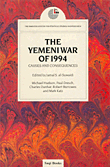

THE YEMENIWAR OF 1994, CAUSES AND CONSEQUENCES
| Author: | Jamal S. Al-Suwaidi |
| Category: | Ethics And Ethics [Edit] |
| Language: | English |
| Publisher: | دار الساقي للطباعة والنشر |
| ISBN: | 863563007 |
| Release Date: | 01 Jan 1995 |
| Pages: | 130 |
| Rank: | 629,274 No 1 most popular |
| Short link: | Copy |
| More books like this book | |
Book Description
On May 22, 1990, a long -standing Yemeni national dream became a reality when North and South Yemen were united in the Republic of Yemen. The process of political integration was violently disrupted four years later, however, and civil war broke out. This book is an examination of the 1994 civil war by five international area experts.
The events leading to the comflict are viewed from both Northern and Southern perspectives. The inherent tensions in wedding a socialist society with a traditional, tribal-dominated one are analyzed in an attempt to discover the extent to which each of the contending parties attempted to impose its view of the world on the other. The South's fear of Islamic fundamentalism emanating from the North is contrasted with Northern concerns of a Southern push to advance social progress at the expense of traditionalism.
A major chapter focuses on the tribes and tribal organizations in the contemporary political development of Yemen. Tribalism as a system-and whether it played a role in the 1994 civil war-is also discussed in detail.The regional implications of the civil war are then examined. In assessing the consequences for the Arabian peninsula, particular attention is paid to Yemen's capacity to influence events in the region, its relationship with Saudi Arabia and the other Gulf Cooperation Council (GCC) states and the functioning of a balance-of-power system in the area.
The potential for large oil discoveries and the fear of spillover effects from attempts at democratization are all sources of instability for Yemen's internal comdition as well as for its regional neighbors. Finally, the issue of de-linking Saudi-Yemeni tensions from GCC politics is addressed to determine whether countries such as Iraq and Iran could play the 'Yemeni card' to erode GCC unity.

Copyright reserved
The book cannot be previewed or downloaded in order to preserve the copyright of the author and publishing house
Not available digitally or on paper through the Noor Library, it is for rating and review
Share the book :
Book Review "THE YEMENIWAR OF 1994, CAUSES AND CONSEQUENCES"

Book Quotes "THE YEMENIWAR OF 1994, CAUSES AND CONSEQUENCES"

Other books like "THE YEMENIWAR OF 1994, CAUSES AND CONSEQUENCES"











If there is a problem with the book, please report through one of the following links:
Report the book or by Contact us
E-books are complementary and supportive of paper books and never cancel it. With the click of a button, the e-book reaches anyone, anywhere in the world.
E-books may weaken your eyesight due to the glare of the screen. Support the book publisher by purchasing his original paper book. If you can access it and get it, do not hesitate to buy it.
Publish your book now for free