Turkish Relations With The Middle East

Account upgrade
The download is free, but we offer some paid services. Support us by subscribing
Delete ads and speed up browsing the library.
The download starts with the click of a button without waiting for the book to be ready.
No limits for download times.
You can upload unlimited books in the library.
Enable readers to download your books without waiting.
Delete ads on the books that you publish.
No problems with download links for your uploaded books.
Book Turkish Relations With The Middle East
Copyright reserved
The book cannot be previewed or downloaded in order to preserve the copyright of the author and publishing house
Not available digitally or on paper through the Noor Library, it is for rating and review

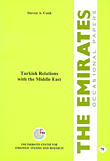

Turkish Relations With The Middle East
| Author: | Steven A. Cook |
| Category: | Conflicts And Wars In The Middle East [Edit] |
| Language: | English |
| Publisher: | مركز الإمارات للدراسات والبحوث السلسلة: The Emirates occasional papers |
| ISBN: | 9789948144762 |
| Release Date: | 31 Oct 2012 |
| Pages: | 42 |
| Rank: | 532,687 No 1 most popular |
| Short link: | Copy |
| More books like this book | |
Book Description
Although it seems entirely appropriate for Turkey to want to broaden and deepen its relations with its neighbors and other countries in the Middle East, the shift in policy has been so dramatic that it led both Western and some Turkish observers to question whether Turkey was shifting away from its traditional Western foreign policy posture. The fact that the ruling party’s lineage can be traced back to the founding of Turkey’s Islamist movement in the late 1960s under the leadership of Necmettin Erbakan only accentuated concerns about Ankara’s efforts to forge a new path in the Middle East. After all, Turkey had long been a tepid and cautious observer of Middle Eastern politics, devoting most of its diplomatic energy on the institutionalization of relations with Europe and the United States. This Western orientation, especially Ankara’s NATO membership, was prior to the rise of the AKP a source of mistrust with which the Arab world tended to view Turkey. More profoundly, the combination of the Ottoman colonial legacy in the Middle East and Kemalism’s official policy of laiklik (secularism), which seemed to many in the Middle East as irreligious, sowed an unarticulated but unmistakable divide between Turkey and the Arab world.
Turkey’s new-found role in the Middle East will neither be as triumphant as some in Ankara suggest nor as malevolent as AKP’s Western opponents imply. There should be no doubt that Turkey is in the Middle East to stay. Still, Ankara’s hoped for role as a regional power broker may be in jeopardy as a result of the Arab Spring. This is not the consequence of early missteps on Libya and Syria, but because if Arab countries, especially Egypt, prove to be successful, Arabs will once again look within for leadership. As important as Ankara has been over the last decade, if Egypt regains its regional luster, Cairo will once again be the central locus of knowledge, cultural production and Middle Eastern political as well as diplomatic power. This is not to say that Turkey would return to a secondary role under such circumstances and its most enduring role in the Middle East is its ability to be the economic engine of the region. Indeed, the best way for Turkey to influence the trajectory of the Arab world undergoing unprecedented change is through its entrepreneurial spirit and willingness to invest in places where others may not. This may not be the grand vision that Erdoğan, Davutoğlu or other AKP leaders had in mind for Turkey in the region, but Turkey’s economic prowess may be the most important factor in ultimately achieving its goal of "zero problems" in the country’s immediate neighborhood.

Copyright reserved
The book cannot be previewed or downloaded in order to preserve the copyright of the author and publishing house
Not available digitally or on paper through the Noor Library, it is for rating and review
Share the book :
Book Review "Turkish Relations With The Middle East"

Book Quotes "Turkish Relations With The Middle East"

Other books like "Turkish Relations With The Middle East"





If there is a problem with the book, please report through one of the following links:
Report the book or by Contact us
E-books are complementary and supportive of paper books and never cancel it. With the click of a button, the e-book reaches anyone, anywhere in the world.
E-books may weaken your eyesight due to the glare of the screen. Support the book publisher by purchasing his original paper book. If you can access it and get it, do not hesitate to buy it.
Publish your book now for free