Black Athena: The Afro-Asian Roots Of Classical Civilization

Account upgrade
The download is free, but we offer some paid services. Support us by subscribing
Delete ads and speed up browsing the library.
The download starts with the click of a button without waiting for the book to be ready.
No limits for download times.
You can upload unlimited books in the library.
Enable readers to download your books without waiting.
Delete ads on the books that you publish.
No problems with download links for your uploaded books.
Book Black Athena The Afro Asian Roots Of Classical Civilization
Copyright reserved
The book cannot be previewed or downloaded in order to preserve the copyright of the author and publishing house
Not available digitally or on paper through the Noor Library, it is for rating and review

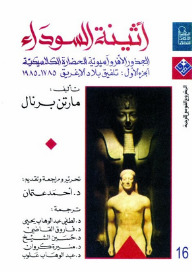

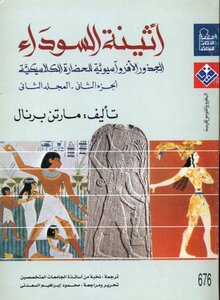
Black Athena: The Afro-Asian Roots Of Classical Civilization
| Author: | Martin Bernal , Martin Bernal |
| Category: | Classical Physics [Edit] |
| Language: | Arabic |
| Release Date: | 01 Jan 1987 |
| Rank: | 314,433 No 1 most popular |
| Short link: | Copy |
| More books like this book | |
Book Description
This volume is the second in a projected four-part series concerned with the competition between two historical models for the origins of Greek civilization. The model current today is the Aryan Model, according to which Greek culture arose as the result of the conquest from the north by Indo-European speakers or "Aryans" of the native "pre-Hellenes." The Ancient Model, wh This volume is the second in a projected four-part series concerned with the competition between two historical models for the origins of Greek civilization. The model current today is the Aryan Model, according to which Greek culture arose as the result of the conquest from the north by Indo-European speakers or "Aryans" of the native "pre-Hellenes." The Ancient Model, which was the model maintained in Classical Greece, held that the native population of Greece had initially been civilized by Egyptian and Phoenician colonists and that more Near Eastern culture had been introduced to Greece by Greeks studying in Egypt and Southwest Asia. In these and later volumes, Martin Bernal proposes a Revised Ancient Model. According to this, the Indo-European aspects of Greek language and culture should be recognized as fundamental and the considerable non-Indo-European elements should be seen largely as Egyptian and Levantine additions to this basis.
Volume II is concerned with the archaeological and documentary evidence for contacts between Egypt and the Levant on the one hand and the Aegean on the other, during the Bronze Age from c. 3400 B.C. to c. 1100 B.C. These approaches are supplemented by information from later Greek myths, legends, religious cults, and language. The author concludes that contact between the two regions was far more extensive and influential than is generally believed. In the introduction to this volume, Bernal also responds to some reviews and criticisms of Volume I of Black Athena.
Martin Bernal is Professor of Government at Cornell University.

Copyright reserved
The book cannot be previewed or downloaded in order to preserve the copyright of the author and publishing house
Not available digitally or on paper through the Noor Library, it is for rating and review
Share the book :
Book Review "Black Athena: The Afro-Asian Roots Of Classical Civilization"

Book Quotes "Black Athena: The Afro-Asian Roots Of Classical Civilization"

Other books like "Black Athena: The Afro-Asian Roots Of Classical Civilization"
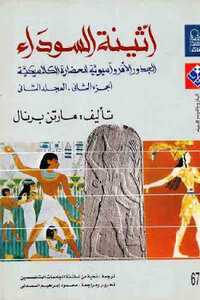

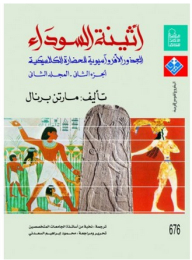







If there is a problem with the book, please report through one of the following links:
Report the book or by Contact us
E-books are complementary and supportive of paper books and never cancel it. With the click of a button, the e-book reaches anyone, anywhere in the world.
E-books may weaken your eyesight due to the glare of the screen. Support the book publisher by purchasing his original paper book. If you can access it and get it, do not hesitate to buy it.
Publish your book now for free