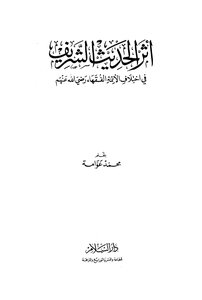
The Influence Of The Noble Hadith Upon The Differences Of Opinion Amongst The Jurist Imams

Account upgrade
The download is free, but we offer some paid services. Support us by subscribing
Delete ads and speed up browsing the library.
The download starts with the click of a button without waiting for the book to be ready.
No limits for download times.
You can upload unlimited books in the library.
Enable readers to download your books without waiting.
Delete ads on the books that you publish.
No problems with download links for your uploaded books.
Book The Influence Of The Noble Hadith Upon The Differences Of Opinion Amongst The Jurist Imams
Copyright reserved
The book cannot be previewed or downloaded in order to preserve the copyright of the author and publishing house
Not available digitally or on paper through the Noor Library, it is for rating and review

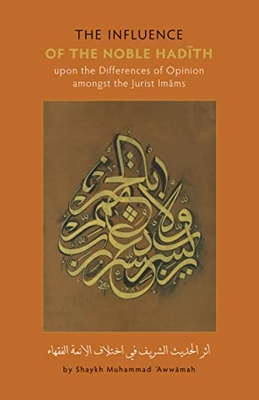

The Influence Of The Noble Hadith Upon The Differences Of Opinion Amongst The Jurist Imams
| Author: | Muhammad Awama , Mariam Madge Conlan , Muhammad Ibn Adam |
| Category: | Scientific Miracles In The Quran And Sunnah [Edit] |
| Language: | English |
| Publisher: | Turath Publishing |
| Release Date: | 01 Jan 2014 |
| Pages: | 235 |
| Rank: | 329,854 No 1 most popular |
| Short link: | Copy |
| More books like this book | |
Book Description
A question commonly posed in different circles is: if we all refer to the same sacred texts of the Quran and Sunnah for guidance, why are there so many differences between the schools of Islamic law (madhahib)? In other words, why did the great jurists (fuqaha) of Islam such as the four main Imams and their students differ in their opinions and rulings? This work attempts A question commonly posed in different circles is: if we all refer to the same sacred texts of the Quran and Sunnah for guidance, why are there so many differences between the schools of Islamic law (madhahib)? In other words, why did the great jurists (fuqaha) of Islam such as the four main Imams and their students differ in their opinions and rulings? This work attempts to answer this very question, focusing on one aspect, namely: how different understandings of the hadith literature influenced and shaped these differences in opinion. In addition, the author responds to some of the misgivings and objections which some people levy against these distinguished luminaries of Islam.
This valuable work is a must-read for students of hadith and fiqh, as well as anyone wishing to gain a better understanding of the differences that occur between the various schools of Islamic law. It will alert the reader to the expertise of the jurist Imams and the effort they exerted in deriving rulings from the Quran and Sunnah. It will also create in him a state of serenity and trust towards the Imams and their schools of law, which are followed by the vast majority of the Muslim Ummah.

Copyright reserved
The book cannot be previewed or downloaded in order to preserve the copyright of the author and publishing house
Not available digitally or on paper through the Noor Library, it is for rating and review
Share the book :
Book Review "The Influence Of The Noble Hadith Upon The Differences Of Opinion Amongst The Jurist Imams"

Book Quotes "The Influence Of The Noble Hadith Upon The Differences Of Opinion Amongst The Jurist Imams"

Other books like "The Influence Of The Noble Hadith Upon The Differences Of Opinion Amongst The Jurist Imams"
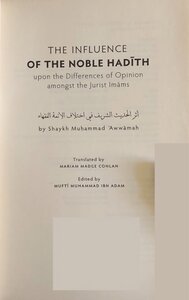
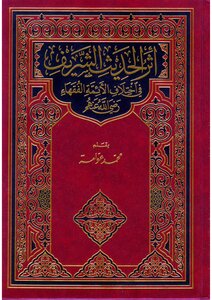






If there is a problem with the book, please report through one of the following links:
Report the book or by Contact us
E-books are complementary and supportive of paper books and never cancel it. With the click of a button, the e-book reaches anyone, anywhere in the world.
E-books may weaken your eyesight due to the glare of the screen. Support the book publisher by purchasing his original paper book. If you can access it and get it, do not hesitate to buy it.
Publish your book now for free