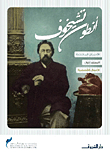
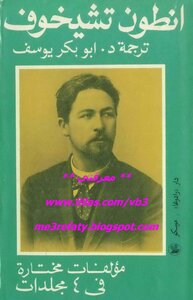
-Anton Chekhov: Selected Works In 4 Volumes - Volume Four

Account upgrade
The download is free, but we offer some paid services. Support us by subscribing
Delete ads and speed up browsing the library.
The download starts with the click of a button without waiting for the book to be ready.
No limits for download times.
You can upload unlimited books in the library.
Enable readers to download your books without waiting.
Delete ads on the books that you publish.
No problems with download links for your uploaded books.
Book Anton Chekhov Selected Works In 4 Volumes Volume Four
Copyright reserved
The book cannot be previewed or downloaded in order to preserve the copyright of the author and publishing house
Not available digitally or on paper through the Noor Library, it is for rating and review

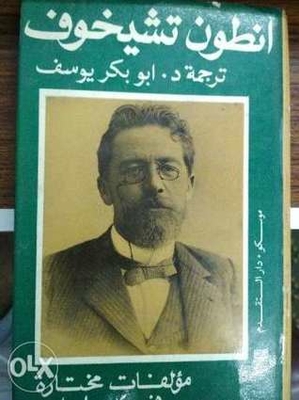

-Anton Chekhov: Selected Works In 4 Volumes - Volume Four
| Author: | Anton Chekhov |
| Category: | The Importance Of Education [Edit] |
| Language: | Arabic |
| Publisher: | دار رادوغا (first published 1981) |
| ISBN: | 9789770925254 |
| Release Date: | 01 Jan 1988 |
| Pages: | 470 |
| Rank: | 299,029 No 1 most popular |
| Short link: | Copy |
| More books like this book | |

Anton Chekhov
The Author Book -Anton Chekhov: Selected Works In 4 Volumes - Volume Four and the author of 3 another books.
Anton Pavlovich Chekhov (Russian: Антон Павлович Чехов ) was born in the small seaport of Taganrog, southern Russia, the son of a grocer. Chekhov's grandfather was a serf, who had bought his own freedom and that of his three sons in 1841. He also taught himself to read and write. Yevgenia Morozova, Chekhov's mother, was the daughter of a cloth merchant.
"When I think back on my childhood," Chekh Anton Pavlovich Chekhov (Russian: Антон Павлович Чехов ) was born in the small seaport of Taganrog, southern Russia, the son of a grocer. Chekhov's grandfather was a serf, who had bought his own freedom and that of his three sons in 1841. He also taught himself to read and write. Yevgenia Morozova, Chekhov's mother, was the daughter of a cloth merchant.
"When I think back on my childhood," Chekhov recalled, "it all seems quite gloomy to me." His early years were shadowed by his father's tyranny, religious fanaticism, and long nights in the store, which was open from five in the morning till midnight. He attended a school for Greek boys in Taganrog (1867-68) and Taganrog grammar school (1868-79). The family was forced to move to Moscow following his father's bankruptcy. At the age of 16, Chekhov became independent and remained for some time alone in his native town, supporting himself through private tutoring.
In 1879 Chekhov entered the Moscow University Medical School. While in the school, he began to publish hundreds of comic short stories to support himself and his mother, sisters and brothers. His publisher at this period was Nicholas Leikin, owner of the St. Petersburg journal Oskolki (splinters). His subjects were silly social situations, marital problems, farcical encounters between husbands, wives, mistresses, and lovers, whims of young women, of whom Chekhov had not much knowledge – the author was shy with women even after his marriage. His works appeared in St. Petersburg daily papers, Peterburskaia gazeta from 1885, and Novoe vremia from 1886.
Chekhov's first novel, Nenunzhaya pobeda (1882), set in Hungary, parodied the novels of the popular Hungarian writer Mór Jókai. As a politician Jókai was also mocked for his ideological optimism. By 1886 Chekhov had gained a wide fame as a writer. His second full-length novel, The Shooting Party, was translated into English in 1926. Agatha Christie used its characters and atmosphere in her mystery novel The Murder of Roger Ackroyd (1926).
Chekhov graduated in 1884, and practiced medicine until 1892. In 1886 Chekhov met H.S. Suvorin, who invited him to become a regular contributor for the St. Petersburg daily Novoe vremya. His friendship with Suvorin ended in 1898 because of his objections to the anti-Dreyfus campaingn conducted by paper. But during these years Chechov developed his concept of the dispassionate, non-judgemental author. He outlined his program in a letter to his brother Aleksandr: "1. Absence of lengthy verbiage of political-social-economic nature; 2. total objectivity; 3. truthful descriptions of persons and objects; 4. extreme brevity; 5. audacity and originality; flee the stereotype; 6. compassion."
Chekhov's first book of stories (1886) was a success, and gradually he became a full-time writer. The author's refusal to join the ranks of social critics arose the wrath of liberal and radical intellitentsia and he was criticized for dealing with serious social and moral questions, but avoiding giving answers. However, he was defended by such leading writers as Leo Tolstoy and Nikolai Leskov. "I'm not a liberal, or a conservative, or a gradualist, or a monk, or an indifferentist. I should like to be a free artist and that's all" Chekhov said in 1888.
The failure of his play The Wood Demon (1889) and problems with his novel made Chekhov to withdraw from literature for a period. In 1890 he travelled across Siberia to remote prison island, Sakhalin. There he conducted a detailed census of some 10,000 convicts and settlers condemned to live their lives on that harsh island. Chekhov hoped to use the results of his research for his doctoral dissertation. It is probable that hard conditions on the island also weakened his own physical condition. From this journey was born his famous travel book T
Book Description
أنطون تشيخوف 1860 - 1904 بالنسبة للكثيرين من المهتمين بالأدب فى كل أنحاء العالم هو أعظم كُتَّاب القصة القصيرة ورائدها الأهم. كما لايقل أهمية عن ذلك ككاتب مسرحى وروائى استطاع عبر أعماله العديدة أن يحفر اسمه في ذاكرة الإنسانية، وأن يرسخ قيماً فنية تحولت إلى مدارس ومذاهب فى الكتابة، مازالت فاعلة ومؤثرة حتى الآن..
هنا نقرأ أعمال تشيخوف بترجمة «أبو بكر يوسف» والتى تصدر فى 4 أجزا أنطون تشيخوف 1860 - 1904 بالنسبة للكثيرين من المهتمين بالأدب فى كل أنحاء العالم هو أعظم كُتَّاب القصة القصيرة ورائدها الأهم. كما لايقل أهمية عن ذلك ككاتب مسرحى وروائى استطاع عبر أعماله العديدة أن يحفر اسمه في ذاكرة الإنسانية، وأن يرسخ قيماً فنية تحولت إلى مدارس ومذاهب فى الكتابة، مازالت فاعلة ومؤثرة حتى الآن..
هنا نقرأ أعمال تشيخوف بترجمة «أبو بكر يوسف» والتى تصدر فى 4 أجزاء الأعمال القصصية - الروايات القصيرة - الروايات - المسرحيات، وهى الترجمة التى يحرص الكثيرون على اقتنائها كترجمة متكاملة نقلت النص بحب فخرج على درجة عالية من الحساسية اللغوية الأخاذة.
هذا هو المجلد الرابع.. يضم المسرحيات الخالدة لتشيخوف وهى حول مضار التبغ، الدب، النورس، الخال فانيا، الشقيقات الثلاث، بستان الكرز

Copyright reserved
The book cannot be previewed or downloaded in order to preserve the copyright of the author and publishing house
Not available digitally or on paper through the Noor Library, it is for rating and review
Share the book :
Book Review "-Anton Chekhov: Selected Works In 4 Volumes - Volume Four"


Other books like "-Anton Chekhov: Selected Works In 4 Volumes - Volume Four"





Other books for "Anton Chekhov"


If there is a problem with the book, please report through one of the following links:
Report the book or by Contact us
E-books are complementary and supportive of paper books and never cancel it. With the click of a button, the e-book reaches anyone, anywhere in the world.
E-books may weaken your eyesight due to the glare of the screen. Support the book publisher by purchasing his original paper book. If you can access it and get it, do not hesitate to buy it.
Publish your book now for free