Madame Bovary

Account upgrade
The download is free, but we offer some paid services. Support us by subscribing
Delete ads and speed up browsing the library.
The download starts with the click of a button without waiting for the book to be ready.
No limits for download times.
You can upload unlimited books in the library.
Enable readers to download your books without waiting.
Delete ads on the books that you publish.
No problems with download links for your uploaded books.
Book Madame Bovary
Copyright reserved
The book cannot be previewed or downloaded in order to preserve the copyright of the author and publishing house
Not available digitally or on paper through the Noor Library, it is for rating and review



Madame Bovary
| Author: | Gustave Flaubert |
| Category: | Thriller And Adventure Novels Translated [Edit] |
| Language: | English |
| Publisher: | Virgin Books |
| Release Date: | 01 Jan 2019 |
| Rank: | 577,946 No 1 most popular |
| Short link: | Copy |
| More books like this book | |
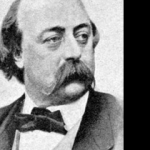
Gustave Flaubert
The Author Book Madame Bovary and the author of 1 another books.
Gustave Flaubert (December 12, 1821 – May 8, 1880) is counted among the greatest Western novelists. He was born in Rouen, Seine-Maritime, in the Haute-Normandie Region of France.
Flaubert's curious modes of composition favored and were emphasized by these peculiarities. He worked in sullen solitude, sometimes occupying a week in the completion of one page, never satisfied with what he had composed, Gustave Flaubert (December 12, 1821 – May 8, 1880) is counted among the greatest Western novelists. He was born in Rouen, Seine-Maritime, in the Haute-Normandie Region of France.
Flaubert's curious modes of composition favored and were emphasized by these peculiarities. He worked in sullen solitude, sometimes occupying a week in the completion of one page, never satisfied with what he had composed, violently tormenting his brain for the best turn of a phrase, the most absolutely final adjective. It cannot be said that his incessant labors were not rewarded. His private letters show that he was not one of those to whom easy and correct language is naturally given; he gained his extraordinary perfection with the unceasing sweat of his brow. One of the most severe of academic critics admits that in all his works, and in every page of his works, Flaubert may be considered a model of style.
That he was one of the greatest writers who ever lived in France is now commonly admitted, and his greatness principally depends upon the extraordinary vigour and exactitude of his style. Less perhaps than any other writer, not of France, but of modern Europe, Flaubert yields admission to the inexact, the abstract, the vaguely inapt expression which is the bane of ordinary methods of composition. He never allowed a cliché to pass him, never indulgently or wearily went on, leaving behind him a phrase which almost expressed his meaning. Being, as he is, a mixture in almost equal parts of the romanticist and the realist, the marvellous propriety of his style has been helpful to later writers of both schools, of every school. The absolute exactitude with which he adapts his expression to his purpose is seen in all parts of his work, but particularly in the portraits he draws of the figures in his principal romances. The degree and manner in which, since his death, the fame of Flaubert has extended, form an interesting chapter of literary history.
The publication of Madame Bovary in 1857 had been followed by scandal than admiration; it was not understood at first that this novel was the beginning of something new, the scrupulously truthful portraiture of life. Gradually this aspect of his genius was accepted, and began to crowd out all others. At the time of his death he was famous as a realist, pure and simple. Under this aspect Flaubert exercised an extraordinary influence over Émile de Goncourt, Alphonse Daudet and Zola. But even after the decline of the realistic school Flaubert did not lose prestige; other facets of his genius caught the light. It has been perceived that he was not merely realistic, but real; that his clairvoyance was almost boundless; that he saw certain phenomena clearly than the best of observers had done. Flaubert is a writer who must always appeal to other authors than to the world at large, because the art of writing, the indefatigable pursuit of perfect expression, were always before him, and because he hated the lax felicities of improvisation as a disloyalty to the most sacred procedures of the literary artist.
He can be said to have made cynicism into an art-form, as evinced by this observation from 1846:
To be stupid, and selfish, and to have good health are the three requirements for happiness; though if stupidity is lacking, the others are useless.
His Oeuvres Complètes (8 vols., 1885) were printed from the original manuscripts, and included, besides the works mentioned already, the two plays, Le Candidat and Le Château des avurs. Another edition (10 vols.) appeared in 1873–1885. Flaubert's correspondence with George Sand was published in 1884 with an introduction by Guy de Maupassant.
He has been admired or written about by almost every major literary personality of the 20th century, including philosophers such as Pierre Bourdieu. Georges Perec named Sentimental Education as one of his favou
Book Description
Following the success of the Vintage Classics Russians series, these are equally gorgeous editions of must-have European classics
The Vintage Classics Europeans series - with covers provided by textile design firm Wallace Sewell, these are must-have editions of European masterpieces, celebrating the warp and weft of a shared literary treasury.
TRANSLATED FROM THE FRENCH BY AWARD-WINNING NOVELIST (AUTHOR OF ULVERTON) AND POET ADAM THORPE
Madame Bovary begins where many other novels end: with marriage. But Emma Bovary is ill-prepared for the prosaic reality of life as a country doctor’s wife, and so plunges into a doomed search for passion and delight, flitting from fantasy to religion, from hedonism to devoted motherhood, from shopping to extra-marital sex. Flaubert’s brutally beautiful tale is subversive in its sexual frankness, revolutionary in its influence and an inexhaustible pleasure to read.
‘One of the finest novels in any language’ Independent

Copyright reserved
The book cannot be previewed or downloaded in order to preserve the copyright of the author and publishing house
Not available digitally or on paper through the Noor Library, it is for rating and review
Share the book :
Book Review "Madame Bovary"

Book Quotes "Madame Bovary"

Other books like "Madame Bovary"
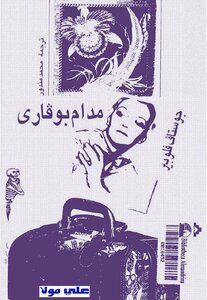



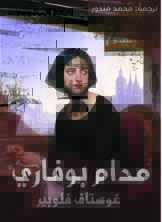
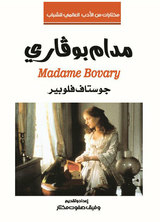
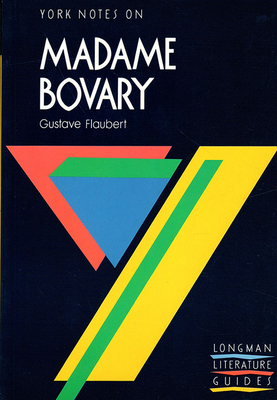

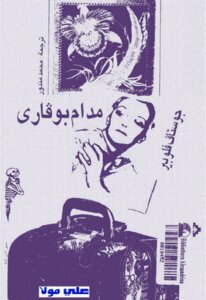
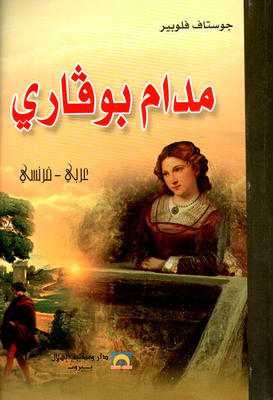
Other books for "Gustave Flaubert"

If there is a problem with the book, please report through one of the following links:
Report the book or by Contact us
E-books are complementary and supportive of paper books and never cancel it. With the click of a button, the e-book reaches anyone, anywhere in the world.
E-books may weaken your eyesight due to the glare of the screen. Support the book publisher by purchasing his original paper book. If you can access it and get it, do not hesitate to buy it.
Publish your book now for free