The Seven Habits Of Most Effective People

Account upgrade
The download is free, but we offer some paid services. Support us by subscribing
Delete ads and speed up browsing the library.
The download starts with the click of a button without waiting for the book to be ready.
No limits for download times.
You can upload unlimited books in the library.
Enable readers to download your books without waiting.
Delete ads on the books that you publish.
No problems with download links for your uploaded books.
Book The Seven Habits Of Most Effective People
Copyright reserved
The book cannot be previewed or downloaded in order to preserve the copyright of the author and publishing house
Not available digitally or on paper through the Noor Library, it is for rating and review

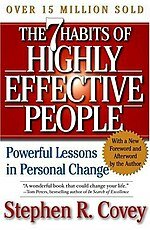

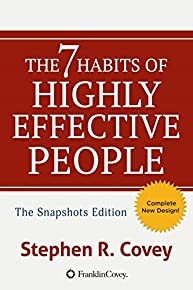
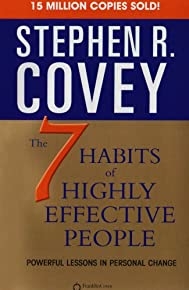
The Seven Habits Of Most Effective People
| Author: | Stephen R. Covey |
| Category: | English Novels And Stories [Edit] |
| Language: | English |
| Rank: | 47,180 No 1 most popular |
| Short link: | Copy |
| More books like this book | |

مۭڜٰٱ̍؏ڔ ۛ ּ
لايوجد
The Publisher and not the author Book The Seven Habits Of Most Effective People .
ٹــمۘــﯣحۡ
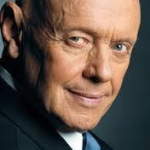
Stephen R. Covey
The Author Book The Seven Habits Of Most Effective People and the author of 9 another books.
Stephen Richards Covey was the author of the best-selling book, "The Seven Habits of Highly Effective People". Other books he wrote include "First Things First", "Principle-Centered Leadership", and "The Seven Habits of Highly Effective Families". In 2004, Covey released "The 8th Habit". In 2008, Covey released "The Leader In Me—How Schools and Parents Around the World Are Inspiring Greatness, One Stephen Richards Covey was the author of the best-selling book, "The Seven Habits of Highly Effective People". Other books he wrote include "First Things First", "Principle-Centered Leadership", and "The Seven Habits of Highly Effective Families". In 2004, Covey released "The 8th Habit". In 2008, Covey released "The Leader In Me—How Schools and Parents Around the World Are Inspiring Greatness, One Child at a Time". He was also a professor at the Jon M. Huntsman School of Business at Utah State University. You can purchase Stephen R. Covey's books and audios at
Covey died at the Eastern Idaho Regional Medical Center in Idaho Falls, Idaho, on July 16, 2012, due to complications from a bicycle accident he suffered the previous April.
Book Description
Each chapter in the book is devoted to one of the Seven Habits of Highly Effective People.
The author has divided the Seven Habits of Highly Effective People into three parts.
The first section: independence or self-control The first three habits speak of the transition from external dependence to internal dependence.
Habit # 1: Be proactive.
Habit # 2: Begin and end on your mind.
Habit # 3: Start with the most important, before the important.
Section Two: The following three habits talk about mutual dependence or working with others.
Habit number 4: gain / gain thinking.
Habit # 5: Striving to be understood first, before being understood.
Habit # 6: Synergy and solidarity.
Section Three: Continuous Improvement and Development
Habit No. 7: Sharpening the saw.
The classes are devoted to each of the Seven Habits, which represent the following imperatives:
Habit # 1: Be proactive
Taking ownership of your life by being aware of your decisions (and the importance of being contextualized by the principles you believe in) is the primary and most influential factor of effectiveness in your life. You are responsible for your actions, choices, and their consequences. Covey focuses on the etymology of the word "initiative" portrayed by Victor Frankl, bestselling author In Search of Meaning. You can be proactive, Act or react dependent when it comes to how to respond to certain things. When you do react, you will blame others and circumstances for obstacles or problems. Being preemptive means taking responsibility for every aspect of your life. Initiate, take the necessary measures, and then follow up on your life and take us out of the victim. Covey also asserts that humans differ from other animals in that they have self-awareness. He has the ability to detach himself, self-monitor; Think about his thoughts. He adds that this quality and his ability to do so: This gives him strength that is not affected by circumstances. Covey spoke about the stimulus and the response to it. Between stimulus and reaction, we have the power of free will sufficient to choose our response. Habit # 2: start and end with your mind.
Discover yourself and define your deepest personal goals and values, and have a vision and perception of your ideal personality in your multiple life roles and your different relationships. This chapter deals with setting long-term goals based on the "inner compass" principle. Covey recommends creating a single "personal message" to visualize and see someone about themselves in life. He sees visualization as an important tool for developing this. It also addresses organizational mission statements, which it claims are more effective if it proves and gets support from all members of the organization rather than describing it.
Habit 3— Principles of Integrity and Execution: Covey describes a framework for setting priorities for action aimed at achieving long-term goals, at the expense of tasks that appear urgent, but are in fact less important. Delegating is considered an important part of time management. Acting success, according to Covey, focuses on outcomes and benchmarks that are agreed upon in advance, rather than on describing detailed business plans. Habit 3 is discussed extensively in the next book, First Thing First.
Usually 4— Principles of mutual benefit: an act based on the mutual benefit of the desired solutions that meet the needs of the self, as well as others, or, in the event of conflict, each of the parties involved.
Habit 5 - Principles of Mutual Understanding: Covey warns against giving advice before impersonating the other person, which would lead to rejection of this advice. Listening carefully to the other person's person instead of getting bogged down in trying to read and understand yourself increases your job opportunities and creates an open communication channel.
Usually 6— Principles of Creative Collaboration: How to work in teams. Effective problem solving app. Collective decision-making application. Differences value. Building on disparate strengths. Increase creative collaboration. Embrace and promote innovation. So when the idea of synergy comes up and becomes a habit, the result of working as a team will exceed the sum of all that individual members can achieve. "The whole is a group greater than the sum of its parts."
And finally
Habit 7— Principles of Self-Balanced Renewal: Focuses on self-balancing regeneration: Covey restored what he calls "productive capacity" by participating in carefully selected leisure activities. Covey stressed the need to sharpen the mind.
God willing, you have benefited from the seven customs, and, God willing, you will be liked.

Copyright reserved
The book cannot be previewed or downloaded in order to preserve the copyright of the author and publishing house
Not available digitally or on paper through the Noor Library, it is for rating and review
Share the book :

Book Quotes "The Seven Habits Of Most Effective People"

Other books like "The Seven Habits Of Most Effective People"
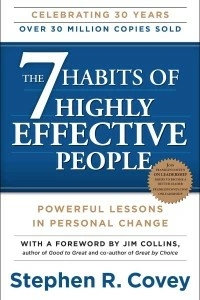



Other books for "Stephen R. Covey"
If there is a problem with the book, please report through one of the following links:
Report the book or by Contact us
E-books are complementary and supportive of paper books and never cancel it. With the click of a button, the e-book reaches anyone, anywhere in the world.
E-books may weaken your eyesight due to the glare of the screen. Support the book publisher by purchasing his original paper book. If you can access it and get it, do not hesitate to buy it.
Publish your book now for free