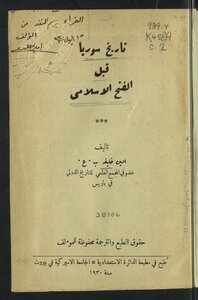
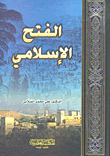
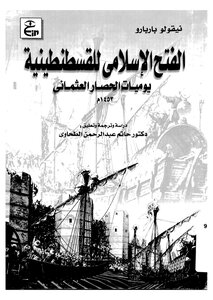
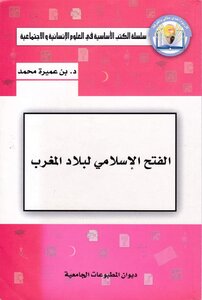
كتب الفتح الإسلامي لسوريا
اذا لم تجد ما تبحث عنه يمكنك استخدام كلمات أكثر دقة.

الفتح الإسلامي لسوريا (كتاب)
"Glory be to Allah, the keys of Syria have been given to me," proclaimed Rasulullah ﷺ at a time when Muslims were facing complete destruction. Yet fourteen years later, Yazid ibn Abi Sufyan رضي الله عنه marched into Caesarea, the last Roman stronghold of resistance in Syria.
This book, originally titled "The Islamic Conquest of Syria", is the first complete English translat "Glory be to Allah, the keys of Syria have been given to me," proclaimed Rasulullah ﷺ at a time when Muslims were facing complete destruction. Yet fourteen years later, Yazid ibn Abi Sufyan رضي الله عنه marched into Caesarea, the last Roman stronghold of resistance in Syria.
This book, originally titled "The Islamic Conquest of Syria", is the first complete English translation of Futuh as-Sham, the ninth century Arabic classic detailing the Muslim advance into Syria. The English reader has, for the first time, the opportunity to read about the great epic struggle of a small, ill-equipped band of Muslims that overthrew the superpower of their day. Events only briefly mentioned in other books are graphically described here, such as the battle of al-Yarmuk, which changed the course of world history. The great personalities of early Islam are brought to life in a unique way. The strategies of Khalid ibn al-Walid رضي الله عنه, the piety of Abu 'Ubaydah al-Jarrah رضي الله عنه, the bravery of Dirar al-Kindi رضي الله عنه and many more are vividly described. The text also sheds light on some lesser-known aspects of Islamic history such as the significant role of women and Roman princes who had embraced Islam.
Al-Imam al-Waqidi, the great historian, was born at the beginning of 130 Hijri in al-Madinah, where he began his studies. He migrated to 'Iraq in 180 Hijri during the reign of Mamun ar-Rashid. There Yahya al-Barmaki welcomed him due to his great learning and he was included as one of Mamun's elite. He was soon appointed as judge and held this post until his death in 207 Hijri.