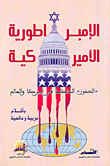
books الملاك يوجه العاصفة أسفار الرؤيا و الإمبراطورية الأمريكية
If you do not find what you're looking for, you can use more accurate words.

الملاك يوجه العاصفة - أسفار الرؤيا و الإمبراطورية الأمريكية (Book)
"This book appraises two visions of religious freedom: on the one hand, the apocalyptic vision of George W. Bush and the Christian conservatives who back his policies, particularly in relation to Iraq and the so-called war on terror; and on the other hand, the peaceable vision of a Christian majority elsewhere who resist what they view as American neo-imperialism and the o "This book appraises two visions of religious freedom: on the one hand, the apocalyptic vision of George W. Bush and the Christian conservatives who back his policies, particularly in relation to Iraq and the so-called war on terror; and on the other hand, the peaceable vision of a Christian majority elsewhere who resist what they view as American neo-imperialism and the overlay of Christian apocalyptic rhetoric." Drawing on a range of religious and secular literature, the author shows that there is a different king of war taking place from the one on terrorism. This is a war for the heart and soul of America itself, and for what 'Christian' culture might mean in a global context increasingly administered by an American empire which - like the Roman Empire of old - is yet hated and mistrusted by many of the peoples it claims to be there to protect. Northcott traces the roots of American apocalyptic to Puritan Millennialism and contemporary fundamentalist readings of the Book of Revelation. He suggests that Americans urgently need to recover a critique of Empire of the kind espoused by the founder of Christianity if their won religion is to avoid the charge of idolatry. America itself emerged out of a war against an empire. In the process, some of those amongst its peoples developed powerful resources for resisting imperialism which, as the author shoes, may yet prove valuable as the child of empire becomes, both in word and deed, an oppressive empire in its own right.