books أصول الفقه الاسلامي إنجليزي
If you do not find what you're looking for, you can use more accurate words.
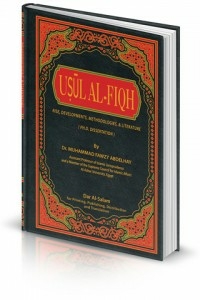
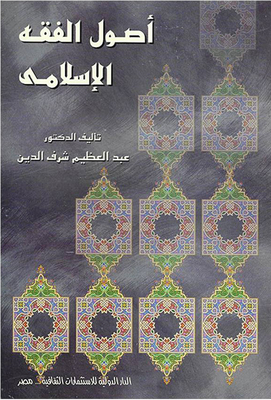
أصول الفقه الاسلامي ( إنجليزي ) (Book)
Dr. Muhammad Fawzi got his Ph.D. degree in Islamic Jurisprudence and Methodologies of us}?l al-fiqh from al-Azhar University. He is currently a lecturer of Islamic studies at Al-Azhar University, Cairo, and at the Higher Institute for Islamic and Arabic Studies, Alexandria. In addition to being a lecturer at Al-Azhar University, he is also a teacher of Islamic studies and Friday Speaker in the Ministry of Religious Endowment, a memorizer of the Glorious Quran, and a highly talented researcher. He has published tens of articles on social and political reforms in some remarkable newspapers and sites and reviewed tens of books and articles on Islamic thought and jurisprudence. For specialty field, he chose one of the most serious areas of Islamic disciplines to learn, explore, and represent to new generations of readers and learners. After discussing the phenomenon of conflicting proofs in the corpus of jurisprudence in his MA thesis, he observed that most cases of conflict could be subliminally or explicitly referred to disciplinary historical developments. Since the history of sciences forms a missing cycle urgently needed in the Islamic Library, he devoted his Ph.D. thesis to write and rediscover the story of us}?l al-fiqh s evolution through the traditional seminal sources and late works. In this book, he reveals the secret behind the rise and evolution of us}ul al-fiqh Through this book you will get closer to the founders of Islamic legal theories, the early writers and makers of Islamic jurisprudence, the traditional and functional attitudes in Islamic jurisprudence, ash-Shafi'i's works and impact on theories and writings of jurisprudence, the Maqas}idi and Ikhbari trends of us}uli writing, as well as the outstanding writers and writings on us}?l through ages. In addition, the book sheds light on the relationship between jurisprudence, theology, and judiciary and explores the worlds, methodologies and contributions of al-Baqillani, 'Abdul-Jabbar, al-Juwayni, Al-Ghazali, Abu Ya'la, Abu Al-Waf?? ibn 'Aq?l, ibn H}azm, As-Subki, Ash-Shat}ibi, Al-Bazdawi, Al-Mirdawi, As-Siy?t}i, and several others. The writer also lends you support to discover how to spot a mufti and judge his method of issuing a fatwa using vivid examples of real fatwa from the last decades, which show how the us}?li methodology can affect the legal decision