books lessons from qur anic stories
If you do not find what you're looking for, you can use more accurate words.
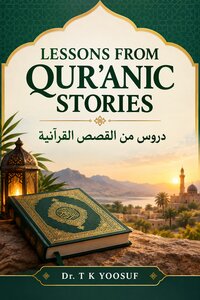
LESSONS FROM QUR’ANIC STORIES (Book)
Stories have always played a major role in the field of literature. However, Qur’anic stories are historical realities that encompass, beyond literary values, numerous facts such as monotheism, warnings, the downfall of wrongdoers, and rules of moral conduct.
The Arabic word Qasas is often translated as stories, but its correct meaning is a truthful historical account. There is no place in it whatsoever for imagination or exaggeration. The stories in the Qur'an also contain many moral lessons. Following the Qur'anic verse mentioned at the beginning, we can read the historical account of Prophet Yusuf. This historical story, which touches upon all dimensions of human psychology, is always worthy of study.
Stories mainly have four elements. One is the event; if there is no event that people are eager to know about, no one will read stories. The other elements are characters, setting, and form. Likewise, a story must have a purpose; otherwise, it would merely be unnecessary talk. Along with that, stories are also considered a cross-section of society. Compared with other forms of literature, stories portray a true picture of society. Even stories written purely for enjoyment often contain many moral lessons.