Isaac Newton And The Scientific Revolution

Account upgrade
The download is free, but we offer some paid services. Support us by subscribing
Delete ads and speed up browsing the library.
The download starts with the click of a button without waiting for the book to be ready.
No limits for download times.
You can upload unlimited books in the library.
Enable readers to download your books without waiting.
Delete ads on the books that you publish.
No problems with download links for your uploaded books.
Download Book Isaac Newton And The Scientific Revolution Pdf
The source of the book
This book was brought from archive.org as under a Creative Commons license, or the author or publishing house agrees to publish the book. If you object to the publication of the book, please contact us.
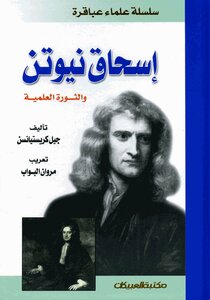

Isaac Newton And The Scientific Revolution
| Author: | جيل كريستيانسن |
| Category: | Conference Papers And Scientific Meetings [Edit] |
| Language: | Arabic |
| Pages: | 214 |
| File Size: | 30.06 MB |
| Extension: | |
| Creation Date: | 03 Oct 2009 |
| Rank: | 17,927 No 1 most popular |
| Short link: | Copy |
| More books like this book | |
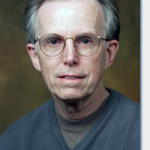
جيل كريستيانسن
The Author Book Isaac Newton And The Scientific Revolution .
Gale Edward Christianson Historian of science; biographer of Isaac Newton, Edwin Hubble, and Loren Eiseley Gale Edward Christianson, professor emeritus of history at Indiana State University, died Sunday, March 28, 2010, after suffering a heart attack.
He grew up in Iowa and Nebraska, received a BA in political science from the University of Iowa in 1964, a MA in social science from the University of Northern Iowa in 1966, and a DA in history from the Carnegie Mellon University in 1971.
He joined the faculty at Indiana State University in 1971, was promoted to professor in 1979, and was named a Distinguished Professor of the College of Arts and Sciences in 1987.
He retired in 2003.
During his career Christianson was known as a demanding but popular teacher.
He taught a variety of courses in his specialty, the history of science.
For many years he also taught the foundation methods course for history and social studies education majors, a rigorous introduction to the field that was long remembered by those who took it, as well as a popular course on history through biography.
He served on a variety of university and professional committees, including the university’s Research Committee and General Education Council, and was a reviewer for numerous academic presses and grant agencies.
He was also active in the Faculty Senate at Indiana State.
Gale Christianson was an internationally known and honored historian of science.
He demonstrated the uncommon ability to combine prodigious research and analysis with topics and a writing style that gave his work a broad audience.
This combination was particularly evident in his highly regarded biographies that were popular with both academic and non-academic audiences.
His dozens of publications included ten books: Greenhouse: The 200-Year Story of Global Warming (1999); Edwin Hubble: Mariner of the Nebulae (1995); In the Presence of the Creator: Isaac Newton and His Times (1984); Isaac Newton and the Scientific Revolution (1996); Isaac Newton (2005); Writing Lives is the Devil! Essays of a Biographer at Work (1990); Fox at the Wood’s Edge: A Biography of Loren Eiseley (1990); The Night Country (1997, with Loren Eiseley); This Wild Abyss: The Story of the Men Who Made Modern Astronomy (1978); and The Last Posse: A Jailbreak, a Manhunt, and the End of Hang-‘Em High Justice (2001).
His books have been translated into many languages and printed in over a dozen countries, including Turkey, China, Korea, Spain, and India.
Edwin Hubble was chosen one of the Notable Books of the Year by the New York Times, and one of the year’s five best books in science by Carl Sagan in the Washington Post.
Among his many other publications were articles and essays in Earth Matters, the New York Times, the International Social Science Review, and the Los Angeles Times.
Christianson was also a frequent lecturer across the country and around the world, and a regular consultant and guest on television and radio.
These appearances included the Environmental News Network, “The Milt Rosenberg Show” on WGN Radio in Chicago, CNN Interactive, “A Science Odyssey” on NPR, and “Isaac Newton: Dark Heretic” with the BBC and NPR.
He was awarded a Guggenheim Fellowship (for his biography of Edwin Hubble) and a Fletcher Jones Fellowship at the Huntington Library, among numerous other grants and honors.
Among hundreds of lectures around the world, Christianson delivered papers at the Carnegie Observatories, the Bullitt Observatory, the University of Valencia, the Lamont-Doherty Earth Observatory at Columbia University, the Canadian National Library, the Vancouver Planetarium, the Adler Planetarium, and the Huntington Library.
After retiring, Gale and his wife Rhonda Packer moved to the Appalachian mountains of north Georgia, where they enjoyed gardening and horses, and where Gale continued to research and write on a variety of subjects.
He is survived by his wife, and remembered with respect and appreciation by his many colleagues and students from Indiana State University.
—Christopher J.
Olsen Indiana State University


Share the book :


Other books like "Isaac Newton And The Scientific Revolution"







If there is a problem with the book, please report through one of the following links:
Report the book or by Contact us
E-books are complementary and supportive of paper books and never cancel it. With the click of a button, the e-book reaches anyone, anywhere in the world.
E-books may weaken your eyesight due to the glare of the screen. Support the book publisher by purchasing his original paper book. If you can access it and get it, do not hesitate to buy it.
Publish your book now for free