Agamemnon

Account upgrade
The download is free, but we offer some paid services. Support us by subscribing
Delete ads and speed up browsing the library.
The download starts with the click of a button without waiting for the book to be ready.
No limits for download times.
You can upload unlimited books in the library.
Enable readers to download your books without waiting.
Delete ads on the books that you publish.
No problems with download links for your uploaded books.
Download Book Agamemnon Pdf
The source of the book
This book was brought from archive.org as under a Creative Commons license, or the author or publishing house agrees to publish the book. If you object to the publication of the book, please contact us.


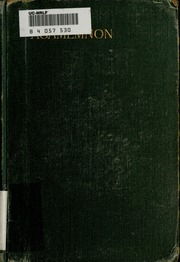
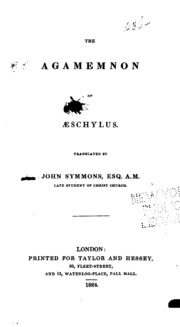
Agamemnon
| Author: | Seneca |
| Category: | Survey Search [Edit] |
| Language: | Arabic |
| Pages: | 172 |
| File Size: | 2.03 MB |
| Extension: | |
| Creation Date: | 28 Oct 2011 |
| Rank: | 55,219 No 1 most popular |
| Short link: | Copy |
| More books like this book | |

Seneca
The Author Book Agamemnon and the author of 1 another books.
Lucius Annaeus Seneca (often known simply as Seneca, in Portugueses Sêneca; ca. 4 BC – 65 AD) was a Roman Stoic philosopher, statesman, dramatist, and in one work humorist, of the Silver Age of Latin literature. He was tutor and later advisor to emperor Nero. While he was later forced to commit suicide for alleged complicity in the Pisonian conspiracy to assassinate Nero, the last of the Julio-Cla Lucius Annaeus Seneca (often known simply as Seneca, in Portugueses Sêneca; ca. 4 BC – 65 AD) was a Roman Stoic philosopher, statesman, dramatist, and in one work humorist, of the Silver Age of Latin literature. He was tutor and later advisor to emperor Nero. While he was later forced to commit suicide for alleged complicity in the Pisonian conspiracy to assassinate Nero, the last of the Julio-Claudian emperors, he may have been innocent.
Book Description
Seneca's tragedy Agamemnon is a brilliantly rhetorical piece, written for the study rather than the stage. In this edition Professor Tarrant provides a much needed critical text. In his introduction he discusses the sources, dating, structure and mode of production of Agamemnon and Senecan drama in general, and includes a detailed survey of the manuscript tradition. His co Seneca's tragedy Agamemnon is a brilliantly rhetorical piece, written for the study rather than the stage. In this edition Professor Tarrant provides a much needed critical text. In his introduction he discusses the sources, dating, structure and mode of production of Agamemnon and Senecan drama in general, and includes a detailed survey of the manuscript tradition. His commentary is the fullest yet published on a Senecan play and attempts both to interpret the text and to define the originality of Senecan drama by placing it in its proper literary context; it contains material illustrating Seneca's relationship to earlier Greek and Roman drama, Augustan poetry (Ovid's in particular), and the rhetoric of declamation. This edition will be welcomed by classical scholars and students of Latin poetry, and may also prove valuable to those interested in Seneca's influence on later European drama.


Share the book :
Book Review "Agamemnon"

Book Quotes "Agamemnon"

Other books like "Agamemnon"







Other books for "Seneca"

If there is a problem with the book, please report through one of the following links:
Report the book or by Contact us
E-books are complementary and supportive of paper books and never cancel it. With the click of a button, the e-book reaches anyone, anywhere in the world.
E-books may weaken your eyesight due to the glare of the screen. Support the book publisher by purchasing his original paper book. If you can access it and get it, do not hesitate to buy it.
Publish your book now for free