The Complete Robot

Account upgrade
The download is free, but we offer some paid services. Support us by subscribing
Delete ads and speed up browsing the library.
The download starts with the click of a button without waiting for the book to be ready.
No limits for download times.
You can upload unlimited books in the library.
Enable readers to download your books without waiting.
Delete ads on the books that you publish.
No problems with download links for your uploaded books.
Book The Complete Robot
Copyright reserved
The book cannot be previewed or downloaded in order to preserve the copyright of the author and publishing house
Not available digitally or on paper through the Noor Library, it is for rating and review

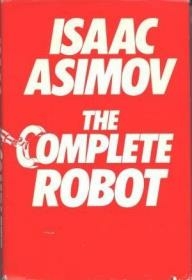

The Complete Robot
| Author: | Isaac Asimov |
| Category: | Translated Science Fiction Novels [Edit] |
| Language: | English |
| ISBN: | 139780385177245 |
| Release Date: | 01 Jan 1982 |
| Pages: | 557 |
| Rank: | 324,047 No 1 most popular |
| Short link: | Copy |
| More books like this book | |

Isaac Asimov
The Author Book The Complete Robot and the author of 1 another books.
Isaac Asimov was a Russian-born, American author, a professor of biochemistry, and a highly successful writer, best known for his works of science fiction and for his popular science books.
Professor Asimov is generally considered one of the most prolific writers of all time, having written or edited than 500 books and an estimated 90,000 letters and postcards. He has works published in nine o Isaac Asimov was a Russian-born, American author, a professor of biochemistry, and a highly successful writer, best known for his works of science fiction and for his popular science books.
Professor Asimov is generally considered one of the most prolific writers of all time, having written or edited than 500 books and an estimated 90,000 letters and postcards. He has works published in nine of the ten major categories of the Dewey Decimal System (lacking only an entry in the 100s category of Philosophy).
Asimov is widely considered a master of the science-fiction genre and, along with Robert A. Heinlein and Arthur C. Clarke, was considered one of the "Big Three" science-fiction writers during his lifetime. Asimov's most famous work is the Foundation Series; his other major series are the Galactic Empire series and the Robot series, both of which he later tied into the same fictional universe as the Foundation Series to create a unified "future history" for his stories much like those pioneered by Robert A. Heinlein and previously produced by Cordwainer Smith and Poul Anderson. He penned numerous short stories, among them "Nightfall", which in 1964 was voted by the Science Fiction Writers of America the best short science fiction story of all time, a title many still honor. He also wrote mysteries and fantasy, as well as a great amount of nonfiction. Asimov wrote the Lucky Starr series of juvenile science-fiction novels using the pen name Paul French.
Most of Asimov's popularized science books explain scientific concepts in a historical way, going as far back as possible to a time when the science in question was at its simplest stage. He often provides nationalities, birth dates, and death dates for the scientists he mentions, as well as etymologies and pronunciation guides for technical terms. Examples include his Guide to Science, the three volume set Understanding Physics, and Asimov's Chronology of Science and Discovery.
Asimov was a long-time member and Vice President of Mensa International, albeit reluctantly; he described some members of that organization as "brain-proud and aggressive about their IQs" He took joy in being president of the American Humanist Association. The asteroid 5020 Asimov, the magazine Asimov's Science Fiction, a Brooklyn, NY elementary school, and two different Isaac Asimov Awards are named in his honor.
----------------------------------------
Isaac Asimov. (2007, November 29). In Wikipedia, The Free Encyclopedia. Retrieved 21:50, November 29, 2007, from
Book Description
Asimov started his Robot series with several short stories set in a common universe with continuing characters from US Robotics and based on the Three Laws of Robotics. This compilation includes 31 stories published from 1940 to 1977, including all the stories from the earlier collection, I, Robot (1950). As of 1988, only one other robot story (Robot Dreams) had been written. The rest of the Robot series were novels. Later, Asimov tied his Robot series and his two other series (Empire and Foundation) into a mega-series sometimes called the Complete Foundation Universe. According to Asimov, this is the "first" book in that series.

Copyright reserved
The book cannot be previewed or downloaded in order to preserve the copyright of the author and publishing house
Not available digitally or on paper through the Noor Library, it is for rating and review
Share the book :
Book Review "The Complete Robot"

Book Quotes "The Complete Robot"

Other books like "The Complete Robot"




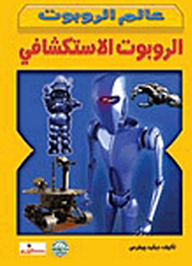


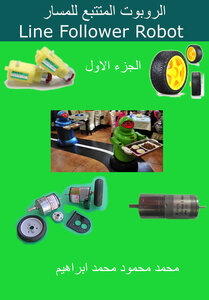
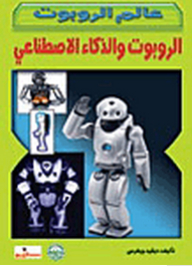
Other books for "Isaac Asimov"
If there is a problem with the book, please report through one of the following links:
Report the book or by Contact us
E-books are complementary and supportive of paper books and never cancel it. With the click of a button, the e-book reaches anyone, anywhere in the world.
E-books may weaken your eyesight due to the glare of the screen. Support the book publisher by purchasing his original paper book. If you can access it and get it, do not hesitate to buy it.
Publish your book now for free