JavaScript: The Good Parts

Account upgrade
The download is free, but we offer some paid services. Support us by subscribing
Delete ads and speed up browsing the library.
The download starts with the click of a button without waiting for the book to be ready.
No limits for download times.
You can upload unlimited books in the library.
Enable readers to download your books without waiting.
Delete ads on the books that you publish.
No problems with download links for your uploaded books.
Book Javascript The Good Parts
Copyright reserved
The book cannot be previewed or downloaded in order to preserve the copyright of the author and publishing house
Not available digitally or on paper through the Noor Library, it is for rating and review

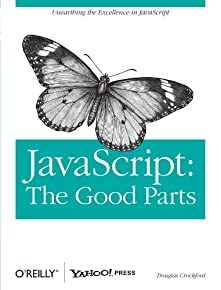

JavaScript: The Good Parts
| Author: | Douglas Crockford |
| Category: | JavaScript Programming Language [Edit] |
| Language: | English |
| Publisher: | Yahoo Press |
| ISBN: | 596517742 |
| Release Date: | 01 Jan 2008 |
| Rank: | 209,918 No 1 most popular |
| Short link: | Copy |
| More books like this book | |
Book Description
Most programming languages contain good and bad parts, but JavaScript has more than its share of the bad, having been developed and released in a hurry before it could be refined. This authoritative book scrapes away these bad features to reveal a subset of JavaScript that's more reliable, readable, and maintainable than the language as a whole-a subset you can use to create truly extensible and efficient code. Considered the JavaScript expert by many people in the development community, author Douglas Crockford identifies the abundance of good ideas that make JavaScript an outstanding object-oriented programming language-ideas such as functions, loose typing, dynamic objects, and an expressive object literal notation. Unfortunately, these good ideas are mixed in with bad and downright awful ideas, like a programming model based on global variables. When Java applets failed, JavaScript became the language of the Web by default, making its popularity almost completely independent of its qualities as a programming language. In JavaScript: The Good Parts , Crockford finally digs through the steaming pile of good intentions and blunders to give you a detailed look at all the genuinely elegant parts of JavaScript, including: Syntax Objects Functions Inheritance Arrays Regular expressions Methods Style Beautiful features The real beauty? As you move ahead with the subset of JavaScript that this book presents, you'll also sidestep the need to unlearn all the bad parts. Of course, if you want to find out more about the bad parts and how to use them badly, simply consult any other JavaScript book. With JavaScript: The Good Parts , you'll discover a beautiful, elegant, lightweight and highly expressive language that lets you create effective code, whether you're managing object libraries or just trying to get Ajax to run fast. If you develop sites or applications for the Web, this book is an absolute must.

Copyright reserved
The book cannot be previewed or downloaded in order to preserve the copyright of the author and publishing house
Not available digitally or on paper through the Noor Library, it is for rating and review
Share the book :
Book Review "JavaScript: The Good Parts"

Book Quotes "JavaScript: The Good Parts"

Other books like "JavaScript: The Good Parts"











If there is a problem with the book, please report through one of the following links:
Report the book or by Contact us
E-books are complementary and supportive of paper books and never cancel it. With the click of a button, the e-book reaches anyone, anywhere in the world.
E-books may weaken your eyesight due to the glare of the screen. Support the book publisher by purchasing his original paper book. If you can access it and get it, do not hesitate to buy it.
Publish your book now for free