Abu Zayd Al-Balkhi’s Sustenance Of The Soul: The Cognitive Behavior Therapy Of A Ninth Century Physi

Account upgrade
The download is free, but we offer some paid services. Support us by subscribing
Delete ads and speed up browsing the library.
The download starts with the click of a button without waiting for the book to be ready.
No limits for download times.
You can upload unlimited books in the library.
Enable readers to download your books without waiting.
Delete ads on the books that you publish.
No problems with download links for your uploaded books.
Book Abu Zayd Al Balkhi S Sustenance Of The Soul The Cognitive Behavior Therapy Of A Ninth Century Physi
Copyright reserved
The book cannot be previewed or downloaded in order to preserve the copyright of the author and publishing house
Not available digitally or on paper through the Noor Library, it is for rating and review



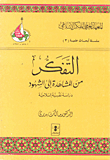
Abu Zayd Al-Balkhi’s Sustenance Of The Soul: The Cognitive Behavior Therapy Of A Ninth Century Physi
| Author: | Malik Badri |
| Category: | Arabic Islamic Literature [Edit] |
| Language: | English |
| Publisher: | المعهد العالمي للفكر الاسلامي |
| Release Date: | 01 Jan 2017 |
| Rank: | 133,749 No 1 most popular |
| Short link: | Copy |
| More books like this book | |
Book Description
Exploring the question in detail Kamali explains the basic principles of halal and haram and discusses, particularly in relation to the meat industry, key issues surrounding their implementation. In doing so he gives important insights into, and relevant understanding of, many of the misconceptions and challenges confronting Muslims today. The issue of additives for instance has caused considerable confusion in food consumption. Not surprisingly, perceptions of what constitutes halal also vary among the schools and scholars of Islam. Other factors such as custom and climate also tend to be influential. In addition the work at hand examines issues in halal certification procedures, and matters of concern to uniformity in halal industry practices.Mohammad Hashim Kamali is currently Chairman and CEO of the International Institute of Advanced Islamic Studies in Kuala Lumpur. He was professor of law and a Faculty Dean at the International Islamic University of Malaysia from 1985 to 2007. He is currently a Shariah Advisor with the Securities Commission of Malaysia, Chairman of the CIMB Shariah Board, and Chairman of Shariah Board, Stanlib Corporation of South Africa. Professor Kamali has addressed over 120 national and international conferences, published 16 books and over 110 academic articles. He has authored a number of works including “Freedom of Expression in Islam” (Cambridge, 1997). “Freedom, Equality and Justice in Islam” (Cambridge, 2002). and “A Textbook of Hadith Studies” (Leicester, UK, 2005). He received the Ismail al-Faruqi Award for Academic Excellence twice, in 1995 and 1997, and is listed in a number of leading “Who’s Who in the World”. (2008).

Copyright reserved
The book cannot be previewed or downloaded in order to preserve the copyright of the author and publishing house
Not available digitally or on paper through the Noor Library, it is for rating and review
Share the book :
Book Review "Abu Zayd Al-Balkhi’s Sustenance Of The Soul: The Cognitive Behavior Therapy Of A Ninth Century Physi"

Book Quotes "Abu Zayd Al-Balkhi’s Sustenance Of The Soul: The Cognitive Behavior Therapy Of A Ninth Century Physi"

Other books like "Abu Zayd Al-Balkhi’s Sustenance Of The Soul: The Cognitive Behavior Therapy Of A Ninth Century Physi"







Other books for "Malik Badri"


If there is a problem with the book, please report through one of the following links:
Report the book or by Contact us
E-books are complementary and supportive of paper books and never cancel it. With the click of a button, the e-book reaches anyone, anywhere in the world.
E-books may weaken your eyesight due to the glare of the screen. Support the book publisher by purchasing his original paper book. If you can access it and get it, do not hesitate to buy it.
Publish your book now for free