The Unthought In Contemporary Islamic Thought

Account upgrade
The download is free, but we offer some paid services. Support us by subscribing
Delete ads and speed up browsing the library.
The download starts with the click of a button without waiting for the book to be ready.
No limits for download times.
You can upload unlimited books in the library.
Enable readers to download your books without waiting.
Delete ads on the books that you publish.
No problems with download links for your uploaded books.
Book The Unthought In Contemporary Islamic Thought
Copyright reserved
The book cannot be previewed or downloaded in order to preserve the copyright of the author and publishing house
Not available digitally or on paper through the Noor Library, it is for rating and review

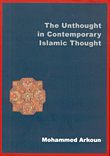

The Unthought In Contemporary Islamic Thought
| Author: | Mohammed Arkoun |
| Category: | Contemporary Politics [Edit] |
| Language: | English |
| Publisher: | دار الساقي للطباعة والنشر |
| ISBN: | 863569188 |
| Release Date: | 01 Jul 2002 |
| Pages: | 352 |
| Rank: | 192,100 No 1 most popular |
| Short link: | Copy |
| More books like this book | |

Mohammed Arkoun
The Author Book The Unthought In Contemporary Islamic Thought .
Professor Mohammed Arkoun (Berber: Muḥemmed Arkun, Arabic: محمد أركون), was an Algerian scholar and thinker of Berber descent. He was considered to have been one of the most influential secular scholars in Islamic studies contributing to contemporary intellectual Islamic reform. In a career of than 30 years, he had been a critic of the tensions embedded in his field of study, advocating Isla Professor Mohammed Arkoun (Berber: Muḥemmed Arkun, Arabic: محمد أركون), was an Algerian scholar and thinker of Berber descent. He was considered to have been one of the most influential secular scholars in Islamic studies contributing to contemporary intellectual Islamic reform. In a career of than 30 years, he had been a critic of the tensions embedded in his field of study, advocating Islamic modernism, secularism, and humanism. During his academic career, he wrote his numerous books mostly in French, and occasionally in English and Arabic.
he studied at the Faculty of Literature of the University of Algiers and at the Sorbonne in Paris (Agrégé in Arabic language and Literature, 1956 and Ph.D., 1968). He established his academic reputation with his studies of the history and philosophy of Ibn Miskawayh. As he began to consider how one might rethink Islam in the contemporary world, his questioning provided a counterpoint to the predominant interpretations of both the Muslim world and the non-Muslim West. As the editor of Arabica, he broadened the journal's scope, and played a "significant" role in shaping Western-language scholarship on Islam (source?). He is the author of numerous books in French, English and Arabic, including most recently: Rethinking Islam (Boulder, Colorado, 1994), L'immigration: défis et richesses (Paris, 1998) and The Unthought in Contemporary Islamic Thought (London, 2002).[2] His shorter studies have appeared in many academic journals and his works have been translated into several languages.
He was decorated as an Officer of the French Légion d'honneur in July 1996. In 2001, Professor Arkoun was asked to deliver the Gifford Lectures, which enable a notable scholar to contribute to the advancement of theological and philosophical thought and was announced as the recipient of the Seventeenth Georgio Levi Della Vida Award for his lifelong contribution to the field of Islamic Studies.
Arkoun taught at the Lyon 2 University (1969–1972), as a professor at the Paris 8 University, and at the New Sorbonne University of Paris (1972–1992). He was a Fellow at Wissenschaftskolleg in Berlin (1986–1987 and 1990) and at the Institute for Advanced Study in Princeton, New Jersey, U.S.A (1992–1993), visiting professor at University of California, Los Angeles (1969), Princeton University (1985), Temple University, the University of Louvain-la-Neuve, Wallonia, Belgium, (1977–1979), the Pontifical Institute of Arabic Studies in Rome and the University of Amsterdam (1991–1993) and served as a jury member for the Aga Khan Award for Architecture. At the time of his death he was Emeritus Professor at La Sorbonne as well as Senior Research Fellow and member of the Board of Governors of The Institute of Ismaili Studies (IIS), At IIS, he has taught various graduate courses including unthought in contemporary Islamic thought, rethinking Islam, contemporary challenges of Muslim world and traditions for almost a decade.
Arkoun died on the evening of September 14, 2010, in Paris.
باحث ومؤرخ ومفكر جزائري، ولد عام 1928 في بلدة تاوريرت ن ميمون(آث يني) بمنطقة القبائل الكبرى الأمازيغية بالجزائر، ;و انتقل مع عائلته إلى بلدة عين الأربعاء(ولاية عين تموشنت) حيث درس دراسته الإبتدائية بها. وأكمل دراسته الثانوية في وهران، إبتدأ دراسته الجامعية بكلية الفلسفة في الجزائر ثم أتم دراسته في السوربون في باريس.
==فكره==
يتميز فكر أركون بمحاولة عدم الفصل بين الحضارات شرقية وغربية واحتكار الإسقاطات على أحدهما دون الآخر، بل إمكانية فهم الحضارات دون النظر إليها على أنها شكل غريب من الآخر، وهو ينتقد الإستشراق المبني على هذا الشكل من البحث. 1- رفع القداسة عن القرآن الكريم, والتعامل مع القرآن على أنه منتوج بشري. 2- رجل علماني بحت. 3- التشكيك في نسبة النصوص الأصلية في الإسلام (الكتاب والسنة)
عُين محمد اركون أستاذا لتاريخ الفكر الإسلامي والفلسفة في جامعة السوربون عام 1968 بعد حصوله على درجة دكتوراه في الفلسفة منها، وعمل كباحث مرافق في برلين عام 1986 و 1987. شغل منذ العام 1993 منصب عضو في مجلس إدارة معاهد الدراسات الإسلامية في لندن.
Book Description
Mohammed Arkoun is one of the Muslim world's foremost thinkers. His efforts to liberate Islamic history from dogmatic constructs have led him to a radical review of traditional history.
Drawing on a combination of pertinent deisciplines-history, sociolog, psychology and anthropology - his approach subjects every system of belief and non-belief, every tradition of exegesis, theology and jursprudence to a critique aimed at liberating reason from the grip of dogmatic postulates.
By treating Islam as a religion as well as a time-honored tradition of though, arkoun's work aims at overcoming the limitations of escriptive, narrative and chronological modes in history by recommending that the entire development of Islamic thought-from Quranic to present-day fundamentalist discourses-be subjected to a critical analysis guided by these categories.
The expected outcome of such a strategy is an emancipated political reason working hand in hand with a truly creative imagination for a radical re-construction of mind and society in the contemporary Muslim world.

Copyright reserved
The book cannot be previewed or downloaded in order to preserve the copyright of the author and publishing house
Not available digitally or on paper through the Noor Library, it is for rating and review
Share the book :
Book Review "The Unthought In Contemporary Islamic Thought"

Book Quotes "The Unthought In Contemporary Islamic Thought"

Other books like "The Unthought In Contemporary Islamic Thought"







If there is a problem with the book, please report through one of the following links:
Report the book or by Contact us
E-books are complementary and supportive of paper books and never cancel it. With the click of a button, the e-book reaches anyone, anywhere in the world.
E-books may weaken your eyesight due to the glare of the screen. Support the book publisher by purchasing his original paper book. If you can access it and get it, do not hesitate to buy it.
Publish your book now for free