Contending Theories Of International Relation From Idealism To Globalization

Account upgrade
The download is free, but we offer some paid services. Support us by subscribing
Delete ads and speed up browsing the library.
The download starts with the click of a button without waiting for the book to be ready.
No limits for download times.
You can upload unlimited books in the library.
Enable readers to download your books without waiting.
Delete ads on the books that you publish.
No problems with download links for your uploaded books.
Book Contending Theories Of International Relation From Idealism To Globalization
Copyright reserved
The book cannot be previewed or downloaded in order to preserve the copyright of the author and publishing house
Not available digitally or on paper through the Noor Library, it is for rating and review

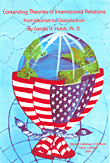

Contending Theories Of International Relation From Idealism To Globalization
| Author: | Cmaille H.Habib |
| Category: | Scientific Theory [Edit] |
| Language: | English |
| Publisher: | المؤسسة الحديثة للكتاب |
| Release Date: | 01 Dec 2004 |
| Pages: | 111 |
| Rank: | 370,177 No 1 most popular |
| Short link: | Copy |
| More books like this book | |
Book Description
In a general sense, international relations theory attempts to deal with the ambiguity of the relationship between unique events and general trends. As might be expected, observes of contemporary international relations have adopted a variety of approaches to explain the essential characteristics of global politics. Indeed, the absence of a world wide consensus on how best to explain international relations has its profound cause in the fundamental changes which have taken place in the structure of these relations, and in the nature of the units among which these relations occur. Throughout this process the result has remained intact: the field of international relations, which was once unified to its fundamental assumptions regarding the question of war and peace, has become increasingly fragmented.
In terms of one dimension, the development of international relations theory between the two world wars reflects the growing gap between the utopians and the realists.
In a more practical vein, the utopians regard international legal rights and obligations, the natural harmony of national interests, and the role of reason in human affairs as a regulator for the preservation of international peace. The realists, on the other hand, stress rationality, power, and need for military force support diplomacy and global security.
In the final analysis, it would be misleading to draw a sharp distinction between the traditional approach and the so-called scientific one. Doubts about the capability of either a traditionalist or a scientific approach to developing a general theory that can be demonstrated to have substantial validity, as well as fertility in opening up new frontiers for research, has led to some diminishment of the debate. Perhaps the difference between the two methods underlined to some degrees the differences between a law and a theory. In fact, it is only recently that a theory – especially in the study of international relation- began to be differentiated from law.

Copyright reserved
The book cannot be previewed or downloaded in order to preserve the copyright of the author and publishing house
Not available digitally or on paper through the Noor Library, it is for rating and review
Share the book :
Book Review "Contending Theories Of International Relation From Idealism To Globalization"

Book Quotes "Contending Theories Of International Relation From Idealism To Globalization"

Other books like "Contending Theories Of International Relation From Idealism To Globalization"








If there is a problem with the book, please report through one of the following links:
Report the book or by Contact us
E-books are complementary and supportive of paper books and never cancel it. With the click of a button, the e-book reaches anyone, anywhere in the world.
E-books may weaken your eyesight due to the glare of the screen. Support the book publisher by purchasing his original paper book. If you can access it and get it, do not hesitate to buy it.
Publish your book now for free