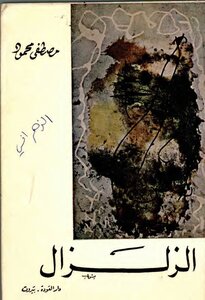
The Earthquake

Account upgrade
The download is free, but we offer some paid services. Support us by subscribing
Delete ads and speed up browsing the library.
The download starts with the click of a button without waiting for the book to be ready.
No limits for download times.
You can upload unlimited books in the library.
Enable readers to download your books without waiting.
Delete ads on the books that you publish.
No problems with download links for your uploaded books.
Book The Earthquake
Copyright reserved
The book cannot be previewed or downloaded in order to preserve the copyright of the author and publishing house
Not available digitally or on paper through the Noor Library, it is for rating and review

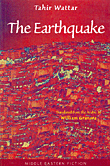

The Earthquake
| Author: | طاهر وتار |
| Category: | Earthquake Engineering [Edit] |
| Language: | English |
| Publisher: | دار الساقي للطباعة والنشر |
| ISBN: | 863563392 |
| Release Date: | 01 Jan 2000 |
| Pages: | 179 |
| Rank: | 363,129 No 1 most popular |
| Short link: | Copy |
| More books like this book | |
Book Description
One afternoon, Shaykh Abdelmajid boularwah embarks upon a journey from Algiers to Constantine in search of lost relatives who might help him defraud the now socialist government in its attempt to implement land reform. Through a labyrinth of back alleys and past memories, Boularwah makes his way across the seven bridges of Constantine, battling the forces of a rapidly changing society while confronting the demons of his own horrific past. The sequence of his recollections and his bizarre internal monologues construct a biographical narrative of modern Algeria from a consistently adversarial and surrealistic point of view, told by the defiantly proud scion of a family of ruthless landowners, swindlers, traitors and collaborators with colonial authorities.
This is the vision of post-colonial Algeria-a society in chaos, a world turned upside down-articulated in graphic detail and drawn from the stark images of Islamic eschatology and apocalyptic legends.
Shaykh Boularwah's odyssey transports us from past to present, colonialism to independence, tradition to modernity, hope to despair, and from one failed ideology to another. Written in the early 1970s, this classic work is an ominous message about the evils of intolerance, ignorance and extremism, told in a language that resonates loudly, presciently foretelling the dreadful events which would later besiege Algeria.
Tahir Wattar is a pioneer of the modern Arabic novel in Algeria, In addition to his many novels, he has also written several plays and short stories. His works have been translated into french, Spanish and Italian and adapted for the theatre. He currently resides in Algiers.
William Granara is professor of Arabic language and literature at Harvard University, and the former executive director of the Center for Arabic study at the American University in Cairo.

Copyright reserved
The book cannot be previewed or downloaded in order to preserve the copyright of the author and publishing house
Not available digitally or on paper through the Noor Library, it is for rating and review
Share the book :
Book Review "The Earthquake"

Book Quotes "The Earthquake"

Other books like "The Earthquake"





If there is a problem with the book, please report through one of the following links:
Report the book or by Contact us
E-books are complementary and supportive of paper books and never cancel it. With the click of a button, the e-book reaches anyone, anywhere in the world.
E-books may weaken your eyesight due to the glare of the screen. Support the book publisher by purchasing his original paper book. If you can access it and get it, do not hesitate to buy it.
Publish your book now for free