Firdaus E Bareen / Firdaus E Bareen

Account upgrade
The download is free, but we offer some paid services. Support us by subscribing
Delete ads and speed up browsing the library.
The download starts with the click of a button without waiting for the book to be ready.
No limits for download times.
You can upload unlimited books in the library.
Enable readers to download your books without waiting.
Delete ads on the books that you publish.
No problems with download links for your uploaded books.
Book Firdaus E Bareen Firdaus E Bareen
Copyright reserved
The book cannot be previewed or downloaded in order to preserve the copyright of the author and publishing house
Not available digitally or on paper through the Noor Library, it is for rating and review



Firdaus E Bareen / Firdaus E Bareen
| Author: | Abdul Haleem Sharar |
| Category: | The Day Of Resurrection And The Last Day [Edit] |
| Language: | English |
| Publisher: | Sang e Meel Publications (first published 1899) |
| Release Date: | 01 Jan 2014 |
| Pages: | 165 |
| Rank: | 392,765 No 1 most popular |
| Short link: | Copy |
| More books like this book | |
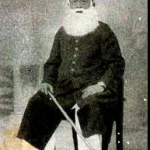
Abdul Haleem Sharar
The Author Book Firdaus E Bareen / Firdaus E Bareen .
Abdul Halim Sharar was a prolific Indian Urdu language author, playwright, essayist and historian from Lucknow. He left behind, in all, hundred and two books. He often wrote about the Islamic past and extolled virtues like courage, bravery, magnanimity and religious fervour.
Malikul Azia Varjina (1889),
Firdaus-e-Bareen (1899),
Zawal-e-Baghdad (1912),
Husn ka Daku (1913–1914),
Darbar-e-Harampur (1 Abdul Halim Sharar was a prolific Indian Urdu language author, playwright, essayist and historian from Lucknow. He left behind, in all, hundred and two books. He often wrote about the Islamic past and extolled virtues like courage, bravery, magnanimity and religious fervour.
Malikul Azia Varjina (1889),
Firdaus-e-Bareen (1899),
Zawal-e-Baghdad (1912),
Husn ka Daku (1913–1914),
Darbar-e-Harampur (1914)
and Fateh Maftuh (1916) are some of his famous novels.
His book Guzishta Lucknow is still considered as one of the best narrative describing the genesis of the city and its culture of Lucknow.
Book Description
The book was first published in 1899. The story of Husain and Zammarrud fallen in the grip of the Assassins take us back to the last days of Hasan Bin Sabah's merciless followers, at the end of which the sect's stronghold, the famous fort of Alamoot, was destroyed by the even more merciless Mongol hordes. Sharar writes famously in the style of a Walter Scott novel, the nov The book was first published in 1899. The story of Husain and Zammarrud fallen in the grip of the Assassins take us back to the last days of Hasan Bin Sabah's merciless followers, at the end of which the sect's stronghold, the famous fort of Alamoot, was destroyed by the even more merciless Mongol hordes. Sharar writes famously in the style of a Walter Scott novel, the novel itself being a new literary form in his day. But there are shades of an earlier indigenous genre - the Dastaan - in his work. Yet although he tells a gripping tale, part Scott and part Dastaan, he is not unaware of character. Husain may be credulous, and smitten silly by his love for Zammarrud, but he can still ask Shaikh Vujoodi intelligent questions which the Shaikh can only parry by the display of great wrath and superhuman knowledge. Husain's credulity in accepting his answers immediately has a lot to do with his fear that he would not be allowed to visit his beloved in 'Paradise.' There is a definite modern streak in Sharar's work. His treatment of Zamarrud is different from the usual portrayal of female characters in his day. Zamarrud has a mind of her own. She is observant and intelligent and capable of rebuffing her lover when he sounds credulous and foolish. No old fashioned perceptions of female 'duty' or the superior status of men holds her back from realizing that she is more clear-headed than Husain. She is moreover not mild of manner or adulatory of her man, as the prototypes of female perfection tend to be in Urdu literature of the day. Yet non of this detracts from her femininity, as she runs around 'like a delicate, fleet-footed doe' but fully determined to have her way. Much has been written about the Assassins in English and other languages. Sharar's novel has its own charm, and given a chance it should become a very popular book. Translated into Tajik, Sharar's works have quite a lot of readers in Tajikistan, where they are also the subject of a Ph.D. dissertation by Vladimir Lanikin.

Copyright reserved
The book cannot be previewed or downloaded in order to preserve the copyright of the author and publishing house
Not available digitally or on paper through the Noor Library, it is for rating and review
Share the book :
Book Review "Firdaus E Bareen / Firdaus E Bareen"

Book Quotes "Firdaus E Bareen / Firdaus E Bareen"

Other books like "Firdaus E Bareen / Firdaus E Bareen"




If there is a problem with the book, please report through one of the following links:
Report the book or by Contact us
E-books are complementary and supportive of paper books and never cancel it. With the click of a button, the e-book reaches anyone, anywhere in the world.
E-books may weaken your eyesight due to the glare of the screen. Support the book publisher by purchasing his original paper book. If you can access it and get it, do not hesitate to buy it.
Publish your book now for free